

Start here
Why Every Family Needs a Budget
Next
Know Your Numbers: Income and Expenses
Then
Choosing a Budgeting Framework That Fits
Apply it
Setting Spending Limits by Category
Keep going
Tracking, Adjusting, and Staying on Course
Why Every Family Needs a Budget
A budget isn't a restriction - it's a plan. Without one, spending decisions happen by default rather than by design, and it's easy to reach the end of the month unsure where the money went. A household budget gives you a clear map: what's coming in, what's going out, and whether those two things line up with your family's priorities.
Families who budget consistently tend to feel more in control of their finances, even when income is tight. The goal isn't perfection - it's awareness. Knowing your numbers means fewer financial surprises and more room to make intentional choices about saving, spending, and planning ahead. If you're ready to move beyond budgeting basics toward longer-term goals, the complete guide to family budgeting covers the full journey from first paycheck onward.
Know Your Numbers: Income and Expenses
Before you can build a budget, you need two figures: your total monthly take-home income and your total monthly expenses. Take-home income is what actually lands in your bank account after taxes and payroll deductions - not your gross salary. If your household has multiple income sources (two earners, freelance work, child support), add them all together.
Next, list every expense. Group them into two categories: fixed expenses and variable expenses. Fixed expenses are the same every month - rent or mortgage, car payments, insurance premiums. Variable expenses change based on behavior or usage - groceries, gas, dining out, and entertainment. The fixed vs. variable expenses reference guide walks through common household examples if you need help categorizing your spending.
Take-home income
The amount of money your household actually receives after taxes and other payroll deductions are subtracted from gross earnings.
Fixed expense
A recurring cost that stays the same amount each month, such as a mortgage payment or car loan, making it easy to plan around.
Variable expense
A cost that changes from month to month depending on usage or choices, like groceries, fuel, or dining out.
Zero-based budgeting
A budgeting method where every dollar of income is assigned a specific purpose so that income minus all allocations equals zero.
Emergency fund
A dedicated savings reserve - typically covering three to six months of essential expenses - set aside to cover unexpected costs without going into debt.
Pull three months of bank and credit card statements to calculate realistic averages for your variable costs. One month of data can be misleading - a car repair or holiday spending will skew your picture.
Choosing a Budgeting Framework That Fits
No single framework works for every household, but a few proven structures give beginners a solid starting point.
- 50/30/20: Allocate 50% of take-home income to needs, 30% to wants, and 20% to savings and debt repayment. This ratio is flexible - families with high housing costs may need to shift the percentages - but it provides an immediate benchmark to measure against.
- Zero-based budgeting: Every dollar of income gets assigned a specific job before the month begins, so income minus all assigned amounts equals zero. This approach requires more discipline but leaves no money unaccounted for.
- Pay-yourself-first: Automatically move a set savings amount out of your account on payday, then budget the remainder for expenses. It prioritizes building a financial cushion before spending decisions are made.
Whichever method you choose, the underlying principle is the same: spend intentionally, not by accident. See our smart budgeting hub for additional strategies tailored to different household situations.
Start With the Simplest Framework
If you've never budgeted before, the 50/30/20 rule is the easiest entry point. It requires only one number - your monthly take-home income - and a basic split. You can always layer in more precision once tracking feels natural. Don't let the perfect system stop you from starting with a good-enough one.
Setting Spending Limits by Category
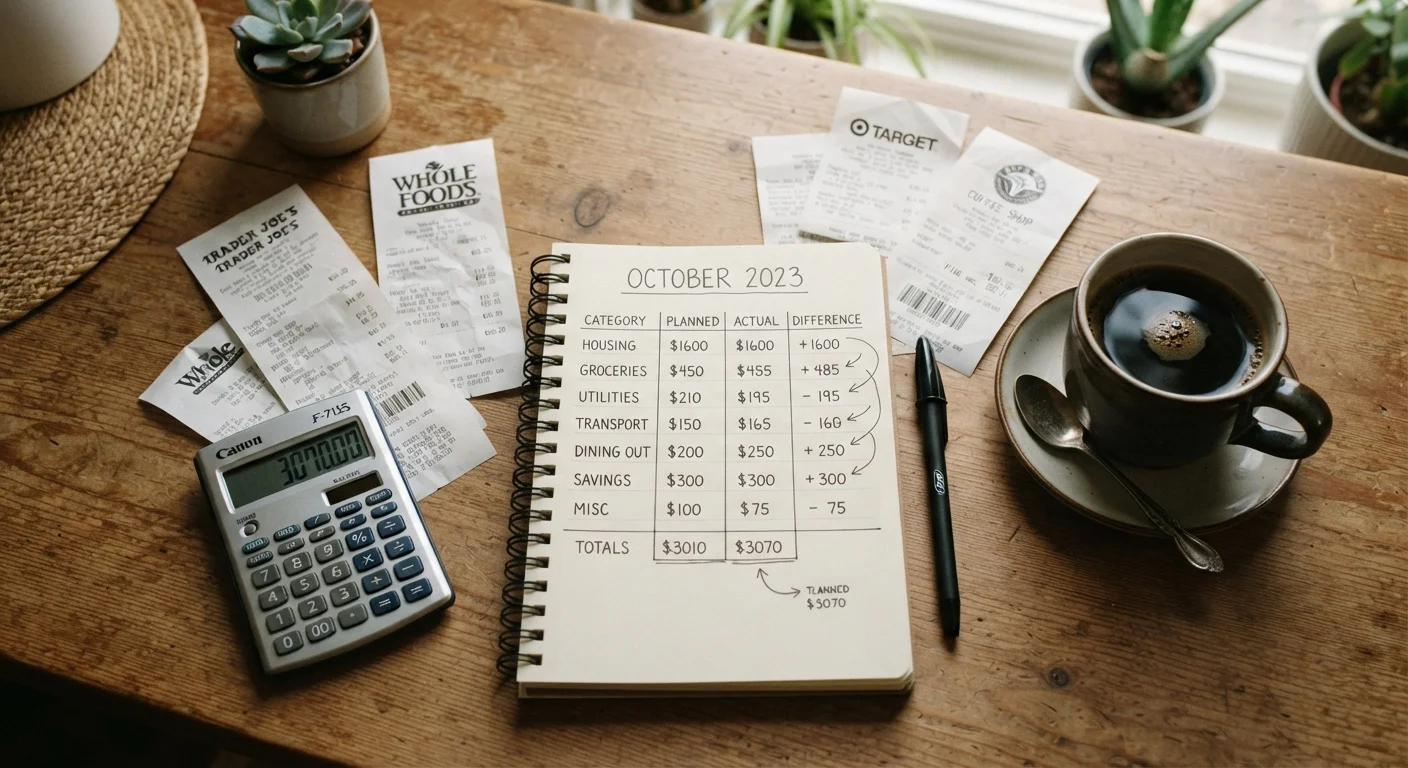
Once you've chosen a framework, break your budget into specific spending categories. Common household categories include housing, utilities, groceries, transportation, childcare, insurance, healthcare, debt payments, savings, and discretionary spending. The household budget category reference provides a structured breakdown of what typically falls under each line item.
Assign a dollar limit to each category based on your income and your chosen framework. Be honest - if you've been spending $600 a month on groceries, setting a $200 limit will set you up to fail. Start close to your actual spending, then make small, realistic adjustments over time.
Avoid Setting Unrealistic Limits
One of the most common reasons first-time budgets fail is setting spending limits far below actual habits. Cutting groceries by 60% in month one, for example, is likely to create frustration and abandonment rather than savings. Start with limits that reflect your real spending, then make incremental adjustments as you build awareness and discipline.
Don't forget irregular expenses: car registration, annual subscriptions, school supplies, or holiday gifts. Divide their annual cost by 12 and add a monthly reserve to your budget so these costs don't catch you off guard.
Tracking, Adjusting, and Staying on Course
Building a budget is step one. Tracking against it is where the real discipline lives. Review your actual spending against your category limits at least once a month. Look for patterns: Are you consistently over in one area? Is a category permanently underspent, meaning you could reallocate those dollars somewhere more useful?
Life changes - a new baby, a job shift, a move - will require you to revisit your budget, not just your spending. Treat your budget as a living document rather than a one-time worksheet. Families who review and adjust regularly tend to stick with budgeting far longer than those who set it and forget it.
If building a savings habit alongside your budget feels overwhelming, the guide to building a savings habit from zero offers grounded first steps for households with no savings history yet. You can also explore the Saving & Goals hub for techniques tailored to building long-term family security.
This article is for general informational and educational purposes only and does not constitute personalized financial advice. For guidance specific to your household's financial situation, consult a qualified financial professional.
Frequently Asked Questions
A commonly cited guideline is to keep housing costs at or below 30% of gross monthly income, though actual affordability varies by location and household size. This figure typically includes rent or mortgage, property taxes, and insurance. Treat it as a starting benchmark, not a hard rule - your other fixed costs may shift what's realistic for your family.
The 50/30/20 rule divides after-tax income into three buckets: 50% for needs, 30% for wants, and 20% for savings and debt repayment. It's a simple framework designed to give households a balanced starting point. Families with high fixed costs may need to adjust the percentages to match their actual situation.
Fixed expenses are consistent amounts due every month - rent, car payments, and insurance premiums are common examples. Variable expenses fluctuate based on usage or choices, like groceries, dining out, and utilities. Understanding this distinction helps you identify where you have the most flexibility to cut back.
No - a basic notebook or a simple spreadsheet works perfectly for beginners. The most important step is writing things down consistently, not the tool you use. Once you're comfortable tracking income and expenses manually, you can decide whether an app or software adds value for your household.
A monthly review is the minimum most financial educators recommend. It's enough time for patterns to emerge but frequent enough to catch problems before they compound. Many families also do a quick weekly check-in to compare actual spending against their plan.
If your household relies on variable or irregular income - freelance work, tips, or seasonal employment - base your budget on your lowest reliable monthly income rather than an average. Cover essentials first, then assign any surplus to savings or discretionary spending once it arrives.
The content provided on our blog site traverses numerous categories, offering readers valuable and practical information. Readers can use the editorial team’s research and data to gain more insights into their topics of interest. However, they are requested not to treat the articles as conclusive. The website team cannot be held responsible for differences in data or inaccuracies found across other platforms. Please also note that the site might also miss out on various schemes and offers available that the readers may find more beneficial than the ones we cover.