

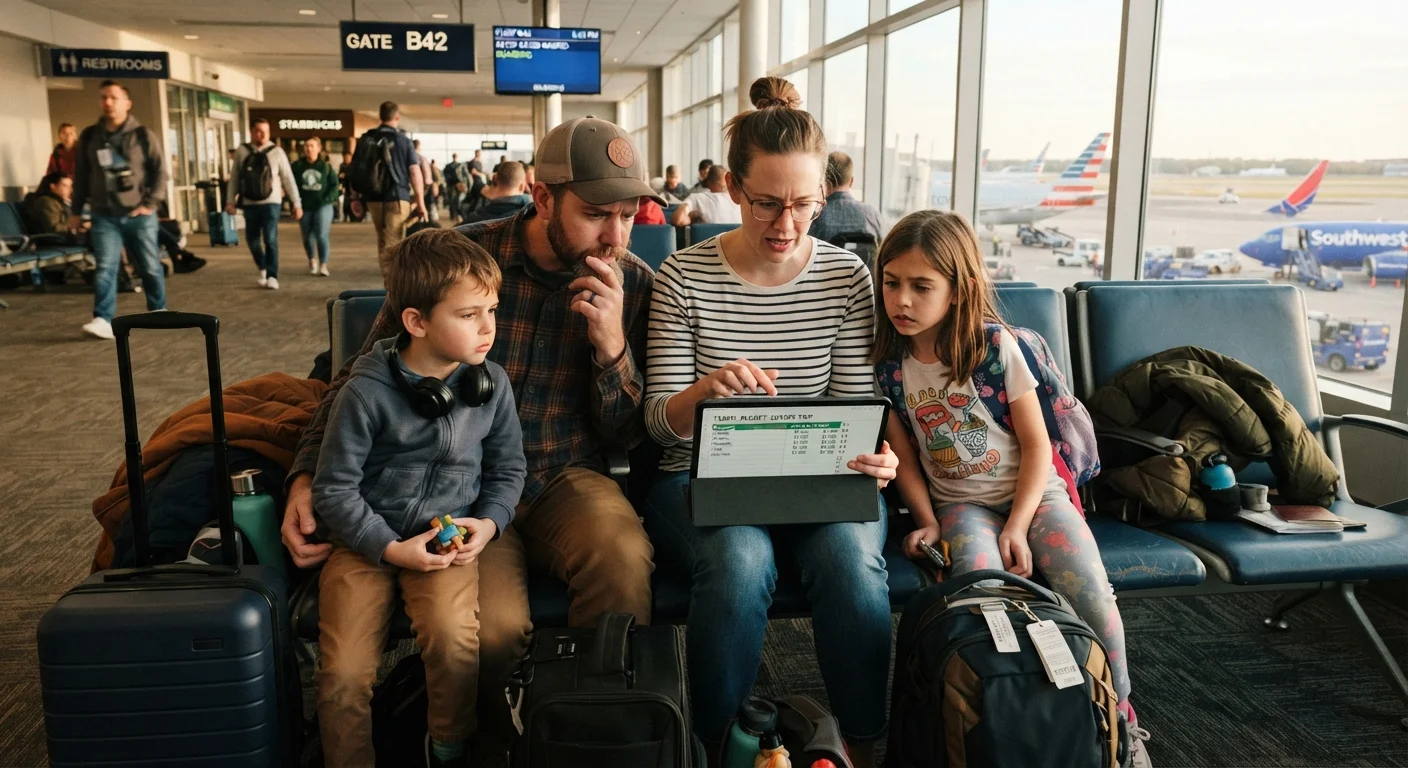
The Gap Between What Families Plan and What They Actually Spend
Most families don't overspend on vacation because they threw caution to the wind. They overspend because their initial budget left out predictable costs that seem minor individually but compound quickly across a multi-day trip. A complete family travel budget framework addresses every spending category upfront — but most families never see one before booking.
The result is a pattern that repeats across households: flights and hotel are booked within budget, then reality fills in the gaps. Ground transportation, meals for four, admission fees, travel-day costs, and surprise expenses quietly consume whatever slack existed. Understanding where the money actually goes is the first step toward closing the gap.
~$5,000
Average U.S. family summer vacation spend
According to survey data from the American Automobile Association (AAA), the average American family spends roughly $5,000 or more on a summer vacation when all costs are totaled.
30–40%
Share of trip budget consumed by food and transport
Travel industry research consistently finds that meals and in-destination transportation together consume a substantial share of a family's actual trip spending, often exceeding initial estimates.
1 in 3
Families who exceed their vacation budget
Consumer travel surveys regularly find that a significant share of families report spending more than planned on their most recent vacation, with hidden fees and food cited most often.
The Most Common Budget Mistakes — and How to Avoid Them
These aren't exotic planning failures. They're the same oversights that catch families off guard trip after trip, and every one of them is fixable before you ever book a flight.
Budgeting only for flights and lodging while ignoring ground transportation at the destination.
Why it happens: Families focus on the two largest line items — airfare and accommodation — and treat everything else as minor. Rental cars, rideshares, parking fees, tolls, and airport transfers rarely appear in a first-draft budget.
Underestimating how much a family of four actually spends on food each day.
Why it happens: Parents often base meal estimates on what a couple spends at home, then mentally double it — which still falls short once you account for kids' meals, snacks, beverages, and the reality that restaurants charge more in tourist areas.
Treating activity and entrance fees as an afterthought rather than a core budget item.
Why it happens: When the big-ticket item — say, theme park tickets — is already booked, families assume remaining activities will be cheap or free. Secondary admission costs, add-ons, and spontaneous paid experiences quickly erode that assumption.
Skipping the contingency buffer because the budget already feels tight.
Why it happens: When a family is stretching to make a trip affordable, adding a cushion feels like a luxury. But without it, any unexpected cost — a delayed flight requiring an extra hotel night, a sick child, a lost item — becomes a financial crisis.
Ignoring the costs that accumulate on travel days themselves.
Why it happens: Departure and return days are treated as zero-cost transitions. In reality, airport meals, baggage fees, parking at your home airport, and travel-day snacks can collectively add hundreds of dollars for a family.
Confusing the advertised nightly rate with the actual cost of lodging.
Why it happens: Families compare hotels by the per-night headline rate without accounting for resort fees, taxes, parking, and the number of nights needed — all of which substantially change the real total.
If the pattern sounds familiar, you're not alone — the same dynamics that derail household budgets tend to show up in travel planning too. Awareness of the mechanism is genuinely half the fix.
Planning More Honestly Starts Before You Search for Flights
The families who stay closest to their travel budgets tend to share one habit: they build their full cost estimate — including every category above — before they start comparing flights or hotels. That sequence matters. When you know your realistic total first, you can make trade-offs deliberately rather than discovering shortfalls after you've already committed.
Advertised Prices Rarely Reflect True Cost
Flight prices, hotel rates, and activity listings almost always show a base price that excludes taxes, fees, and add-ons. For families comparing options, the only meaningful number is the final checkout total. Build the habit of calculating that full number before making any comparison or commitment — and verify current prices directly with providers, as rates and fees change frequently.
Spending patterns on vacation also mirror patterns at home. Families who overspend on groceries due to untracked small purchases often encounter the same friction on the road — individual small decisions that feel harmless but aggregate into real overruns.
For families considering their first international trip, it's worth noting that the logistics of international family travel are often more manageable than assumed — but the budgeting process requires even more category-level specificity, especially around currency exchange and entry requirements.
Travel is worth every bit of the planning effort. Going in with honest numbers — not optimistic ones — is what keeps the trip a happy memory instead of a financial hangover.
The content provided on our blog site traverses numerous categories, offering readers valuable and practical information. Readers can use the editorial team’s research and data to gain more insights into their topics of interest. However, they are requested not to treat the articles as conclusive. The website team cannot be held responsible for differences in data or inaccuracies found across other platforms. Please also note that the site might also miss out on various schemes and offers available that the readers may find more beneficial than the ones we cover.