

Our Verdict
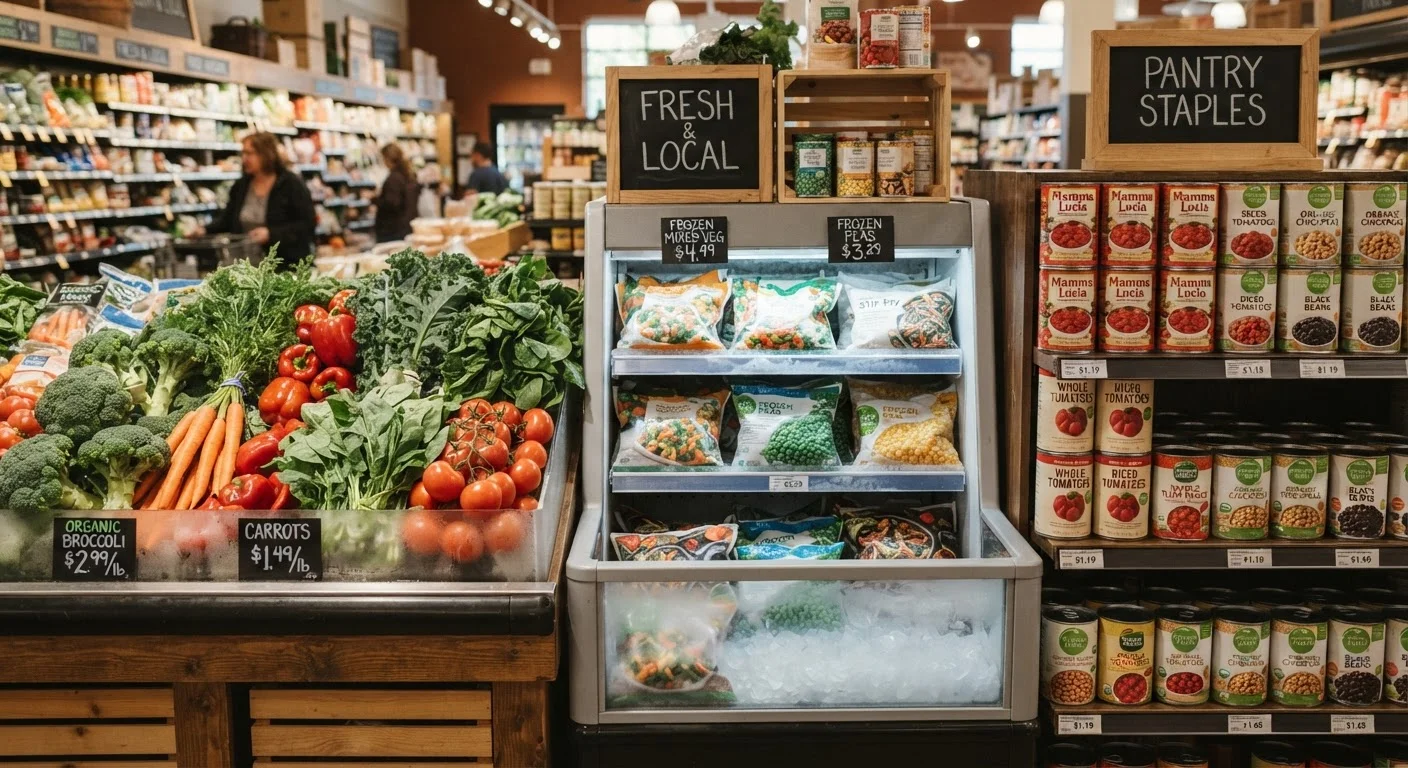
No single produce format wins across every measure. Fresh offers peak flavor and variety when planned well; frozen delivers reliable nutrition at a lower cost with zero prep stress; canned provides affordable, shelf-stable convenience that reduces food waste. For most busy families, a deliberate mix of all three is the most practical and nutritious strategy.
| Best for | Recommended |
|---|---|
| Families who plan meals weekly and have reliable storage space | Fresh produce |
| Households wanting nutrition and convenience without daily shopping | Frozen produce |
| Budget-conscious families prioritizing shelf life and zero waste | Canned produce |
| Most American families navigating time, cost, and taste together | A mix of all three formats |
The Nutrition Picture: What Research Actually Shows
One of the most persistent grocery myths is that fresh produce is always the most nutritious option. Research tells a more nuanced story. According to studies supported by the USDA, fruits and vegetables begin losing certain water-soluble vitamins — like vitamin C and some B vitamins — within hours of harvesting. By the time fresh produce travels from farm to distribution center to store shelf to your kitchen, several days or even weeks may have passed.
Frozen vegetables are typically harvested at peak ripeness and blanched (briefly heated), then frozen within hours. This process locks in most nutrients. Studies published in journals such as the Journal of the Science of Food and Agriculture have found that frozen vegetables are often nutritionally comparable — and occasionally superior — to their fresh counterparts that have been stored for several days.
Canned produce is similarly processed close to harvest. The main trade-offs are heat-sensitive nutrients (some vitamin C is lost during canning) and, in many products, added sodium or sugar. However, minerals like iron and calcium survive canning well, and lycopene — the antioxidant in tomatoes — actually becomes more bioavailable after heating.
≤40%
Sodium reduced by rinsing canned vegetables
Research referenced by the American Heart Association suggests draining and rinsing can remove a meaningful share of added sodium from canned produce.
3–7 days
Average fresh produce nutrient window after purchase
USDA-supported research indicates nutrient levels in fresh produce decline measurably during post-harvest storage and transport.
The practical takeaway: unless fresh produce moves from your market to your plate within a day or two, the nutritional gap between formats is smaller than most families assume.
Cost and Convenience: Where Each Format Fits Your Week
Cost per serving varies meaningfully across formats, and it also varies by season, region, and what you're buying. Fresh spinach in July costs very differently than fresh asparagus in December. As a general pattern, canned vegetables tend to be the most affordable per serving, frozen comes second, and fresh is often the priciest — especially for out-of-season items.
| Fresh | Frozen | Canned | |
|---|---|---|---|
| Nutritional value | High if eaten quickly | Comparable to fresh | Good; some heat-sensitive loss |
| Average cost per serving | Higher, varies by season | Moderate, consistent | Lowest, very affordable |
| Shelf life | Days to one week | Several months to a year | One to several years |
| Prep time | Washing and chopping needed | Minimal; ready to cook | Open and rinse; ready to use |
| Risk of food waste | Highest | Low | Very low |
| Sodium concern | None naturally | Low (check sauces) | Can be high; choose low-sodium |
| Best use case | Salads, snacking, texture | Stir-fries, soups, sides | Soups, stews, beans, bases |
Convenience is equally important for busy households. Frozen vegetables require no chopping, no washing, and no urgency — they wait in your freezer for weeks without spoiling. Canned goods last even longer, typically one to several years, making them an excellent emergency pantry staple and a buffer against food waste. Fresh produce, by contrast, demands timely use; half a bag of wilted spinach thrown out mid-week is money lost.
For families working within a tight grocery plan, building a budget-friendly meal framework can help decide which format to prioritize for each item on your list. Understanding what realistic grocery spending looks like for your family size also provides helpful context before making any changes.
Practical Tips for Using Each Format Well
Getting the most from each produce format comes down to a few smart habits rather than an all-or-nothing approach.
Fresh
- Buy only what you'll realistically use within three to four days.
- Shop seasonally — in-season produce is cheaper, fresher, and often more flavorful.
- Store greens with a dry paper towel in a sealed bag to extend shelf life by several days.
Frozen
- Choose plain frozen vegetables without added sauces, salt, or butter to control sodium and calories.
- Keep a rotating stock of staples like peas, corn, edamame, and mixed stir-fry blends for fast weeknight meals.
- Frozen fruit works excellently in smoothies, oatmeal, and baked dishes without any texture compromise.
Canned
- Look for labels that say "no salt added" or "low sodium," particularly for beans and vegetables.
- Rinse canned beans and vegetables under cold water before use — this step can reduce sodium content by roughly 40%, according to research cited by the American Heart Association.
- Canned tomatoes, pumpkin, and legumes are especially nutrient-dense and economical choices.
Build a Flexible Produce Routine
Consider stocking your freezer and pantry with frozen and canned staples as a baseline, then supplementing with fresh items you know your family will use within a few days. This approach reduces waste, keeps costs predictable, and ensures vegetables are always within reach — even on the busiest evenings. Over time, patterns like these can meaningfully curb overspending; common grocery budget traps are worth reviewing if you find your produce spending hard to control.
Families exploring more plant-centered eating can find additional context in our overview of plant-forward family meals, which covers realistic trade-offs and expectations.
This article is for general informational and educational purposes only and is not a substitute for professional medical or dietary advice. Consult a qualified healthcare provider or registered dietitian for guidance specific to your family's health needs.
The content provided on our blog site traverses numerous categories, offering readers valuable and practical information. Readers can use the editorial team’s research and data to gain more insights into their topics of interest. However, they are requested not to treat the articles as conclusive. The website team cannot be held responsible for differences in data or inaccuracies found across other platforms. Please also note that the site might also miss out on various schemes and offers available that the readers may find more beneficial than the ones we cover.