

What Research Actually Says — and Doesn't Say
Headlines about screen time often swing between alarm and dismissal, making it hard for families to know what's genuinely supported by evidence. The honest answer is: the research is meaningful but still evolving.
A substantial body of observational research — including studies reviewed by the CDC and NIH — associates high levels of sedentary behavior with increased risk of cardiovascular concerns, metabolic changes, and poorer mental health outcomes. But observational studies show associations, not definitive cause-and-effect. People who sit more may differ in many other ways from people who sit less, and researchers work to account for those differences with varying degrees of success.
What is more consistently supported is that long, uninterrupted periods of sitting appear to carry more risk than the same total sitting time broken into shorter stretches. This distinction matters practically: a family member who sits for three hours straight faces a different risk profile than one who sits in 20-minute intervals with light movement in between.
Screen Time Guidelines Vary by Age
The American Academy of Pediatrics recommends avoiding screen time (other than video chatting) for children under 18–24 months, and limiting recreational screen time for older children — with an emphasis on content quality and avoiding displacement of sleep or physical activity. These guidelines are updated periodically, so checking current AAP resources directly is worthwhile. Adult guidance focuses more on breaking up sedentary patterns than on capping screen minutes.
For a broader look at how daily incidental movement compares to structured exercise, see why everyday movement matters.
Screen Time and Sedentary Time: Not Always the Same Thing
Screen time is frequently used as a proxy for sedentary time, but the two overlap imperfectly. A child doing an active dance video game is using a screen but not sitting. An adult on a long phone call while pacing the kitchen is similarly active. Conversely, reading a physical book for hours is sedentary but screen-free.
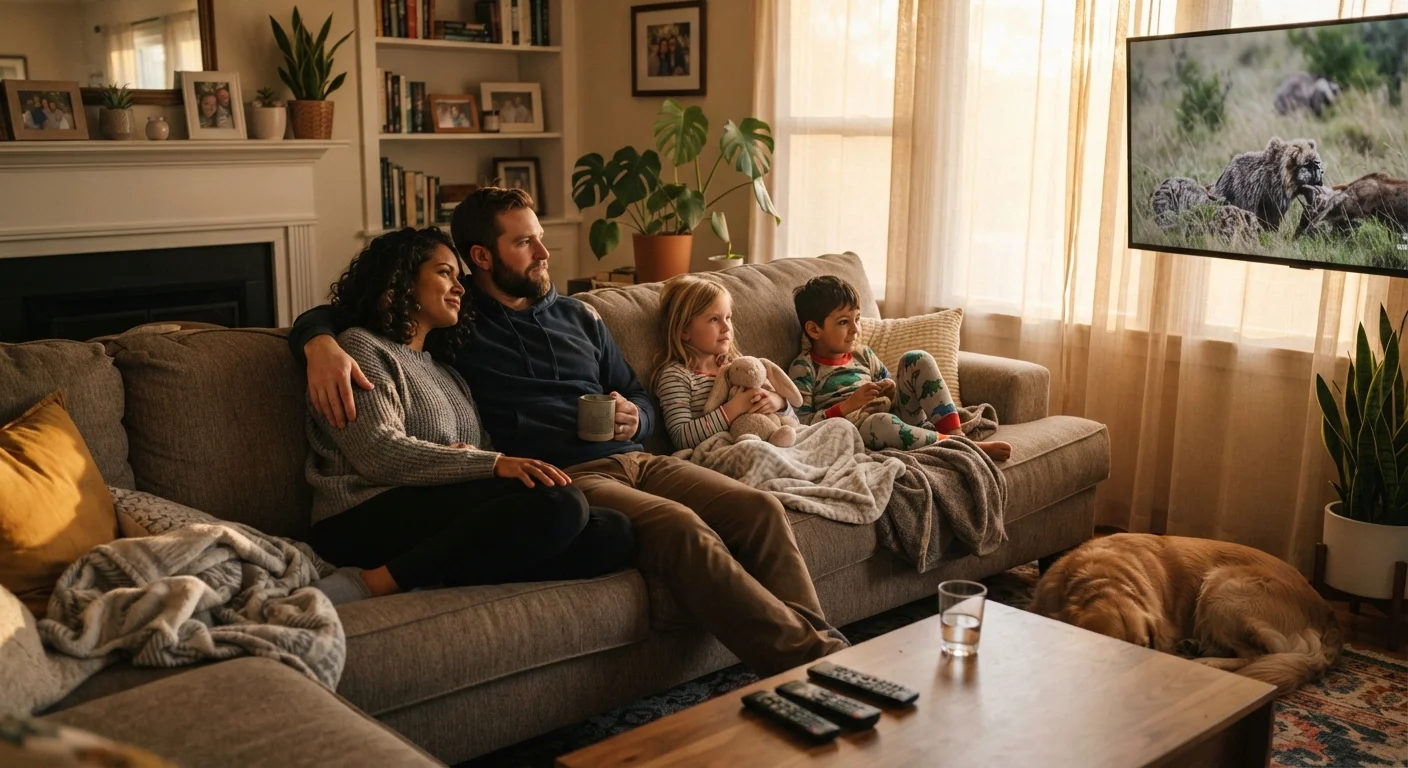
What the research tends to flag is passive, reclined screen consumption — prolonged TV watching or scrolling — particularly when it displaces sleep, outdoor activity, or social interaction. Content type, social context, and what the screen replaces all factor into outcomes.
6–8 hrs
Average daily sitting time for U.S. adults
Estimates from multiple national surveys suggest most American adults spend six to eight or more hours per day in sedentary activities, with desk workers often exceeding this.
~3 hrs
Average daily recreational screen time for U.S. children
CDC and related survey data suggest children outside of school hours average roughly three or more hours of recreational screen time daily, though figures vary significantly by age group.
30 min
Suggested sitting break interval
Many physical activity researchers and health bodies recommend interrupting continuous sitting at least every 30–60 minutes with light movement, based on available evidence on sedentary behavior.
Families benefit from asking not just "how much screen time?" but "what is screen time replacing in our day?" That reframe aligns with how more nuanced public health guidance is evolving. You can also explore screen time and family mental health trade-offs for the emotional wellbeing dimension.
Practical Ways Families Can Reduce Sedentary Risk
Reducing sedentary risk does not require eliminating screens or buying gym equipment. The most consistently evidence-supported approach is simply breaking up sitting time regularly.
- Set a movement cue: Use a phone timer or TV commercial breaks as a prompt to stand, stretch, or walk briefly every 30–60 minutes.
- Reframe chores as movement: Folding laundry, cooking, or tidying are light activity that counters sedentary time — and they need to happen anyway.
- Make transitions active: Walk to meet the school bus, take stairs, or park farther away. These brief moments accumulate meaningfully across a week.
- Choose active screen options sometimes: Dance games, yoga videos, or walk-and-talk phone calls bring movement into screen time rather than treating them as opposites.
Start with One Break Per Hour
You don't need a structured exercise plan to begin reducing sedentary risk. Choose one time each day — maybe after lunch or during a TV show — to stand and move for just two to five minutes. Building one reliable habit first makes it easier to add more over time.
If you're unsure how sedentary your family's current routine has become, a self-audit checklist can help you notice patterns that have quietly shifted over time.
This article is for general informational and educational purposes only and is not a substitute for professional medical advice. Consult a qualified healthcare provider with questions about your family's specific health circumstances.
Frequently Asked Questions
Not necessarily. Research generally distinguishes between passive, sedentary screen use and active or social screen engagement. Video calls, active gaming, or educational content have different associations than hours of passive TV viewing. The overall pattern of movement throughout the day matters as much as the screen itself.
There is no universally agreed threshold, and individual factors vary. However, many public health guidelines note that regularly sitting for more than eight to ten hours per day — especially in long unbroken stretches — is associated with elevated health risks. Breaking up sitting every 30–60 minutes is a commonly cited practical guideline.
No. Organizations such as the American Academy of Pediatrics have age-specific guidance for children, reflecting developmental differences. Adults face different concerns, particularly around occupational sedentary time. Guidelines for children focus more on content quality and sleep displacement than on minutes alone.
Partly, but research suggests it may not fully counteract very high levels of daily sitting. A 30-minute workout is beneficial, but if the rest of the day is almost entirely sedentary, some health risks may persist. Frequent movement breaks throughout the day appear to add independent benefit.
Even light activity counts — standing, walking to another room, stretching, or doing light household tasks. Research does not require intense exercise. The key is interrupting prolonged stillness at regular intervals rather than remaining seated for hours at a stretch.
The content provided on our blog site traverses numerous categories, offering readers valuable and practical information. Readers can use the editorial team’s research and data to gain more insights into their topics of interest. However, they are requested not to treat the articles as conclusive. The website team cannot be held responsible for differences in data or inaccuracies found across other platforms. Please also note that the site might also miss out on various schemes and offers available that the readers may find more beneficial than the ones we cover.