

Why Walking Gets Overlooked — and Why That's a Mistake
Walking rarely gets the credit it deserves. In a fitness culture that prizes intensity, many families assume that if it doesn't involve a gym, a class, or significant effort, it probably doesn't count. That assumption is worth challenging.
The CDC identifies brisk walking as a moderate-intensity aerobic activity — the same category as cycling at a relaxed pace or water aerobics. For adults, accumulating 150 minutes of moderate activity per week is a widely supported general health target, and walking is one of the most reliable ways to get there. For children, the guidance is higher, but walking woven into daily routines contributes meaningfully toward it. As everyday movement can be just as meaningful as gym time, the bar to starting is lower than most families realize.
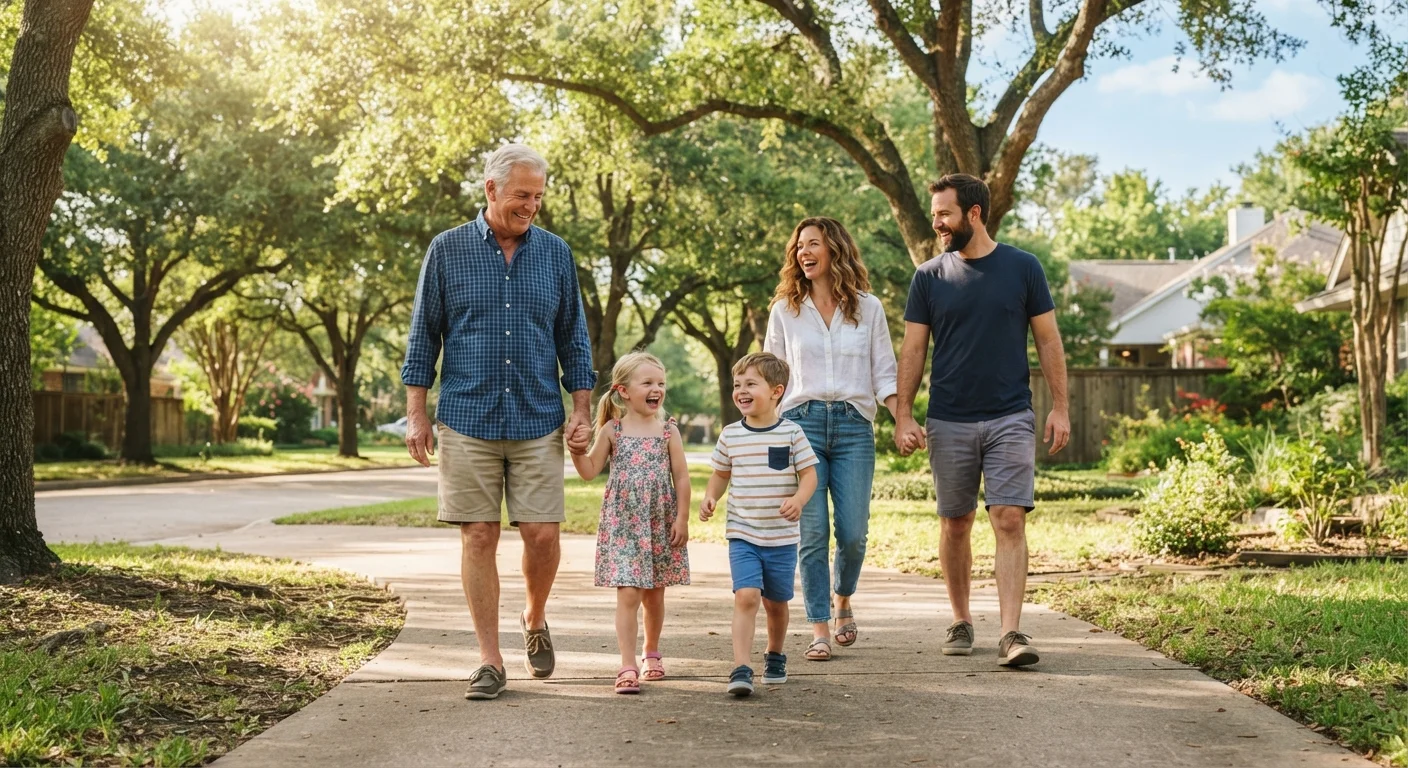
Walking also scales naturally. A toddler, a teenager, a parent recovering from an injury, and a grandparent can all walk together — adjusting pace as needed — without anyone sitting out.
Best Practices for Making Family Walks Stick
Consistency matters more than intensity when building any physical habit. These practices help families move from occasional walks to reliable ones.
Anchor walks to existing daily routines rather than treating them as separate events.
Habit research consistently shows that new behaviors stick when linked to established triggers. When walking is attached to something the family already does — school drop-off, after dinner, weekend errands — it requires less willpower to maintain and is less likely to be skipped when schedules get busy.
Keep the pace conversational, especially when walking with children or older adults.
A pace where everyone can hold a conversation is typically brisk enough to qualify as moderate-intensity activity while remaining comfortable for mixed-ability groups. Pushing too hard early discourages less-fit family members and increases the chance of minor injury or discomfort that derails the habit.
Let children lead direction and route choices on some walks.
Children are more likely to stay engaged and view walking as enjoyable rather than obligatory when they have a sense of agency. Giving kids ownership of simple decisions — which park, which street, how far — shifts the dynamic from exercise to exploration, which tends to sustain participation over the long term.
Use short, frequent walks rather than waiting for a long uninterrupted window.
Evidence supports that accumulated physical activity throughout the day — multiple shorter bouts — provides health benefits comparable to a single longer session for most people. Waiting for a perfect 45-minute slot often means not walking at all, particularly on school days and work nights. The myth that exercise must happen in one long block holds many families back unnecessarily.
Make the walk engaging with low-effort social activities like storytelling, spotting games, or podcasts.
Boredom is one of the most commonly cited reasons families abandon walking routines. Pairing the walk with something enjoyable transforms it from a health obligation into anticipated family time, which dramatically improves long-term adherence across age groups.
If your family is starting from scratch, building a family fitness routine from the ground up covers the broader framework — scheduling, buy-in, and keeping different ages engaged over time.
Quick Ways to Add More Walking Right Now
You don't need a dedicated "walk slot" to benefit from more steps. Many families find it easier to attach walking to things they're already doing.
For more creative ideas on weaving movement into a packed day, see sneaking more steps into a day that never slows down.
Walking Counts Even in Small Doses
You don't need to hit a specific step count or maintain a particular pace for walking to support your family's health. Even relaxed, shorter walks contribute to reduced sedentary time, improved mood, and more consistent movement habits. The most important walk is simply the one that actually happens — start there, and build from it.
This article is for general informational and educational purposes only and does not constitute medical advice. Consult a qualified healthcare professional before beginning any new physical activity program, particularly if any family member has a health condition or special consideration.
The content provided on our blog site traverses numerous categories, offering readers valuable and practical information. Readers can use the editorial team’s research and data to gain more insights into their topics of interest. However, they are requested not to treat the articles as conclusive. The website team cannot be held responsible for differences in data or inaccuracies found across other platforms. Please also note that the site might also miss out on various schemes and offers available that the readers may find more beneficial than the ones we cover.