

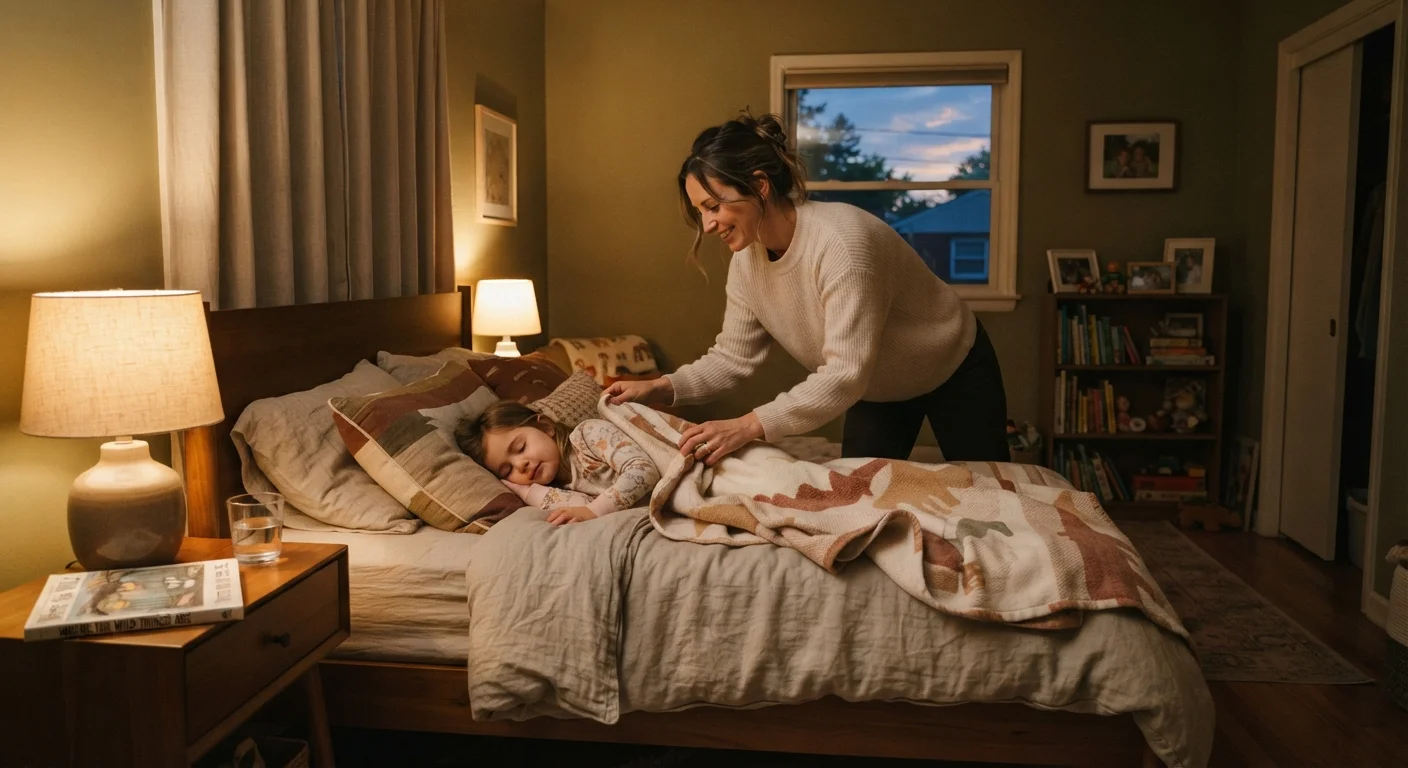
Why Sleep Is an Emotional Health Tool, Not Just Physical Recovery
Most families think about sleep mainly in terms of energy — getting enough rest so everyone can function the next day. But sleep does something far more fundamental: it actively processes emotional experiences and resets the brain's capacity to respond calmly to stress.
During sleep, particularly during REM (rapid eye movement) stages, the brain consolidates emotional memories and regulates the stress hormone cortisol. When sleep is cut short, the brain enters the next day with its emotional circuits already under strain. For children, whose brains are still developing the capacity for self-control, this effect is even more pronounced.
Understanding sleep as an emotional health tool — not just physical recovery — changes how families can approach it. It moves sleep from an inconvenient necessity to an active investment in mood, patience, and family resilience.
1 in 3
U.S. adults not getting enough sleep
According to the CDC, about one-third of American adults regularly sleep less than the recommended seven hours per night.
57%
Adolescents sleeping less than recommended
CDC data indicates that more than half of U.S. middle and high school students report sleeping fewer hours than recommended for their age group on school nights.
24%
Increased emotional reactivity after sleep loss
Research published in peer-reviewed sleep medicine journals suggests sleep-deprived individuals show substantially heightened amygdala responses to negative stimuli compared to well-rested counterparts.
What Happens in a Sleep-Deprived Child's Brain
Children's brains are particularly sensitive to sleep loss because the prefrontal cortex — responsible for reasoning, impulse control, and emotional regulation — is still maturing well into early adulthood. Without adequate sleep, this region functions less efficiently, while the amygdala (the brain's alarm system) becomes more reactive.
The result: a child who is quicker to cry, slower to calm down, more likely to escalate conflicts, and less able to respond to a parent's attempts to soothe them. This isn't defiance or a personality trait — it's neurobiology. Teachers and caregivers often notice the difference in a child's behavior after a poor night's sleep before parents do.
Chronic sleep restriction — not just occasional late nights — is associated with longer-term effects on mood stability and learning. The American Academy of Sleep Medicine notes that inadequate sleep in school-age children is linked to increased rates of anxiety and depressive symptoms.
Watch for Sleep Deprivation Disguised as Behavior
In children, the signs of insufficient sleep don't always look like tiredness. Watch for increased emotional sensitivity, difficulty transitioning between activities, or uncharacteristic defiance — these can all be indicators that sleep quality or duration needs attention. Keeping a simple one-week sleep log (noting bedtime, wake time, and mood the next morning) can help you spot patterns before raising them with a pediatrician.
The Parent Sleep Equation: How Your Rest Affects the Whole Family
Parent wellbeing is inseparable from family wellbeing. When parents are sleep-deprived, research shows they are more likely to respond to children's emotional behavior with frustration rather than calm guidance — not because they are poor parents, but because the brain's regulatory systems are depleted.
This creates a bidirectional relationship: sleep-deprived parents are less equipped to support children's emotional regulation, and children's sleep difficulties are a leading cause of parental sleep disruption. Addressing sleep as a family system rather than an individual problem is a more effective framing.
Parents who prioritize their own sleep — by establishing consistent sleep and wake times, reducing late-night screen exposure, and creating a wind-down habit — model the very behaviors that help children develop healthy sleep patterns. See our evening routine strategies for practical wind-down ideas the whole household can use.
“Sleep is the single most effective thing we can do to reset our brain and body health each day — and its neglect costs us dearly, both mentally and physically.”
— Matthew Walker, Professor of Neuroscience and Psychology, University of California, Berkeley; author of 'Why We Sleep'
Building Better Sleep Habits: Practical Starting Points
The good news is that sleep habits are modifiable. Small, consistent changes tend to produce more lasting results than dramatic overhauls. Here are evidence-informed starting points for families:
- Consistent sleep and wake times: The body's internal clock (circadian rhythm) responds strongly to regularity. Keeping times consistent — even on weekends — supports faster sleep onset and better sleep quality.
- A predictable pre-sleep routine: A 20–45 minute wind-down sequence that is the same each night signals to children's brains that sleep is approaching. Quiet activities, dimmed lighting, and a calm tone help. For more on this, see our guide to family decompress routines.
- Limit screen exposure before bed: Blue-spectrum light from screens can suppress melatonin production. The evidence on exact timing thresholds is still evolving, but reducing screen intensity in the hour before sleep is a reasonable, low-risk habit. For a balanced look at how screens affect family wellbeing more broadly, see screen time and family mental health.
- Keep sleep environments cool and dark: These environmental cues support natural sleep onset and help maintain sleep across the night.
If a child or parent is experiencing persistent sleep difficulties — including frequent waking, difficulty falling asleep, or daytime sleepiness despite adequate time in bed — consulting a pediatrician or primary care provider is appropriate. Underlying sleep disorders are treatable.
This article is for general informational purposes only and does not constitute medical advice. Please consult a qualified healthcare professional for concerns about your child's or your own sleep health.
Frequently Asked Questions
The CDC recommends that toddlers get 11–14 hours, school-age children 9–12 hours, and teenagers 8–10 hours per night. These ranges support healthy brain development and emotional stability. Individual needs may vary, and a pediatrician can help assess whether your child is getting enough rest.
Research consistently links insufficient sleep in children to increased irritability, difficulty concentrating, heightened emotional reactivity, and behavior that can resemble ADHD symptoms. This doesn't mean poor sleep causes a disorder, but it does significantly worsen emotional control. Improving sleep often leads to noticeable behavioral improvements.
Yes. Studies show that sleep-deprived parents report lower patience, reduced emotional availability, and more reactive responses to children's behavior. This creates a feedback loop — stressed parenting can disrupt children's sleep, and children's poor sleep disrupts parents' rest.
Evidence suggests a consistent, calming pre-sleep routine of 20–45 minutes works well for most children. This might include a bath, quiet reading, and dimming lights. Consistency — doing it at the same time each night — matters as much as the specific activities chosen.
General evidence suggests that improving sleep quality and duration is associated with better mood, lower stress reactivity, and improved emotional control in adults. If you struggle with persistent sleep problems, consulting a healthcare provider is a worthwhile step.
The content provided on our blog site traverses numerous categories, offering readers valuable and practical information. Readers can use the editorial team’s research and data to gain more insights into their topics of interest. However, they are requested not to treat the articles as conclusive. The website team cannot be held responsible for differences in data or inaccuracies found across other platforms. Please also note that the site might also miss out on various schemes and offers available that the readers may find more beneficial than the ones we cover.