

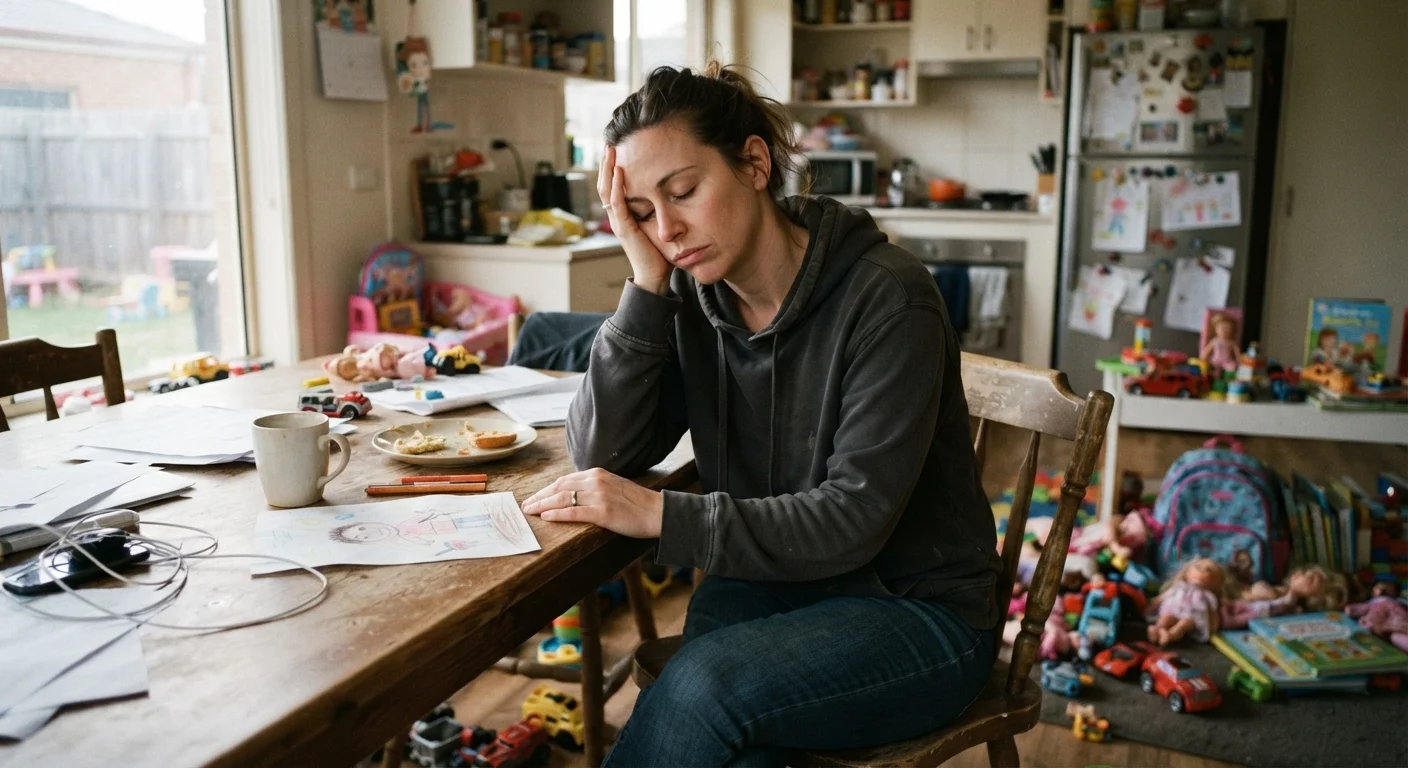
Exhaustion vs. Burnout: Why the Difference Matters
Every parent knows what tiredness feels like. A sleepless night with a sick toddler, a week of back-to-back school events, a stretch of single-parenting while a partner travels — these experiences leave anyone drained. But that tiredness is temporary. It lifts with rest, relief, or a change in circumstances.
Parental burnout is something different. It doesn't respond to a good weekend or a night off. It accumulates over months or years of caregiving demands that consistently outpace a parent's personal reserves — time, energy, emotional bandwidth, and social support. Researchers describe it as a distinct syndrome with four core dimensions:
- Overwhelming exhaustion in the parenting role
- Emotional distancing from your children — going through the motions without genuine connection
- Loss of parenting efficacy — feeling like you're no longer good at or fulfilled by being a parent
- A contrast between who you used to be as a parent and who you feel you've become
Understanding this distinction matters because the response each condition calls for is different. Ordinary tiredness needs rest. Burnout typically needs more: a genuine reassessment of demands, resources, and sometimes professional guidance.
This Is General Information, Not a Diagnosis
The information in this article is educational and intended to help families understand parental burnout as a concept. It is not a substitute for professional assessment. If you recognize these signs in yourself or someone you know, speaking with a licensed mental health professional is the appropriate next step. In a mental health emergency, contact emergency services or a crisis line immediately.
What Drives Parental Burnout?
Burnout isn't a character flaw or a sign of loving your children less. It emerges from an imbalance — when the ongoing demands of raising children exceed the resources available to meet them. Several factors can tip that balance:
~5%
Estimated prevalence of parental burnout
Studies led by researchers at UCLouvain estimate that approximately 5% of parents in Western countries meet criteria for parental burnout, though rates vary significantly by country and context.
42 countries
Nations included in cross-cultural burnout research
A large international study examined parental burnout across 42 countries, finding that individualistic cultures with high parenting standards tend to report higher rates.
- High-intensity parenting expectations: Cultural norms that frame ideal parenting as total self-sacrifice leave little room for parents to replenish themselves.
- Isolated caregiving: Parents without adequate social support — family nearby, a co-parent, or a community network — carry the load without relief.
- Children with complex needs: Caring for a child with a chronic illness, disability, or significant behavioral challenges multiplies caregiving demands.
- Perfectionism: Parents who hold themselves to very high standards are more vulnerable, as the gap between their expectations and daily reality widens over time.
Research published in peer-reviewed journals notes that both mothers and fathers experience parental burnout, though the pathways and risk factors can differ by gender, household structure, and cultural context.
General Approaches That May Help
While parental burnout warrants professional attention when symptoms are persistent or severe, general wellbeing strategies can help reduce risk and support recovery for many families. These are not prescriptions — they are starting points worth exploring:
Start Small With Your Support Network
You don't need a dramatic life overhaul to begin reducing burnout risk. Identifying just one person you can be honest with about how you're doing — a partner, friend, or family member — is a meaningful first step. Social support consistently emerges in research as one of the strongest protective factors against parental burnout.
- Redistribute the load: Honestly mapping which tasks can be shared, delegated, or temporarily let go is often more effective than simply trying harder.
- Protect moments of recovery: Even brief, consistent periods of rest — without caregiving responsibility — can help replenish emotional reserves.
- Strengthen social connection: Talking openly with other parents, a trusted friend, or a support group reduces isolation and normalizes struggle.
- Practice self-compassion: Treating yourself with the same understanding you'd offer a friend in your situation is associated with greater resilience under stress.
Approaches like mindfulness may also play a supportive role. See our grounded look at mindfulness for families for a closer examination of what the evidence supports for parents and children.
This article is for general informational purposes only and does not constitute medical or mental health advice. If you are experiencing symptoms of burnout or any mental health concern, please consult a qualified healthcare or mental health professional.
Frequently Asked Questions
They share some overlapping symptoms, such as exhaustion and emotional withdrawal, but they are distinct conditions. Parental burnout is specifically tied to the parenting role — a person may feel depleted as a parent while still finding satisfaction in other areas of life. Depression tends to affect all life domains. A mental health professional can help distinguish between the two.
Research suggests that parents experiencing burnout may be more likely to engage in neglectful or harsh parenting behaviors, which can affect children's emotional wellbeing over time. This is not a reason for shame — it's a reason to seek support early, for the benefit of the whole family.
Regular tiredness typically resolves with rest and rebounds after a good night's sleep or a break. Parental burnout does not. It's characterized by persistent exhaustion, emotional distance from your children, and a sense of losing your identity as a parent — feelings that linger regardless of rest.
Parents with perfectionist tendencies, limited social support, children with high care needs, or those managing solo parenting situations tend to face elevated risk. Cultural pressures that idealize selfless, intensive parenting can also contribute.
Start by speaking with a licensed mental health professional, such as a therapist or psychologist, who can assess your situation and recommend appropriate support. Reaching out to your primary care provider is also a reasonable first step. You do not have to manage this alone.
The content provided on our blog site traverses numerous categories, offering readers valuable and practical information. Readers can use the editorial team’s research and data to gain more insights into their topics of interest. However, they are requested not to treat the articles as conclusive. The website team cannot be held responsible for differences in data or inaccuracies found across other platforms. Please also note that the site might also miss out on various schemes and offers available that the readers may find more beneficial than the ones we cover.