

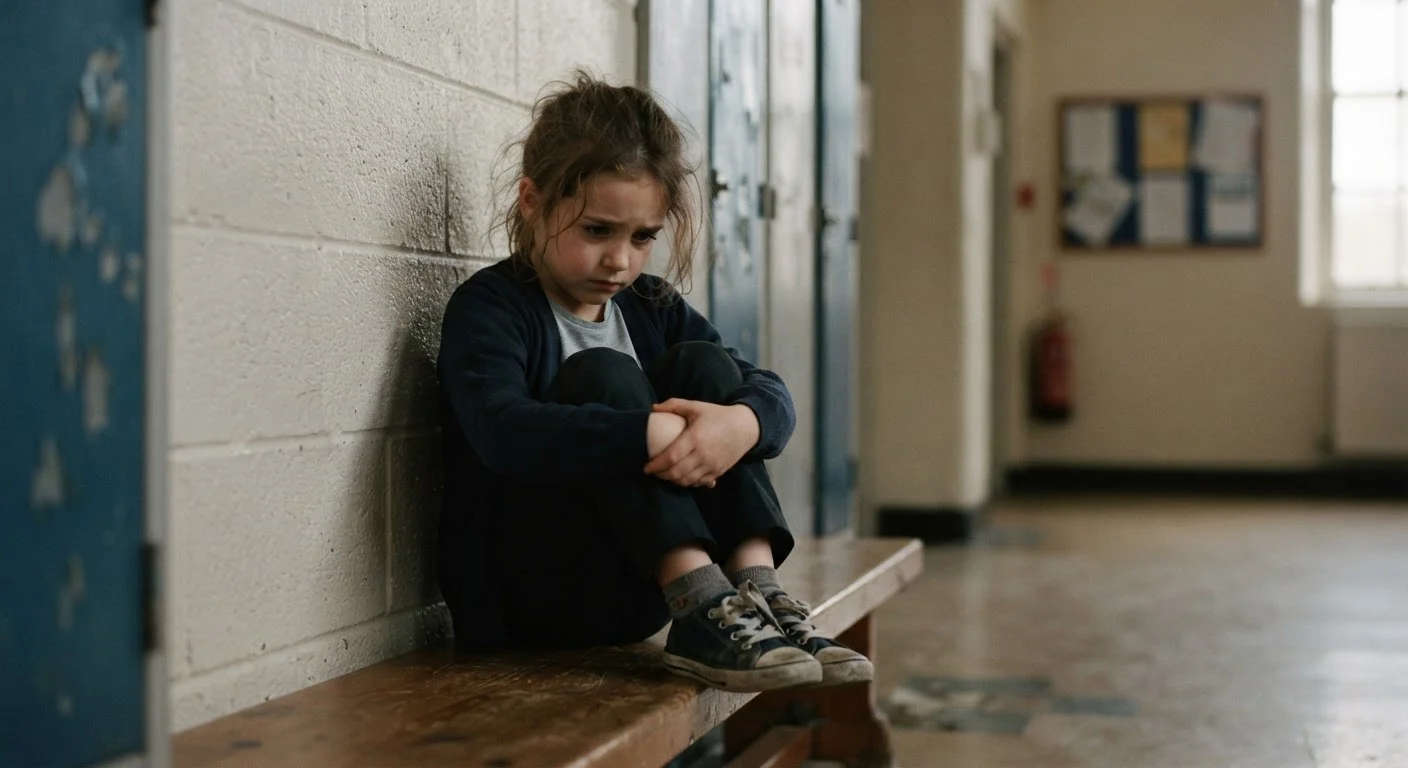
Normal Worry vs. Something More
Every child experiences worry. Nervousness before a test, unease about making new friends, or fear of the dark are developmentally typical responses to uncertainty. According to the American Academy of Pediatrics, transient fears and worries are a normal part of childhood development across all age groups.
What distinguishes everyday anxiety from something that warrants closer attention is persistence, intensity, and impact. When a child's worry does not ease after reassurance, begins to interfere with school, sleep, or friendships, or causes physical symptoms on a recurring basis, it has likely moved beyond the range of typical stress.
This distinction matters because untreated anxiety in children can affect academic performance, social development, and long-term wellbeing. The good news: early recognition and support make a meaningful difference. See our guide to talking with kids about big feelings for practical language to use once you've identified a concern.
Anxiety disorder
A clinical condition in which worry or fear is persistent, disproportionate to the situation, and significantly impairs daily functioning. Anxiety disorders are among the most common mental health conditions in children and are distinct from everyday stress.
Avoidance behavior
Actions taken to escape or prevent encounters with feared situations. While avoidance reduces short-term distress, it reinforces anxiety over time and can progressively narrow a child's activities.
Cognitive behavioral therapy (CBT)
A structured, evidence-based form of talk therapy that helps children identify unhelpful thought patterns and practice new responses to feared situations. It is frequently recommended as a first-line treatment for childhood anxiety.
Reassurance-seeking
Repeated requests for confirmation that a feared outcome will not happen. When reassurance provides no lasting relief and the behavior recurs compulsively, it is considered a symptom of anxiety rather than a normal coping strategy.
Somatic symptoms
Physical symptoms such as stomachaches or headaches that have an emotional or psychological origin. In children with anxiety, somatic complaints are common and often precede or accompany other signs of distress.
Key Warning Signs to Watch For
The following patterns, especially when they cluster together or persist for four or more weeks, are recognized indicators that a child may benefit from professional evaluation:
| Age of onset | Anxiety disorders most commonly emerge between ages 6 and 13 (National Institute of Mental Health) |
| Prevalence | Approximately 1 in 8 children experiences an anxiety disorder (American Academy of Pediatrics) |
| Duration threshold | Symptoms persisting 4+ weeks warrant professional evaluation (DSM-5 diagnostic guidance) |
| First point of contact | Child's pediatrician — can assess, rule out physical causes, and refer |
| Most studied treatment | Cognitive behavioral therapy (CBT) (American Psychological Association) |
Physical Complaints Without Medical Cause
Frequent stomachaches, headaches, or nausea that a pediatrician cannot attribute to illness are commonly associated with anxiety in school-age children. The mind-body connection in children is well-documented — physical symptoms are often the first language kids use to express emotional distress.
Avoidance That Limits Daily Life
Refusing to attend school, avoiding social situations, or insisting on rituals before routine activities signals that worry is directing behavior. Occasional reluctance is normal; consistent avoidance that narrows a child's world is not.
Sleep Disruption
Difficulty falling asleep, frequent nightmares, or an unwillingness to sleep alone that persists beyond early childhood can reflect elevated anxiety. The National Institute of Mental Health notes that sleep problems and anxiety disorders frequently co-occur in children.
Reassurance-Seeking That Doesn't Help
All children seek comfort. A red flag emerges when reassurance provides no lasting relief — when a child asks the same worry-driven question dozens of times a day and the answer never feels satisfying.
Disproportionate Reactions
Meltdowns, tantrums, or emotional shutdowns triggered by minor changes — a schedule shift, a substitute teacher, a different lunch item — may indicate an anxiety response rather than typical behavior.
When to Seek Professional Support
If several of the signs above have been present for more than a month and are limiting your child's participation in normal activities, a conversation with your child's pediatrician is a sound first step. They can rule out physical causes, provide an initial assessment, and refer you to a licensed mental health professional who specializes in children if needed.
A Professional Opinion Is Not a Last Resort
Many parents wait until a child's anxiety is severe before seeking help. In reality, a pediatrician or child psychologist can be consulted at any point — even if you are simply unsure whether what you are observing is typical. Early conversations carry no stigma and often provide significant reassurance or helpful guidance. You do not need a crisis to make an appointment.
Cognitive behavioral therapy (CBT) is considered one of the most well-supported approaches for childhood anxiety disorders, according to research published by the American Psychological Association. Families do not need to wait for a crisis to seek a professional opinion — earlier support typically means a shorter, less intensive intervention.
Environmental factors matter too. Exposure to ongoing household stress, financial pressure, or family conflict can amplify a child's anxiety. If money conversations at home are creating visible stress for your child, teaching kids about the family budget without causing anxiety offers age-appropriate ways to handle those discussions. Parents' own wellbeing also plays a role — the monthly mental wellbeing check-in for parents can help you spot your own stress patterns before they ripple outward.
This article is for general informational purposes only and does not constitute medical advice. If you have concerns about your child's mental health, please consult a qualified healthcare or mental health professional.
The content provided on our blog site traverses numerous categories, offering readers valuable and practical information. Readers can use the editorial team’s research and data to gain more insights into their topics of interest. However, they are requested not to treat the articles as conclusive. The website team cannot be held responsible for differences in data or inaccuracies found across other platforms. Please also note that the site might also miss out on various schemes and offers available that the readers may find more beneficial than the ones we cover.