

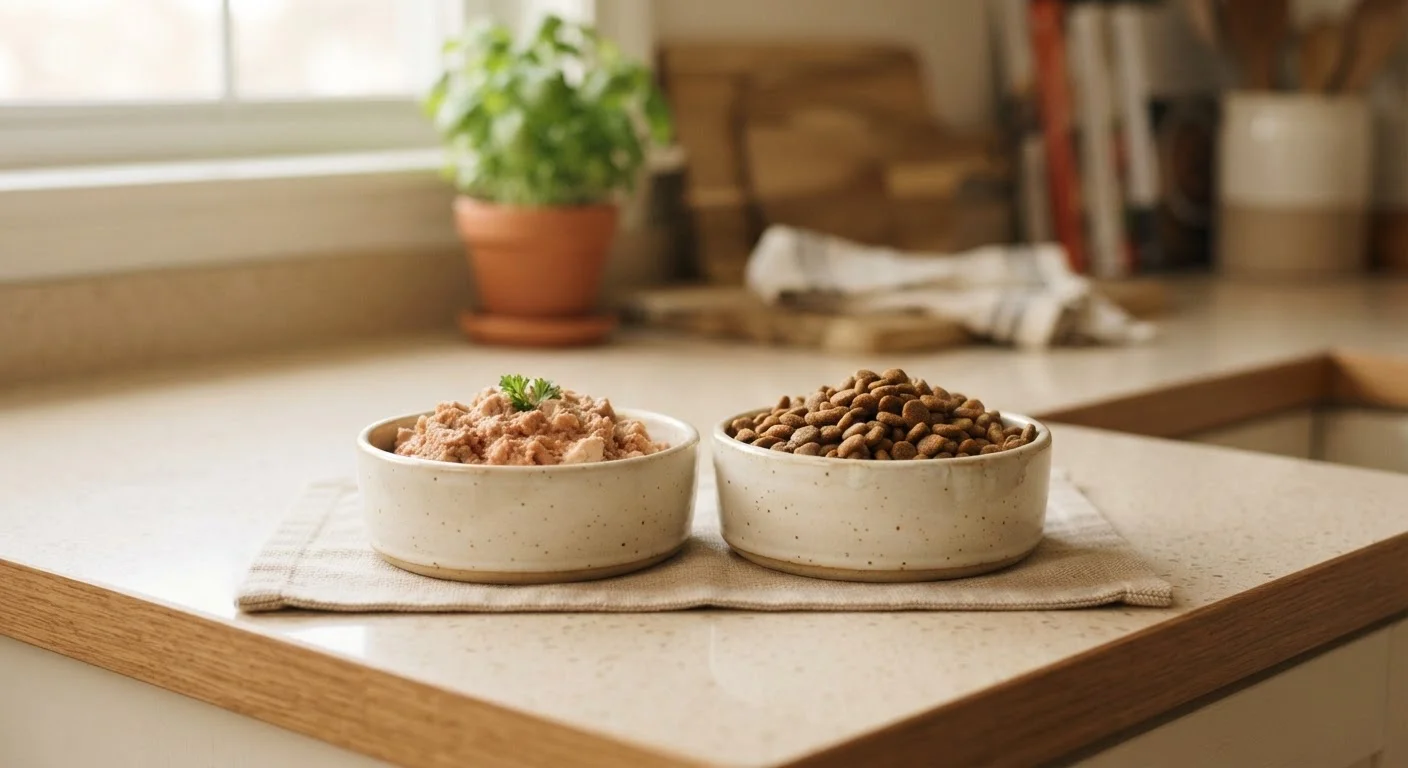
Option A
Wet Cat Food
The moisture-rich, protein-forward option.
Best for: Cats that need extra hydration, seniors, picky eaters, or cats prone to urinary tract issues.
Option B
Dry Cat Food
The convenient, shelf-stable everyday staple.
Best for: Families seeking affordable, easy-to-store food that works well for free-feeding or multi-cat households.
Why the Food Format Actually Matters
When it comes to feeding your cat, the choice between wet and dry food isn't just a matter of preference — it can meaningfully influence your cat's hydration, weight, dental health, and long-term wellbeing. Cats are obligate carnivores, meaning they rely almost entirely on animal-based protein for essential nutrients. Both wet and dry food can be formulated to meet those needs, but the way they do so differs in some important ways.
The most significant difference is moisture content. Wet food typically contains 70–80% water, closely mimicking the moisture cats would get from eating prey in the wild. Dry food, by contrast, contains only about 10% moisture. Because cats evolved with a low thirst drive — historically getting most of their water from food — this gap can matter more than many owners realize.
It's also worth noting that not all formulas within each category are equal. Reading the ingredient list and looking for AAFCO nutritional adequacy statements can help you verify that any food you choose is complete and balanced for your cat's life stage. For a deeper look at common misconceptions around cat nutrition, see our article on cat nutrition myths.
| Criterion | Wet Cat Food | Dry Cat Food |
|---|---|---|
| Moisture content | 70–80% | ~10% |
| Typical cost per serving | Higher | Lower |
| Shelf life (once opened) | 24–48 hours refrigerated | Weeks in sealed container |
| Calorie density | Lower per gram | Higher per gram |
| Suitability for free-feeding | Not recommended | Common and practical |
| Palatability for picky eaters | Generally higher | Variable |
| Support for urinary health | Strong (high moisture) | Limited without extra water intake |
| Works with automatic feeders | Specialized feeders only | Yes, widely compatible |
Health Considerations That Should Influence Your Choice
For many families, a cat's specific health profile is the deciding factor. Cats prone to urinary tract infections, bladder crystals, or chronic kidney disease often benefit from the extra hydration wet food provides. Veterinary nutritionists frequently recommend increasing dietary water intake as a supportive measure for these conditions — though any dietary change for a cat with a diagnosed condition should always be guided by your vet.
Weight management is another consideration. Dry food is calorie-dense, and free-feeding (leaving food out all day) can make it easy for cats to overeat. Measured wet food portions, on the other hand, tend to be more filling relative to calories, which may help weight-prone cats feel satisfied with less. However, improperly portioned wet food can also lead to overfeeding, so the format alone isn't a magic solution.
Dental health is sometimes cited as a reason to favor dry kibble, with the idea that the crunch helps scrape tartar. Research on this is mixed, and many dental veterinarians note that specialized dental diets or regular tooth brushing are more reliably effective than standard dry food. If dental health is a concern for your cat, speak with your veterinarian about targeted approaches.
70–80%
Moisture content in wet cat food
Compared to roughly 10% in dry kibble, this difference closely mirrors the water content of prey animals cats would eat in the wild.
~60%
Of cats may not drink enough water
Veterinary nutrition literature consistently notes that many cats have a low drive to seek out water, making dietary moisture especially important for urinary and kidney health.
2–3x
Cost difference per calorie (wet vs. dry)
Wet food generally costs more per calorie than dry food, though exact figures vary by formula, packaging size, and region.
Cost, Convenience, and Practical Family Life
For busy American families, day-to-day practicality matters. Dry food has a clear edge in convenience: it keeps fresh in the bowl for hours, stores easily in a sealed container, and works well with automatic feeders. It's also generally less expensive per serving, which adds up meaningfully over months and years.
Wet food requires a bit more management. Once opened, canned food should be refrigerated and used within 24–48 hours. Some cats refuse cold food straight from the fridge, which means a short warming step before serving. These aren't dealbreakers, but they're worth factoring in if your household runs on a tight schedule.
A mixed feeding approach — sometimes called "combination feeding" — can offer the best of both formats. Many families offer a wet food meal once or twice a day for hydration and palatability, supplemented by a measured portion of dry food. This can keep costs manageable while still improving moisture intake. If you're weighing pet food costs alongside other household expenses, our family budgeting hub has tools to help you think through monthly spending more broadly.
Transitioning Between Food Types
If you decide to shift your cat's diet — whether adding wet food to a dry-food routine or vice versa — do so gradually over 7–10 days. Abrupt changes can cause digestive upset, including vomiting or loose stools. Mix increasing proportions of the new food with decreasing proportions of the old food until the transition is complete. If your cat refuses the new food or shows signs of GI distress, consult your veterinarian.
The right balance also depends on how many cats you're feeding. Multi-cat households often find dry food easier to manage, while a single cat may adapt happily to primarily wet feeding. Curious about the dynamics of adding another feline to the mix? Our guide on one cat or two walks through the key considerations.
This article provides general information about cat nutrition and is not a substitute for personalized veterinary advice. Always consult a licensed veterinarian before making significant changes to your cat's diet, especially if your cat has an existing health condition.
The content provided on our blog site traverses numerous categories, offering readers valuable and practical information. Readers can use the editorial team’s research and data to gain more insights into their topics of interest. However, they are requested not to treat the articles as conclusive. The website team cannot be held responsible for differences in data or inaccuracies found across other platforms. Please also note that the site might also miss out on various schemes and offers available that the readers may find more beneficial than the ones we cover.