

Our Verdict
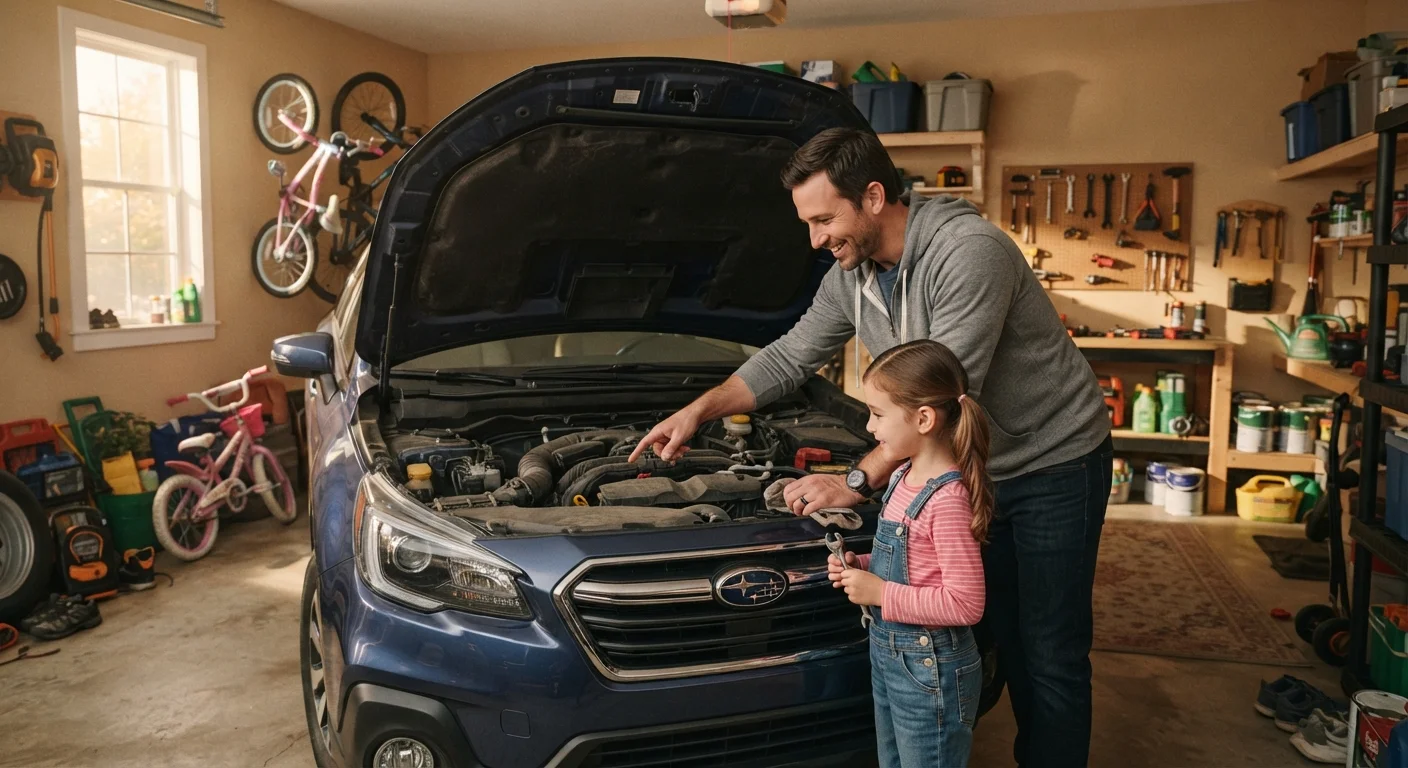
For most families, a handful of low-risk tasks - air filters, wiper blades, cabin filters, and fluid top-offs - are genuinely manageable at home with minimal tools. Anything that affects braking, steering, or fuel delivery is best left to a qualified mechanic. The goal isn't to do everything yourself; it's to know confidently where your limits are.
| Best for | Recommended |
|---|---|
| Families comfortable with basic tools and following instructions | DIY for low-risk tasks |
| Safety-critical systems like brakes, suspension, or fuel lines | Professional shop |
| Those working within strict time or cost constraints | DIY for simple consumables, shop for everything else |
| Newer vehicles with complex electronics or advanced driver-assistance systems | Professional shop |
Why the DIY-vs-Shop Decision Matters for Families
Car ownership is one of the larger ongoing expenses a family carries, and maintenance costs add up fast. It's tempting to handle as much as possible at home to save money - and in some cases, that's entirely reasonable. In others, a well-meaning attempt can create a safety hazard or a more expensive repair down the road.
The honest answer isn't "always use a shop" or "DIY everything." It's about matching the task's complexity and risk level to your actual skill set and tools. For a fuller grounding in routine upkeep, this plain-language maintenance guide is a good starting point. This article focuses specifically on where the line between safe DIY and professional work typically falls.
Tasks That Are Generally Safe to Handle at Home
These jobs share a few things in common: they don't require lifting the vehicle off the ground, they don't touch safety-critical systems, and clear instructions are easy to find in your owner's manual or vehicle-specific resources.
- Engine air filter replacement: Usually a matter of unclipping a housing, pulling the old filter, and dropping in a new one. No tools required on most vehicles.
- Cabin air filter replacement: Typically located behind the glove box. Straightforward on most modern vehicles and takes under 15 minutes.
- Windshield wiper blades: Packaging usually includes model-specific instructions. A common task even for first-timers.
- Checking and topping off fluids: Windshield washer fluid, coolant reservoir (when the engine is cold), and power steering fluid are low-risk checks described in every owner's manual.
- Battery terminal cleaning: Corroded terminals can cause starting problems. Disconnecting and cleaning with a wire brush is manageable, though you should understand the correct disconnect sequence for your vehicle first.
Check Your Owner's Manual First
Even simple tasks can vary significantly between makes and models. Always cross-reference your owner's manual before starting - what takes five minutes on one vehicle may require partial disassembly on another. Vehicle-specific owner forums are also a reliable resource for real-world guidance on your exact trim level.
Even simple tasks can vary significantly between makes and models. Always cross-reference your owner's manual before starting - what takes five minutes on one vehicle may require partial disassembly on another.
Tasks That Belong at a Professional Shop
These jobs either involve your vehicle's safety systems, require specialized tools or training, or carry a real risk of injury or vehicle damage if done incorrectly.
- Brake pad and rotor replacement: Brakes are the single most safety-critical system on your vehicle. Improper reassembly can lead to brake failure. This is not a task to learn on the job.
- Suspension and steering components: Control arms, ball joints, tie rods, and wheel bearings affect how your car handles and stops. They require precise torque specifications and alignment afterward.
- Timing belt or timing chain service: Getting this wrong can cause catastrophic engine damage. The cost of a shop visit is far less than an engine replacement.
- Fuel system work: Fuel lines, fuel injectors, and fuel pumps involve flammable materials under pressure. This is work for a trained technician with proper equipment.
- Electrical diagnostics and repairs: Modern vehicles have complex, interconnected electrical systems. Incorrect repairs can disable safety features - including airbags.
Don't Gamble with Safety-Critical Systems
Skipping professional service on brakes, steering, or suspension isn't just a financial risk - it's a safety risk for everyone in your vehicle and on the road. If you're unsure whether a repair falls into this category, get a professional assessment before attempting anything. The cost of a diagnostic visit is small compared to the cost of a mistake.
Skipping professional service on safety-critical systems isn't just a financial risk - it's a safety risk for everyone in your vehicle and on the road. If you're unsure whether a repair falls into this category, err on the side of caution and get a professional assessment first.
How to Compare the Real Costs
| Task | DIY-Friendly? | Tools Needed | Risk If Done Wrong | Typical Shop Cost | |
|---|---|---|---|---|---|
| Engine air filter | Yes | None or basic | Low - reduced engine efficiency | $20-$40 labor | |
| Wiper blades | Yes | None | Very low - poor visibility | $15-$30 labor | |
| Cabin air filter | Yes | None or basic | Low - reduced HVAC airflow | $20-$50 labor | |
| Brake pads/rotors | No | Specialty tools required | High - brake failure risk | $150-$400 per axle | |
| Timing belt service | No | Extensive specialty tools | Very high - engine damage | $500-$1,000+ | |
| Fluid top-offs | Yes | None | Low if correct fluid used | $10-$20 per fluid | |
| Suspension components | No | Specialty tools + alignment | High - handling failure | $200-$600+ |
When weighing whether to DIY or use a shop, factor in tool costs, your time, and the consequence of getting it wrong. A $30 shop visit for a wiper blade swap isn't worth it. A $400 brake job done incorrectly can cost thousands - or worse. Minor neglect often leads to major repair bills, so staying current on any task - whether DIY or professional - is always money well spent.
If you want to build a realistic schedule around these decisions, this family-friendly car care routine guide offers practical scheduling strategies. And if you're questioning conventional wisdom - like whether you really need to change your oil every 3,000 miles - this look at common car maintenance myths is worth a read.
The content provided on our blog site traverses numerous categories, offering readers valuable and practical information. Readers can use the editorial team’s research and data to gain more insights into their topics of interest. However, they are requested not to treat the articles as conclusive. The website team cannot be held responsible for differences in data or inaccuracies found across other platforms. Please also note that the site might also miss out on various schemes and offers available that the readers may find more beneficial than the ones we cover.