

The Hidden Cost of 'I'll Deal With It Later'
Most major car repair bills don't arrive out of nowhere. They're the result of small maintenance tasks that got postponed week after week until the damage became unavoidable. The pattern is predictable: a $15 oil top-up becomes a $4,000 engine repair; a $12 pair of wiper blades gets skipped until poor visibility contributes to a collision.
For families managing tight schedules and tighter budgets, this is worth understanding clearly - not to cause alarm, but because the math strongly favors staying ahead of routine maintenance. As the real costs of skipped maintenance show, the savings from deferring a small task rarely offset the repair bill it eventually generates.
$1,200+
Average unplanned car repair cost per incident
According to data from AAA, American drivers face average unplanned repair bills exceeding $1,200 - costs that routine maintenance often prevents.
35%
Of breakdowns linked to neglected maintenance
AAA research has found that a significant portion of roadside breakdowns involve vehicles with maintenance that was overdue at the time of failure.
$80-$150
Typical annual cost of basic routine maintenance
Oil changes, air filters, and wiper blades combined cost most families under $150 per year - a fraction of what deferred maintenance can generate in repair bills.
The Most Costly Maintenance Mistakes - and How to Avoid Them
The mistakes below are the ones mechanics see most often when a vehicle arrives with serious damage that could have been prevented. None of them require mechanical expertise to avoid - just awareness and a basic schedule.
Going too long between oil changes, or ignoring the oil warning light.
Why it happens: Modern life is busy, and oil changes feel easy to push back 'just a little longer.' Many drivers also assume the oil light is a non-urgent reminder rather than an emergency signal.
Ignoring the coolant level until the engine overheats.
Why it happens: Coolant - the fluid that regulates engine temperature - sits out of sight, so it's easy to forget. Drivers often only discover a problem when the temperature gauge spikes or steam appears.
Leaving worn wiper blades on the car past the point of effectiveness.
Why it happens: Wipers degrade gradually, so drivers adjust unconsciously to streaking or smearing until heavy rain makes the problem dangerous.
Skipping tire rotations and pressure checks.
Why it happens: Tire maintenance feels abstract - the car still drives, so nothing seems wrong. Uneven wear develops slowly and isn't obvious until a tire fails or steering feels off.
Never replacing the cabin or engine air filter.
Why it happens: Filters are invisible during normal driving, and clogged filters degrade performance so gradually that the change is barely perceptible until it's significant.
Engine Damage from Oil Neglect Is Often Irreversible
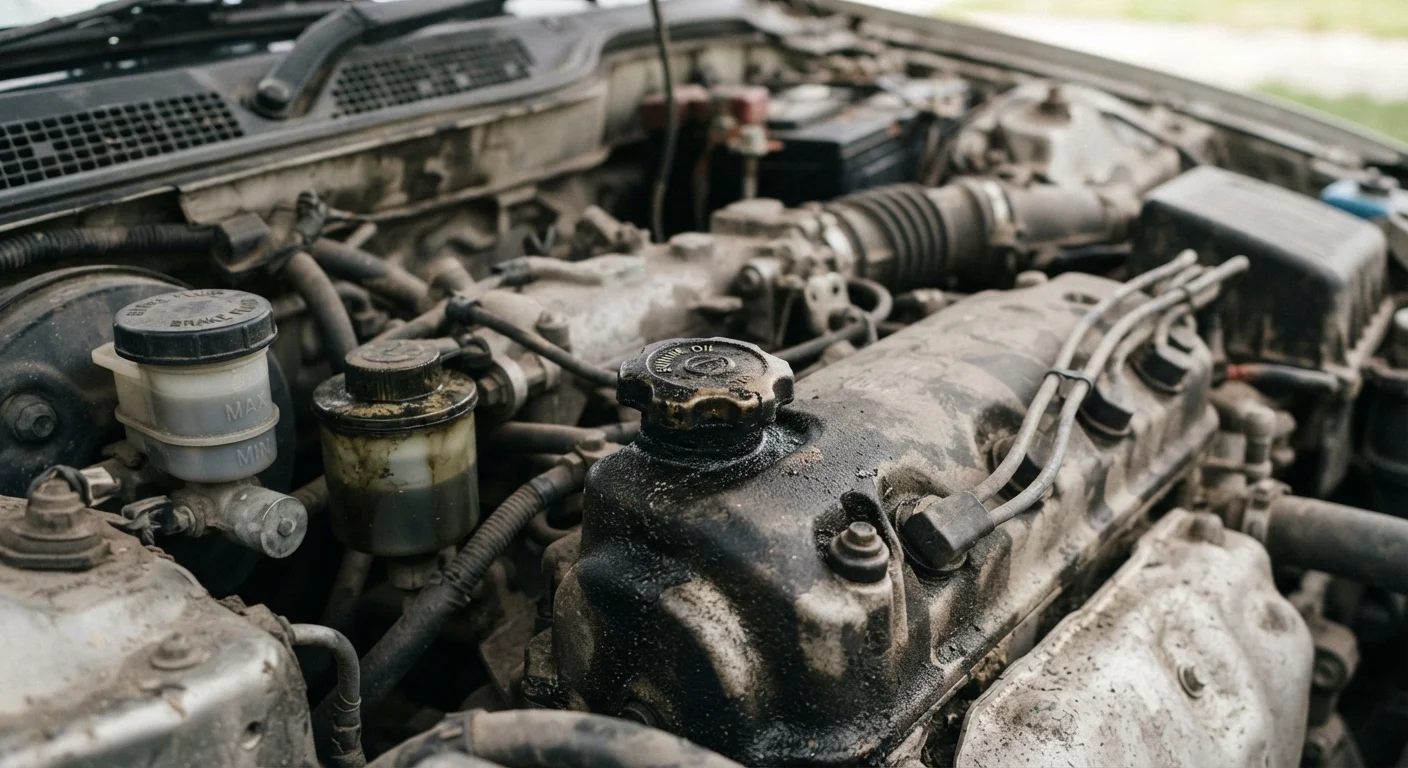
Running an engine on degraded or low oil doesn't just cause wear - it can seize internal components entirely, resulting in repair bills that rival the value of the vehicle itself. Once metal-on-metal damage occurs inside the engine, no oil change can reverse it. If your oil light comes on, stop driving and check the level immediately rather than waiting for your next service appointment.
If you're unsure where to start building better habits, this plain-language maintenance guide walks through every foundational habit in plain terms, even for drivers with zero mechanical background.
Making Maintenance a Habit Instead of a Crisis
The simplest way to avoid large repair bills is to stop treating maintenance as something you do when something goes wrong. A brief monthly check of fluid levels, tire pressure, and visible wear takes under ten minutes and catches the majority of issues before they escalate.
Keeping a basic log of your service history is also more valuable than most drivers realize. It tells you exactly when each task was last done, helps mechanics diagnose problems faster, and protects resale value. See how to start a car maintenance log for a practical approach that takes minutes to set up.
For families with demanding schedules, building a car care routine that fits real life offers scheduling strategies that make upkeep manageable without adding stress. And if you want to understand the mechanical chain reaction that unfolds when maintenance slips, what happens inside your engine when maintenance is overdue explains it clearly without jargon.
Your vehicle is likely one of the largest investments your family owns. A few dollars and minutes spent consistently now is almost always cheaper - and far less disruptive - than the alternative.
The content provided on our blog site traverses numerous categories, offering readers valuable and practical information. Readers can use the editorial team’s research and data to gain more insights into their topics of interest. However, they are requested not to treat the articles as conclusive. The website team cannot be held responsible for differences in data or inaccuracies found across other platforms. Please also note that the site might also miss out on various schemes and offers available that the readers may find more beneficial than the ones we cover.