

Oil Degradation: From Lubricant to Liquid Sandpaper
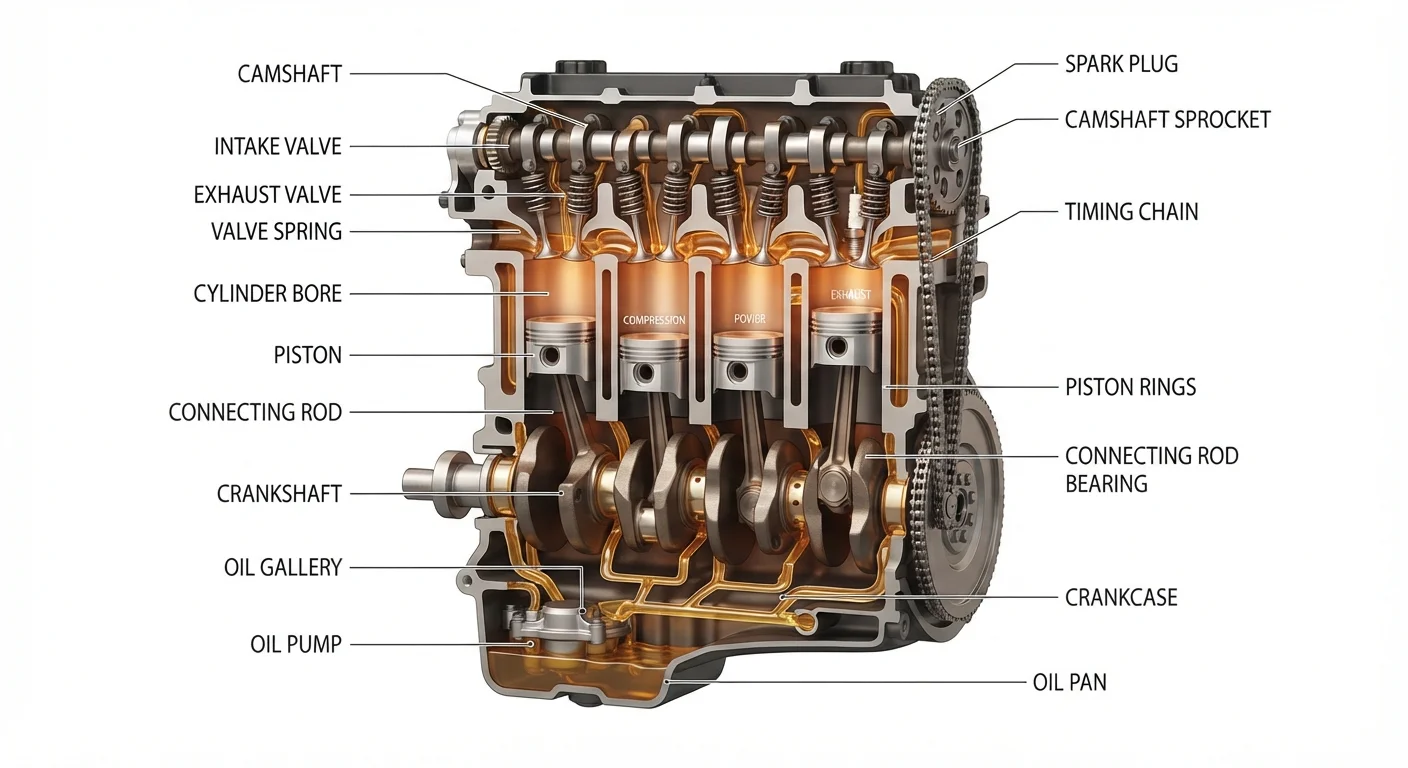
Fresh motor oil does two critical jobs: it forms a thin film between metal surfaces so they never actually touch, and it carries heat and microscopic debris away from those surfaces. As miles accumulate, the oil's additive package - the chemistry that keeps it stable - breaks down. The oil thickens, oxidizes, and begins holding contaminants instead of flushing them away.
At that point, every piston stroke and camshaft rotation forces metal against metal through an increasingly abrasive slurry. The damage is microscopic at first - tiny grooves on bearing surfaces and cylinder walls - but it's cumulative and irreversible. This is why the type of oil in your engine matters: different formulations degrade at different rates under different conditions.
Check Your Oil the Right Way
Pull the dipstick when the engine is warm but turned off for a few minutes. Wipe it clean, reinsert fully, then withdraw it again. Healthy oil is amber-colored and translucent. Black, gritty, or milky oil - or a level below the minimum mark - means it's time to see a mechanic. This 60-second check can catch problems long before they become expensive.
What Happens When the Oil Filter Clogs
Your oil filter catches the metal particles, soot, and combustion byproducts that contaminated oil carries. When it's overdue for replacement, the filter medium becomes so saturated it can no longer pass oil through efficiently. Most engines respond by opening a pressure-relief bypass valve - a safety mechanism that keeps oil moving even through a blocked filter.
The trade-off: that oil is now completely unfiltered. Every particle the filter was supposed to catch flows freely to the crankshaft bearings, camshaft journals, and timing components. Think of it as removing the screen from a swimming pool pump and letting the debris circulate. Many families don't realize the filter is as important as the oil itself - but skipping it carries the same risk.
~$4,000+
Average engine repair cost from oil-related failure
Industry repair data consistently shows that sludge-related engine damage and bearing failures - both linked to neglected oil changes - rank among the most expensive non-collision repairs a family vehicle can require.
Up to 40%
Engine wear increase with degraded oil
Engineering studies on engine lubrication indicate that heavily oxidized oil can generate significantly more friction-related wear on bearing surfaces compared to fresh oil operating within its service life.
The Cooling System: When Low Coolant Gets Dangerous
Coolant (also called antifreeze) absorbs heat from the engine block and cylinder head, then releases it through the radiator. When the level drops - due to a slow leak, a failing hose, or simply evaporation over time - the system loses capacity. The engine doesn't overheat uniformly; it develops hot spots, particularly around the combustion chambers.
Sustained hot spots can warp an aluminum cylinder head - the component that seals the combustion chamber and oil passages. A warped head allows coolant and oil to mix, destroying lubrication throughout the engine. Head gasket and cylinder head repairs can run into thousands of dollars, often exceeding the value of older vehicles. The coolant system is one of the foundational checks every family driver should understand.
How Small Problems Become Major Failures
Engine damage from deferred maintenance rarely announces itself dramatically. It accumulates. Slightly worn bearings create a faint knock. Mild oil sludge restricts a narrow oil passage. A marginal coolant level holds fine on a cool day but fails on a summer highway. Each small degradation narrows the margin of safety until a triggering event - an extra-long commute, a hot day, a heavy load - tips the system over the edge.
By the time a warning light illuminates or a noise becomes undeniable, the internal damage is usually well established. That's the central lesson of deferred maintenance: the costs aren't just financial. They compound silently. Understanding which maintenance beliefs are actually myths - and which ones are grounded in how engines actually work - is what separates reactive repairs from confident, preventive ownership.
Your Owner's Manual Is the Final Word
Service interval recommendations vary significantly by vehicle make, model, engine type, and oil specification. The intervals printed in your owner's manual - not general rules of thumb - are what your engine was engineered around. If you've lost your manual, most manufacturers make digital versions available on their websites. When in doubt, a qualified mechanic can advise based on your specific vehicle and driving habits.
Frequently Asked Questions
There's no universal answer - it depends on your engine, oil type, and driving conditions. Damage doesn't happen instantly, but oil begins losing its protective qualities well before it looks visibly dirty. Your vehicle's owner's manual and oil-life monitor are the most reliable guides.
Common early signs include a louder-than-normal engine, a knocking or ticking sound at idle, the oil pressure warning light, or dark, gritty oil on the dipstick. If you notice any of these, have the vehicle inspected by a qualified mechanic promptly.
A single missed change rarely causes immediate catastrophic failure, but it can accelerate wear - especially in engines that run hot or work hard (towing, stop-and-go traffic). The risk compounds with each consecutive delay.
Not immediately, but low coolant reduces the system's ability to absorb and transfer heat. Over time - or under heavy load - this leads to localized hot spots that can warp metal components. Coolant level and condition should be checked at every oil change.
Synthetic oils do resist thermal breakdown longer than conventional oils, but they still degrade and eventually lose their protective additives. Extended intervals are only appropriate when your vehicle's manufacturer specifically supports them.
The content provided on our blog site traverses numerous categories, offering readers valuable and practical information. Readers can use the editorial team’s research and data to gain more insights into their topics of interest. However, they are requested not to treat the articles as conclusive. The website team cannot be held responsible for differences in data or inaccuracies found across other platforms. Please also note that the site might also miss out on various schemes and offers available that the readers may find more beneficial than the ones we cover.