

Summary
22 items · 30-60 minutes per seasonal check
Why Seasonal Checkups Matter for Family Vehicles
Weather doesn't just affect how you drive - it directly stresses your vehicle's mechanical systems. Extreme cold thickens engine oil and shrinks tire pressure; summer heat accelerates fluid breakdown and puts extra load on cooling systems. By inspecting your car four times a year - once before each season - you catch small issues before they become expensive failures at the worst possible moment.
This checklist is designed for everyday family drivers, not professional mechanics. Most items here require nothing more than your eyes, a flashlight, and five minutes per check. For anything beyond a visual inspection, a trusted mechanic is your best resource. For a broader view of maintenance timing and intervals, see our year-round car maintenance roadmap.
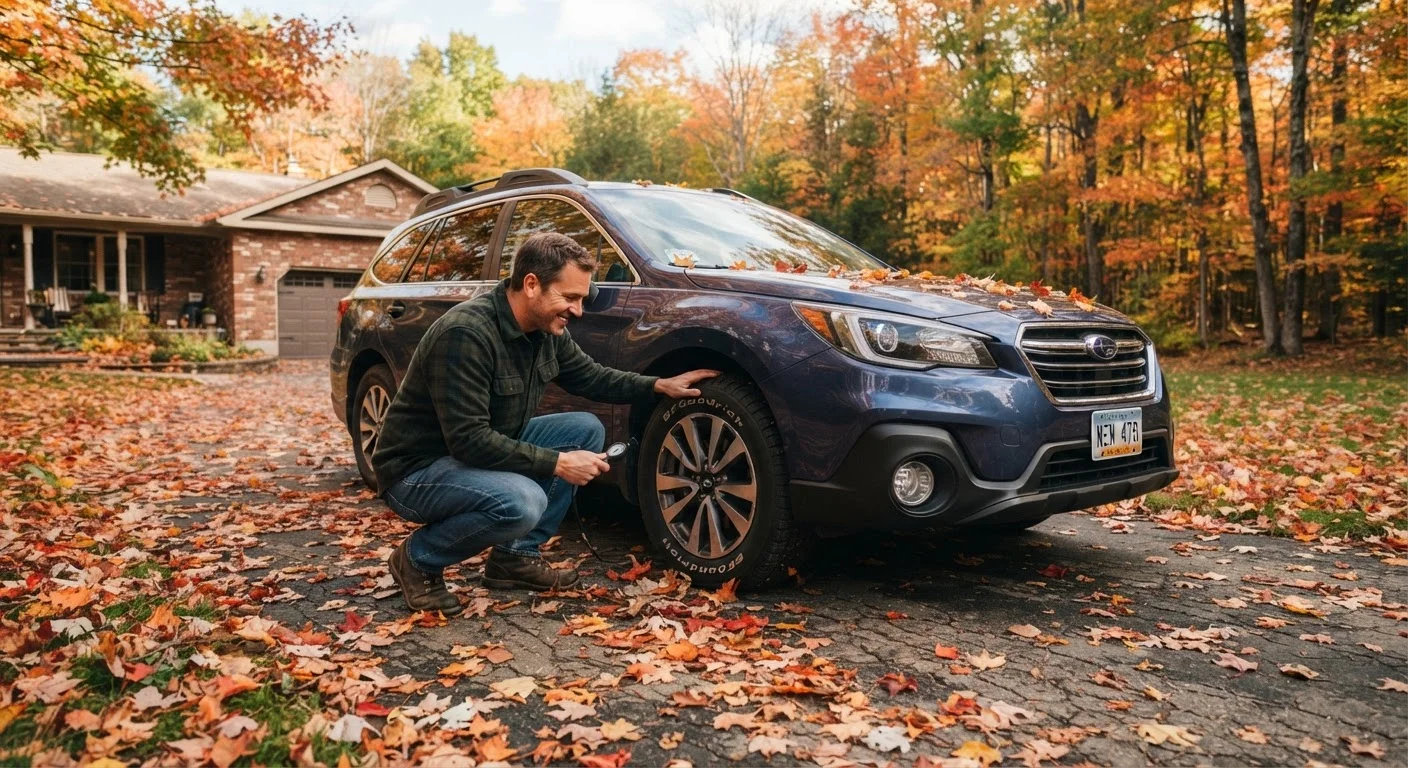
Tire pressure gauge
Measures air pressure in each tire so you can compare it against the manufacturer's specification.
Flashlight or headlamp
Illuminates dark areas under the hood and around tires for a thorough visual inspection.
Coin (quarter and penny)
Used for quick tread-depth checks - the coin test is a reliable visual indicator of dangerous wear.
Clean rag or paper towels
Needed for reading the oil dipstick accurately and wiping fluid caps before opening.
Mechanic or service shop
Required for brake inspections, battery load tests, and any repair that goes beyond a visual check.
The Four-Season Inspection Checklist
Work through these groups in order. Items marked must are non-negotiable safety checks. Items marked should are strongly recommended. Nice-to-have items round out a thorough inspection when you have extra time.
Tires
Fluids
Brakes and Steering
Battery and Electrical
Belts, Hoses, and Wipers
Emergency Kit and Interior Readiness
Don't Skip the Brake Check Before Winter
Cold weather reduces braking efficiency on its own, so worn pads or low fluid entering winter creates a compounding risk. If you hear grinding, feel a pulsing pedal, or notice the car pulling to one side during braking, stop driving and have a qualified mechanic inspect the system before your next trip. This is not a wait-and-see situation.
Understanding how weather affects vehicle behavior goes hand in hand with this checklist. Our article on how weather forecasts should change how you drive explains what to expect once you're on the road.
Season-by-Season Focus Areas
Before Winter
Cold weather is hardest on batteries, tires, and fluids. Check battery terminals for corrosion (a white or bluish crust), confirm tire tread depth is at least 2/32" (a quarter inserted upside-down is a quick test - if you can see the top of Washington's head, tread is dangerously low), and make sure your antifreeze/coolant mixture is rated for your region's lowest expected temperature.
Before Spring
Winter is rough on brakes and suspension. Look for uneven tire wear, listen for grinding or squealing when braking, and check that wiper blades survived ice scraping. Spring is also a good time to flush windshield washer fluid and refill with a warm-weather formula.
Before Summer
Heat stresses your cooling system and can cause tires to over-inflate. Check coolant levels, inspect belts and hoses for cracking or fraying, and reduce tire pressure if it climbed beyond the manufacturer's recommended range (found on the sticker inside the driver's door jamb - not the sidewall of the tire).
Before Fall
Fall is your last chance to prepare before temperatures drop sharply. Test all exterior lights (shorter days mean more darkness), confirm your emergency kit has fresh supplies, and consider whether your tires are adequate for potential early-season snow in your region.
When to Call a Mechanic Instead of DIY
This checklist covers visual and basic hands-on checks that any careful driver can do safely. However, brake system repairs, electrical diagnosis, belt replacement, and cooling system flushes involve safety-critical components and should be handled by a licensed mechanic. If anything you find during this inspection is outside your comfort level to assess, err on the side of caution and book a professional inspection. The cost of a shop visit is almost always less than a roadside breakdown or a collision caused by a preventable failure.
If you're heading into a road trip right after a seasonal check, pair this inspection with our family vehicle road trip safety walkthrough for a complete pre-departure routine.
The content provided on our blog site traverses numerous categories, offering readers valuable and practical information. Readers can use the editorial team’s research and data to gain more insights into their topics of interest. However, they are requested not to treat the articles as conclusive. The website team cannot be held responsible for differences in data or inaccuracies found across other platforms. Please also note that the site might also miss out on various schemes and offers available that the readers may find more beneficial than the ones we cover.