

Why the Forecast Belongs in Your Pre-Drive Routine
Most drivers check the weather to decide what to wear. Fewer use it to decide how to drive - and that gap has real consequences. Road conditions shift significantly with temperature, precipitation, and visibility, and those shifts affect braking distance, tire grip, and the way your car responds to steering inputs.
Weather forecasts have become accurate enough over short windows that a quick check before a family road trip or even a routine commute can meaningfully reduce risk. The goal isn't to cancel every rainy errand; it's to go in prepared rather than surprised.
The following factors are the ones that most consistently demand a change in how you operate your vehicle. Understanding what each one does to road physics - and to your car - is the first step toward adjusting confidently rather than reacting too late. For a broader look at getting your vehicle ready before seasonal weather arrives, see our seasonal car checkup guide.
Rain: Stopping Distance Grows Faster Than You'd Expect
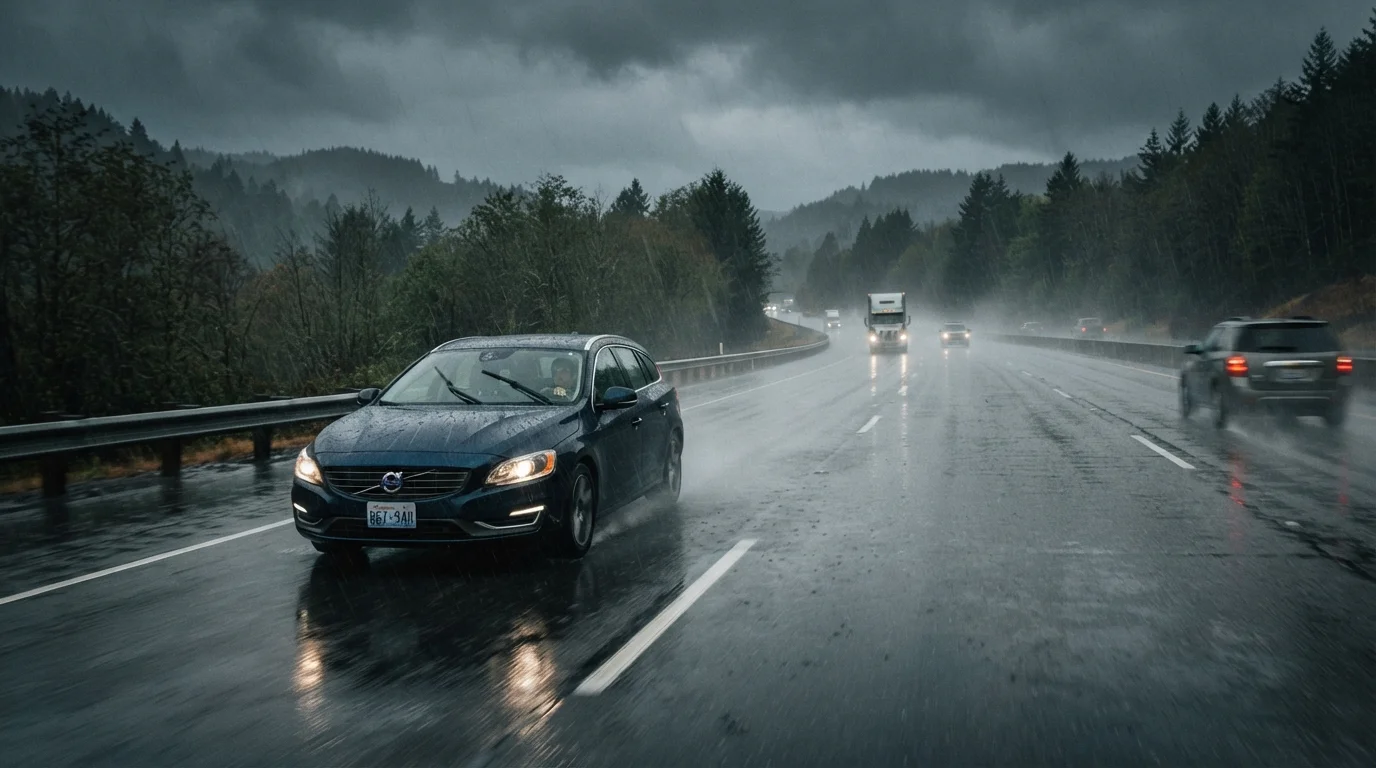
Water on the road reduces tire-to-pavement friction, which extends stopping distances considerably. On wet pavement, stopping distances can roughly double compared to dry conditions at the same speed - meaning the gap you'd normally leave between your car and the one ahead isn't enough anymore.
The practical adjustment is to increase your following distance and reduce speed - particularly on the first rain after a dry spell, when oil and rubber residue on the road surface create a particularly slick layer before it washes away. Using low-beam headlights in rain improves both your visibility and how visible you are to other drivers, and is required by law in many states.
Hydroplaning - when a tire rides on a film of water rather than the road surface - is a real risk above roughly 35 mph in standing water. If it happens, ease off the accelerator smoothly without braking hard or steering sharply.
On wet pavement, stopping distances can roughly double - the gap you normally leave isn't enough.
Fog: Visibility Collapses in Ways Speed Doesn't Account For
Fog reduces how far ahead you can see, which means your stopping distance can easily exceed your sight distance if you're traveling at normal speeds. This is sometimes called "overdriving your headlights" - and in dense fog, it's a critical hazard even at moderate speeds.
Use low-beam headlights in fog, not high beams - high beams reflect off the moisture and reduce visibility further. If your vehicle has dedicated fog lights, use them. Slow down enough that you could stop within the distance you can actually see. Avoid the temptation to follow the taillights of the car ahead too closely; it creates a false sense of security and reduces your reaction time.
In dense fog, your stopping distance can exceed what you can actually see ahead - slow down accordingly.
Wind: Crosswinds Affect High-Profile Vehicles Most
Strong crosswinds create lateral force on vehicles, and the effect is most pronounced on SUVs, minivans, trucks, and vehicles with roof cargo carriers or trailers. Even sedans can be pushed out of lane position in gusts above 40-50 mph, particularly on open highways or bridges.
In high-wind conditions, reduce speed and increase your grip on the wheel with both hands. Be especially alert when passing large trucks or emerging from highway overpasses, where wind shielding changes suddenly. If you're towing anything - a camper, a boat trailer - wind handling becomes significantly more demanding, and your safe speed threshold drops further.
SUVs and minivans are especially vulnerable to crosswinds - both hands on the wheel, slow down on open roads.
Ice and Snow: The Rule Is Earlier Everything
Ice dramatically reduces friction - to a fraction of what dry pavement provides. Even at low speeds, braking distances on ice extend far beyond what most drivers anticipate. Black ice, which forms invisibly on road surfaces when temperatures hover near freezing, is especially dangerous because it offers no visual warning.
The core adjustment for any icy or snowy condition is to do everything earlier: brake earlier, steer earlier, accelerate more gradually. Four-wheel drive helps you get moving but does not improve your ability to stop - a common and dangerous misconception. Bridges and overpasses freeze before road surfaces because cold air circulates underneath them, so slow down before you reach them, not on them. For more on how surface conditions change your traction, our guide on wet roads, black ice, and gravel goes deeper.
Four-wheel drive helps you get moving on ice, but it does nothing to improve your stopping distance.
Extreme Heat: The Threat Is Under Your Car, Not Around It
High ambient temperatures stress vehicle components in ways that aren't obvious until something fails. Tire pressure increases as air inside heats up - but tires already underinflated before a hot day can reach dangerous stress levels on highway driving. The National Highway Traffic Safety Administration links underinflated tires to a significantly elevated risk of blowouts.
Brake performance can also degrade under repeated heavy use in high heat - a concern particularly in mountainous terrain. Coolant system failures, which lead to engine overheating, are more common in extreme heat and often trace back to neglected maintenance. Before a summer road trip, checking tire pressure when tires are cold, verifying coolant level, and confirming your brake pads have adequate life remaining are practical steps that take minutes but matter significantly in high temperatures.
Underinflated tires combined with summer heat and highway speeds significantly elevate blowout risk.
Sun Glare: A Visibility Problem That Arrives on Schedule
Low sun angle at sunrise and sunset creates glare that can temporarily blind drivers - and unlike fog or rain, it appears on clear, "perfect" weather days when drivers are least mentally prepared for a visibility challenge. Glare is predictable: it hits worst when the sun is within about 15 degrees of the horizon, which corresponds roughly to the hour after sunrise and before sunset.
Keep a clean windshield (interior smearing amplifies glare significantly), have quality sunglasses accessible, and use your sun visor. In severe glare, reduce speed and increase following distance - you may not be able to see a stopping vehicle, pedestrian, or traffic signal clearly until the geometry shifts. Our guide on driving after dark addresses the related visibility challenges that come with transitioning light conditions at dusk.
Sun glare hits hardest during the hour after sunrise and before sunset - a predictable hazard on otherwise clear days.
Putting the Forecast to Work on Every Drive
None of these adjustments require special skills - they require awareness and a willingness to slow down earlier than feels instinctively necessary. The biggest mistake drivers make in adverse weather is applying dry-road instincts to wet, icy, or low-visibility conditions.
Check Conditions at Your Destination, Too
Weather can vary significantly across even a short drive - especially in areas with elevation changes or proximity to large bodies of water. Before a longer trip, check conditions at your destination and at the midpoint, not just where you're starting. Many weather apps allow you to check conditions along a route, which can reveal fog, rain, or temperature drops you wouldn't otherwise anticipate.
If you're traveling with children, weather-related delays are worth building into your planning from the start. Our guide on realistic drive time with kids covers how to account for those kinds of variables. And for a deeper look at how specific road surfaces - wet asphalt, black ice, loose gravel - change your traction and what to do about it, see our surface-by-surface driving guide.
Weather is one layer of driving risk; fatigue compounds it significantly. If a long drive in difficult conditions is leaving you tired, understanding how fatigue impairs your driving is worth a read before your next trip.
The content provided on our blog site traverses numerous categories, offering readers valuable and practical information. Readers can use the editorial team’s research and data to gain more insights into their topics of interest. However, they are requested not to treat the articles as conclusive. The website team cannot be held responsible for differences in data or inaccuracies found across other platforms. Please also note that the site might also miss out on various schemes and offers available that the readers may find more beneficial than the ones we cover.