

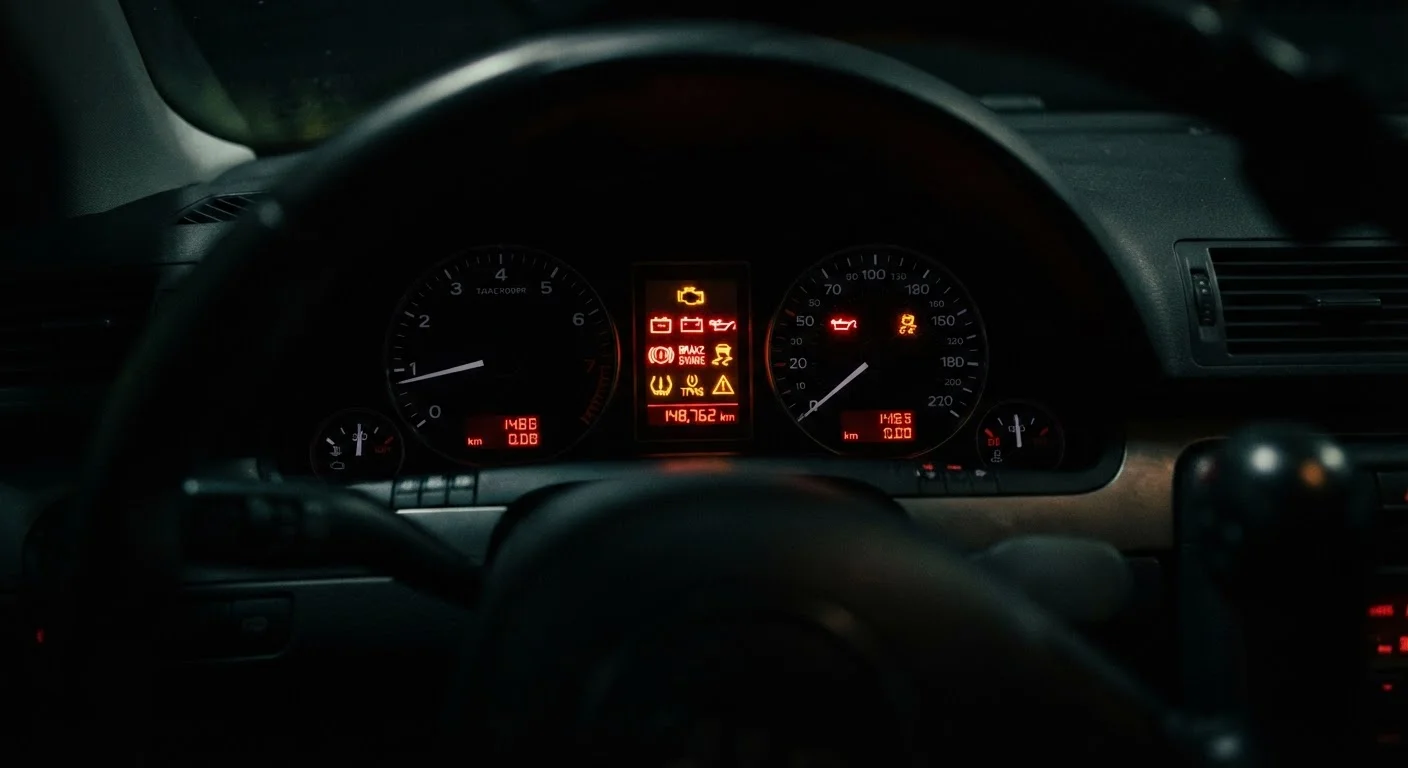
Why Warning Lights Exist - and Why You Shouldn't Ignore Them
Modern vehicles are equipped with an onboard diagnostics system that constantly monitors dozens of sensors. When something falls outside normal operating parameters, that system turns on a dashboard light to alert you. Think of it as your car sending a text message - some are urgent, some are informational, but none should be permanently ignored.
The tricky part is that not all warning lights carry the same level of urgency. Color coding helps: red lights typically signal a serious problem requiring immediate attention, amber or yellow lights indicate a condition that needs attention soon but may not require pulling over right now, and green or blue lights are usually just status indicators (like high beams or turn signals being active).
For a broader picture of vehicle health signals beyond the dashboard, see Signs Your Car Is Trying to Tell You Something Is Wrong.
| Number of sensors monitored | Dozens to hundreds, depending on vehicle (OBD-II standard, introduced in U.S. vehicles from 1996) |
| Red light urgency | Stop driving as soon as safely possible |
| Amber light urgency | Schedule service within days, not weeks |
| Most misunderstood light | Check Engine - can range from minor to serious |
| Owner's manual importance | Definitive reference for your specific vehicle's symbols |
The Most Common Warning Lights Decoded
Here are the lights most drivers encounter, what they mean, and how to respond:
OBD-II
On-Board Diagnostics, second generation - a standardized system used in U.S. vehicles since 1996 that monitors engine and emissions components and stores diagnostic trouble codes when a fault is detected.
TPMS
Tire Pressure Monitoring System - sensors inside each wheel that alert the driver when tire pressure drops significantly below the recommended level.
Diagnostic Trouble Code (DTC)
An alphanumeric code stored by the OBD-II system when a sensor reading falls outside acceptable limits. A mechanic uses a scan tool to read these codes as part of diagnosing a problem.
Charging System
The combination of alternator, battery, and related wiring that keeps your vehicle powered while the engine runs. A failure here means the battery is not being recharged.
Lights That Mean Pull Over Now
- Oil Pressure (red oil can): Oil pressure has dropped dangerously low. Continuing to drive can cause severe engine damage within minutes. Pull over safely, turn off the engine, and call for assistance.
- Engine Temperature (red thermometer in water): The engine is overheating. Turn off the A/C, pull over, and let the engine cool before opening the hood. Never remove a radiator cap on a hot engine.
- Battery (red battery symbol): The charging system has failed. The car is running on battery reserves only and may stall soon. Drive directly to a repair shop if it's close - otherwise pull over safely.
Lights That Need Attention Within Days
- Check Engine (amber engine outline): This is the most misunderstood light on any dashboard. It can signal anything from a loose gas cap to a misfiring cylinder. A flashing check engine light is more urgent than a steady one - a steady light warrants a diagnostic scan soon; a flashing light means pull over and avoid hard acceleration.
- Tire Pressure (TPMS - amber exclamation in tire): One or more tires is significantly underinflated. Check pressures at your next safe stop using a tire gauge. Correct inflation improves handling and fuel economy.
- Traction Control / Stability Control (amber car with skid lines): If this illuminates while driving, it means the system actively intervened. If it stays on, the system may be disabled or malfunctioning - have it inspected.
- Brake System (red BRAKE or exclamation): Could indicate the parking brake is engaged, low brake fluid, or a brake system fault. Check the parking brake first. If that's not the cause, treat it as urgent.
Keeping up with fluid levels is one of the best ways to prevent several of these lights from appearing. Fluid Checks Every Family Driver Should Do Regularly walks you through exactly how to do that safely at home.
What To Do When a Light Comes On
Your first instinct might be to panic - or to assume it'll go away on its own. Neither response serves you well. Here's a practical approach:
- Stay calm and assess the color. Red means act now. Amber means schedule attention soon.
- Check your owner's manual. Every vehicle's dashboard symbols are documented there. The manual is your single most reliable reference for your specific car.
- Don't assume it's trivial. A light that comes on and goes off repeatedly is still communicating a pattern worth investigating.
- Get a diagnostic scan. Auto parts retailers often scan for trouble codes at no charge. This gives a mechanic a useful starting point - though a code alone doesn't replace professional diagnosis.
- Avoid long trips until resolved. If you're planning family travel and a warning light is active, get it checked first. Our pre-trip vehicle safety walkthrough covers what to verify before you leave.
Your Owner's Manual Is the Final Word
Dashboard symbols are not fully standardized across all makes and models. A symbol on a Honda may look different from the same warning on a Ford or Toyota. Your printed or digital owner's manual shows exactly what each light on your specific vehicle means - keep it in your glove compartment or bookmark the digital version on your phone.
This article is for general informational purposes only. Always consult a qualified mechanic for diagnosis and repair decisions specific to your vehicle.
The content provided on our blog site traverses numerous categories, offering readers valuable and practical information. Readers can use the editorial team’s research and data to gain more insights into their topics of interest. However, they are requested not to treat the articles as conclusive. The website team cannot be held responsible for differences in data or inaccuracies found across other platforms. Please also note that the site might also miss out on various schemes and offers available that the readers may find more beneficial than the ones we cover.