

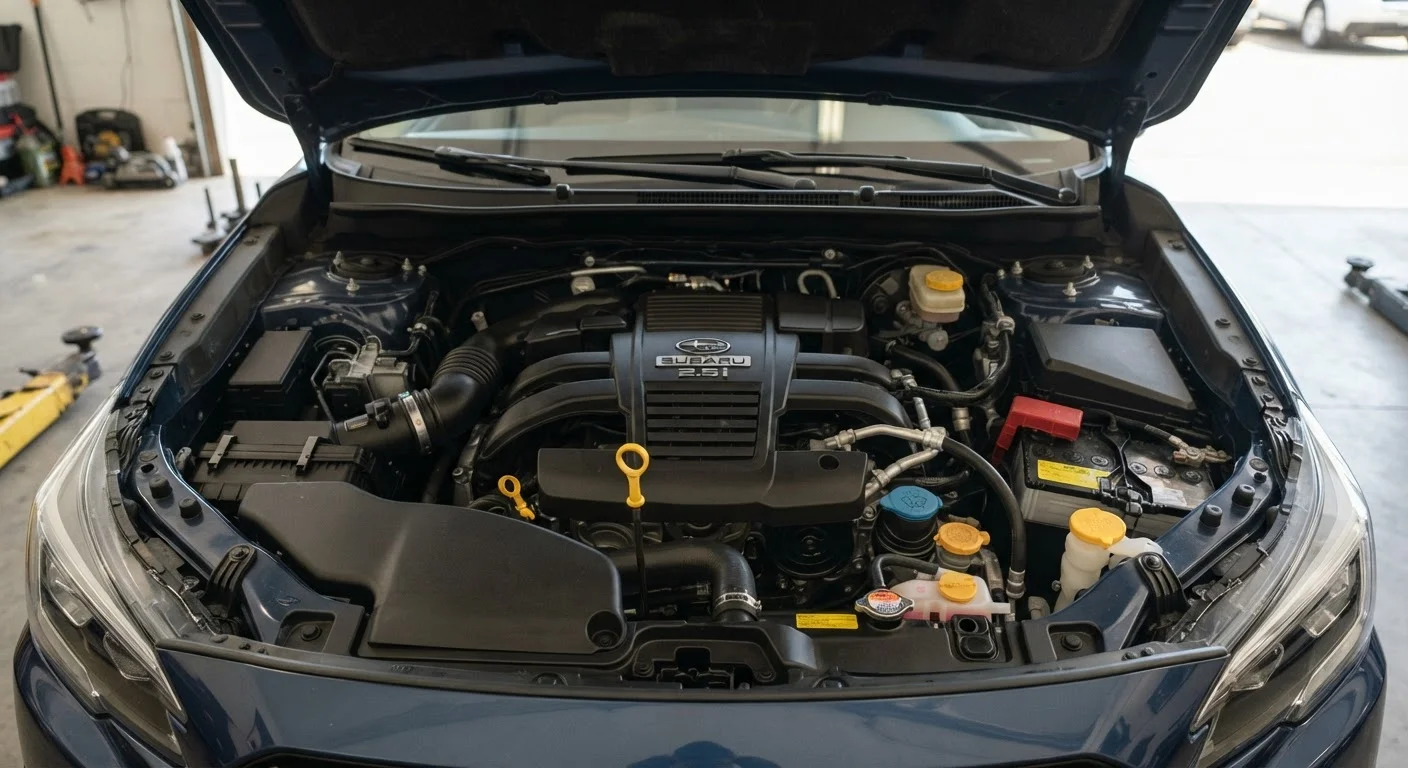
Why Fluid Checks Matter for Your Family Vehicle
Fluids are the lifeblood of your car. They lubricate moving parts, regulate temperature, transfer force, and keep your windshield clear. When any one of them drops too low or degrades past its useful life, the consequences range from minor inconvenience to a roadside breakdown - or worse, a safety risk while your family is on board.
The good news: checking these fluids yourself is genuinely straightforward. You don't need mechanical training, and for the majority of checks, you won't even need any tools beyond a clean rag. This guide walks through the five fluids that matter most, in plain language. For a broader look at keeping your vehicle healthy, see our foundational car maintenance guide.
Clean lint-free rag or paper towels
Used to wipe dipsticks clean before taking a reading and to clean up any spills.
Owner's manual
Identifies the correct fluid types, reservoir locations, and recommended check intervals for your specific vehicle.
Flashlight or phone torch
Helps you see fluid color and level markings clearly inside dark reservoirs.
Nitrile gloves
Protects your hands from engine fluids, some of which are toxic or skin irritants.
If a fluid check ever turns up something that looks wrong - strange color, a sudden drop in level, or an unfamiliar smell - our guide on signs your car is trying to tell you something is wrong can help you interpret what your vehicle is communicating.
What You Need Before You Start
Fluid checks are low-risk when you follow a couple of basic safety rules. Always work on a flat, level surface with the engine off and cooled. Avoid touching any components you can't identify, and never force open a cap that seems stuck.
What you will need
Build a Simple Under-Hood Habit
Pair fluid checks with a recurring task you already do - such as a monthly fill-up. Keeping a clean lint-free rag in your trunk means you're always ready to pull a dipstick or wipe a reservoir cap. Consistency matters more than precision timing.
How often should you check? A general rule is to inspect engine oil monthly and before any long journey. Coolant, brake fluid, and power steering fluid can be checked every three months or at each oil change. Washer fluid can be topped up as needed. Always cross-reference with your owner's manual - interval recommendations vary by vehicle. For a full pre-trip routine, our family vehicle safety walkthrough covers fluids alongside tires, lights, and emergency gear.
Step-by-Step: Checking Each Fluid
Park safely and let the engine cool
Pull onto a flat, level surface - a slight slope can give a false reading on dipsticks and reservoir markings. Turn off the engine and wait at least 30 minutes before opening the hood. Hot engines and pressurized systems are a burn risk.
Check the engine oil
Locate the oil dipstick - it typically has a brightly colored ring handle and is labeled in most vehicles. Pull it out, wipe it clean with your rag, reinsert it fully, then pull it out again. The oil level should fall between the two marks (MIN and MAX, or similar). The oil should look amber to dark brown; black, gritty, or milky oil is a sign something is wrong.
Inspect the coolant (antifreeze) reservoir
Coolant prevents your engine from overheating in summer and freezing in winter. Locate the translucent plastic reservoir near the radiator - you can read the level through the side without opening it. The level should sit between the MIN and MAX lines. Coolant is typically bright green, orange, or pink depending on type; a colorless or rusty appearance suggests it needs changing.
Check the brake fluid
The brake fluid reservoir is a small plastic container near the back of the engine bay on the driver's side, usually marked with a brake symbol. You can read the level through the reservoir wall - it should sit between MIN and MAX. Brake fluid should be nearly clear to light yellow. Dark brown fluid is old and should be flushed by a mechanic.
Check power steering fluid (if applicable)
Many newer vehicles use electric power steering and have no fluid to check - consult your owner's manual to confirm. If your vehicle does have a power steering reservoir (typically labeled with a steering wheel icon), check the level using the dipstick attached to the cap or through the translucent reservoir walls. Low power steering fluid can cause stiff, difficult steering.
Top up windshield washer fluid
Locate the washer fluid reservoir - it's usually marked with a windshield and water arc symbol. This is the one fluid you can safely fill at any time, hot or cold. Use a purpose-made washer fluid, not water alone, as it contains detergents and freeze inhibitors. Check and top up this reservoir every month, especially before winter or a long drive.
Never Open a Hot Coolant Cap
Coolant (antifreeze) systems are pressurized and reach extreme temperatures. Opening the radiator or coolant reservoir cap on a hot engine can cause scalding fluid to erupt. Always wait at least 30 minutes after driving before removing any coolant cap.
Low Brake Fluid Warrants Immediate Attention
A significantly low brake fluid level can indicate a leak in the braking system - not just normal consumption. If the reservoir is well below the minimum line, do not continue driving. Have a qualified mechanic inspect the system before your next trip.
Skipping these checks over time has real mechanical consequences. To understand what actually happens inside an engine when oil runs low or coolant is ignored, see our explainer on what happens when maintenance is overdue. And if a dashboard light comes on during or after your checks, this guide to warning lights can help you decide how urgently to act.
The content provided on our blog site traverses numerous categories, offering readers valuable and practical information. Readers can use the editorial team’s research and data to gain more insights into their topics of interest. However, they are requested not to treat the articles as conclusive. The website team cannot be held responsible for differences in data or inaccuracies found across other platforms. Please also note that the site might also miss out on various schemes and offers available that the readers may find more beneficial than the ones we cover.