

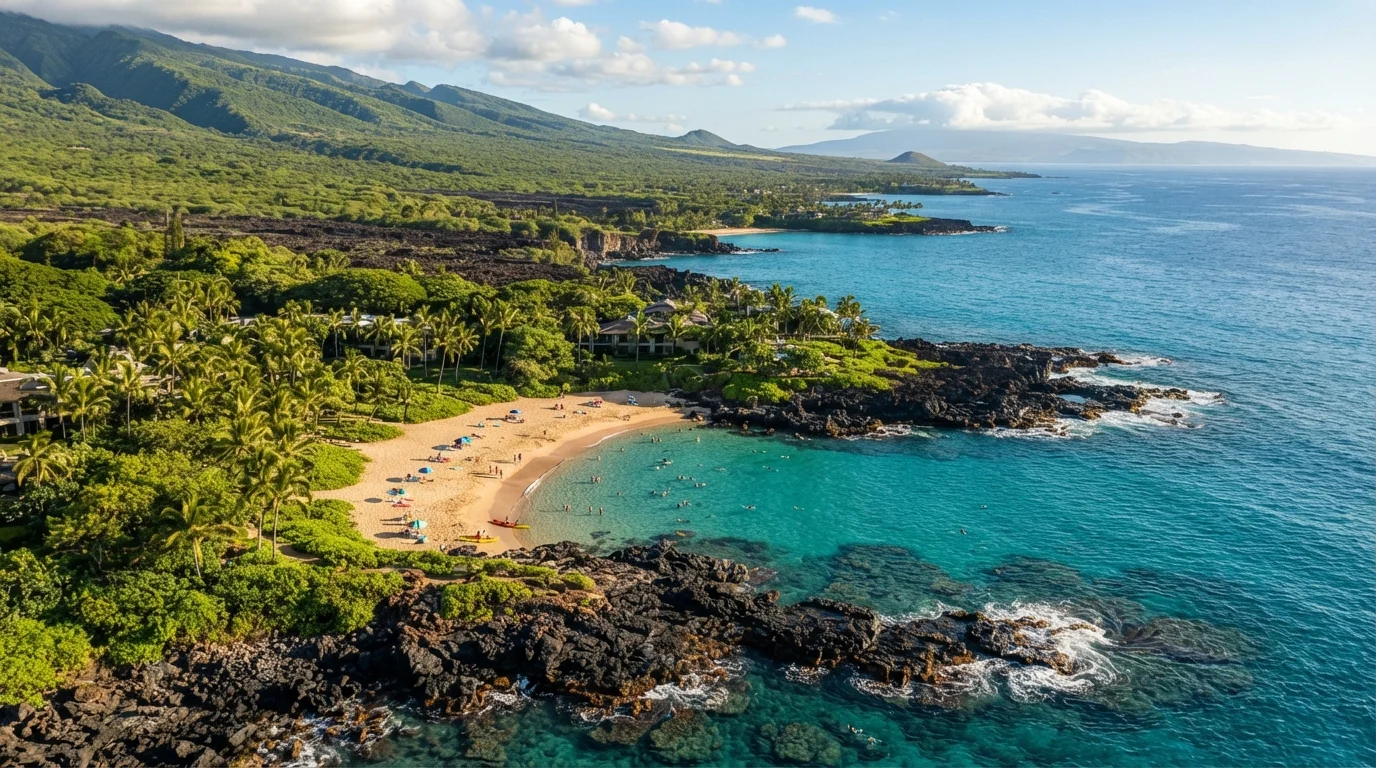
Option A
Hawaii Island (The Big Island)
The wild, adventurous island for explorer families.
Best for: Families with older kids who love hiking, volcanoes, diverse landscapes, and a slower, less-crowded pace.
Option B
Maui
The polished, beach-first island for classic Hawaiian family fun.
Best for: Families with younger children seeking calm, swimmable beaches, whale watching, and easy resort amenities.
Two Islands, Two Very Different Family Trips
Hawaii Island and Maui are both extraordinary, but treating them as interchangeable is one of the most common planning mistakes families make. The Big Island is roughly twice the size of all other Hawaiian islands combined, spanning eleven distinct climate zones - from tropical rainforest to alpine desert. Maui, by contrast, is a more compact, visitor-optimized destination where world-class beaches, scenic drives, and resort corridors are tightly clustered and easy to navigate.
Choosing between them really comes down to two questions: How old are your kids, and what do they actually enjoy doing? If your family's ideal vacation is anchored around beach time, calm swims, and approachable day trips, Maui delivers reliably. If your crew lights up at the idea of seeing an active volcano, stargazing at nearly 14,000 feet, or driving through a snow-dusted summit, Hawaii Island offers experiences you simply cannot replicate anywhere else.
For a broader lens on how coastal vacation destinations compare by age and activity type, see our guide to US beach vacation destinations.
| Criterion | Hawaii Island (Big Island) | Maui |
|---|---|---|
| Land area | ~4,028 sq miles | ~727 sq miles |
| Best beach conditions for young kids | Good (select beaches) | Excellent (most west/south shores) |
| Signature landmark | Hawaii Volcanoes National Park | Haleakalā National Park |
| Whale watching | Limited | Outstanding (Nov-May) |
| Resort infrastructure | Moderate, clustered on Kohala Coast | Extensive, multiple resort corridors |
| Crowd level | Lower | Higher |
| Driving distances | Long - plan for it | Moderate |
| Best age range | Older kids and teens | All ages, especially young children |
Kid-Friendly Beaches and Water Safety
Water safety is a non-negotiable concern for families, and the two islands differ meaningfully here. Maui's western and southern shores - particularly around Wailea and Ka'anapali - are sheltered by offshore geography that keeps surf generally mild year-round. These beaches routinely offer ideal conditions for young swimmers and snorkelers, with lifeguards present at many popular spots.
Hawaii Island's coastline is more variable. Beaches like Hapuna and Mauna Kea (on the Kohala Coast) rank among Hawaii's finest and offer relatively calm conditions, but the island also has a significant number of rocky, wave-exposed shores that require more caution. Always check local ocean conditions through resources like the Hawaii Beach Safety website before entering the water, regardless of which island you visit.
~3 million
Annual visitors to Maui
According to the Hawaii Tourism Authority, Maui consistently receives among the highest visitor counts of any Hawaiian island.
~12,000
Humpback whales in Maui waters seasonally
The Hawaiian Islands Humpback Whale National Marine Sanctuary estimates that a significant portion of the North Pacific humpback population migrates to Maui-area waters each winter.
13,796 ft
Summit elevation of Mauna Kea
Mauna Kea on Hawaii Island is one of the world's premier astronomical observing sites and a striking family destination at the visitor center level.
Snorkeling is a family favorite on both islands. Maui's Molokini Crater - a partially submerged volcanic caldera - draws families to its clear, protected waters. Hawaii Island counters with Kealakekua Bay, a marine sanctuary offering some of the state's most pristine reef snorkeling. Both require planning ahead for tours or equipment.
Signature Experiences by Island
Hawaii Island standouts: Hawaii Volcanoes National Park is genuinely one of the most awe-inspiring national parks in the US system. Families with kids aged 8 and up tend to get the most from lava tube hikes, crater rim walks, and ranger-led programs. The island also offers manta ray night snorkeling tours, black sand beaches at Punalu'u, and stargazing at Mauna Kea's visitor center (note that the summit road has restrictions - always verify current access requirements before visiting).
Maui standouts: The Road to Hana is a bucket-list scenic drive with waterfalls, swimming holes, and jungle trails accessible to most families. Sunrise at Haleakalā National Park is memorable for kids old enough to appreciate an early wake-up call and the eerie, Mars-like landscape. Whale watching cruises (typically November through May) are reliably thrilling for children of all ages.
If your family is weighing whether an outdoor-heavy trip or a more activity-mixed vacation suits your kids better, our article on city trips vs. nature trips with kids offers a useful framework.
Planning Around Hawaii's Seasons
Both islands see their driest, sunniest weather on leeward (western and southern) coasts from April through October, making that window popular for beach-focused families. Winter months bring higher surf on north-facing shores across all islands - an important safety consideration for families with young swimmers. Hawaii Island's weather varies dramatically by elevation and side of the island, so check microclimates for each area you plan to visit. Always verify current conditions with official park and ocean safety sources before outdoor activities.
Practical Planning: Logistics, Cost, and Getting Around
Both islands require a rental car - this is not a destination where you can rely on ride-sharing apps or public transit for family sightseeing. Book vehicles well in advance, especially for peak travel periods. On Hawaii Island, be prepared for longer driving times; distances between the Kohala Coast resorts and Hawaii Volcanoes National Park can exceed 90 miles each way.
Accommodation costs on both islands can be significant. Maui's resort corridor tends to offer more all-inclusive-style options with on-site pools, kids' programs, and dining - which can simplify logistics for families. Hawaii Island's offerings are more spread out, with a mix of resort, vacation rental, and smaller inn options depending on which coast you base yourself on. For a deeper dive into how accommodation type affects family travel, see our comparison of vacation rentals vs. hotel rooms for families.
Flight access is another practical note: Maui (OGG) and Kona (KOA) or Hilo (ITO) on Hawaii Island all receive direct mainland flights, though routes and availability vary by departure city. Always verify current schedules and entry requirements directly with airlines and relevant government sources before booking.
The content provided on our blog site traverses numerous categories, offering readers valuable and practical information. Readers can use the editorial team’s research and data to gain more insights into their topics of interest. However, they are requested not to treat the articles as conclusive. The website team cannot be held responsible for differences in data or inaccuracies found across other platforms. Please also note that the site might also miss out on various schemes and offers available that the readers may find more beneficial than the ones we cover.