

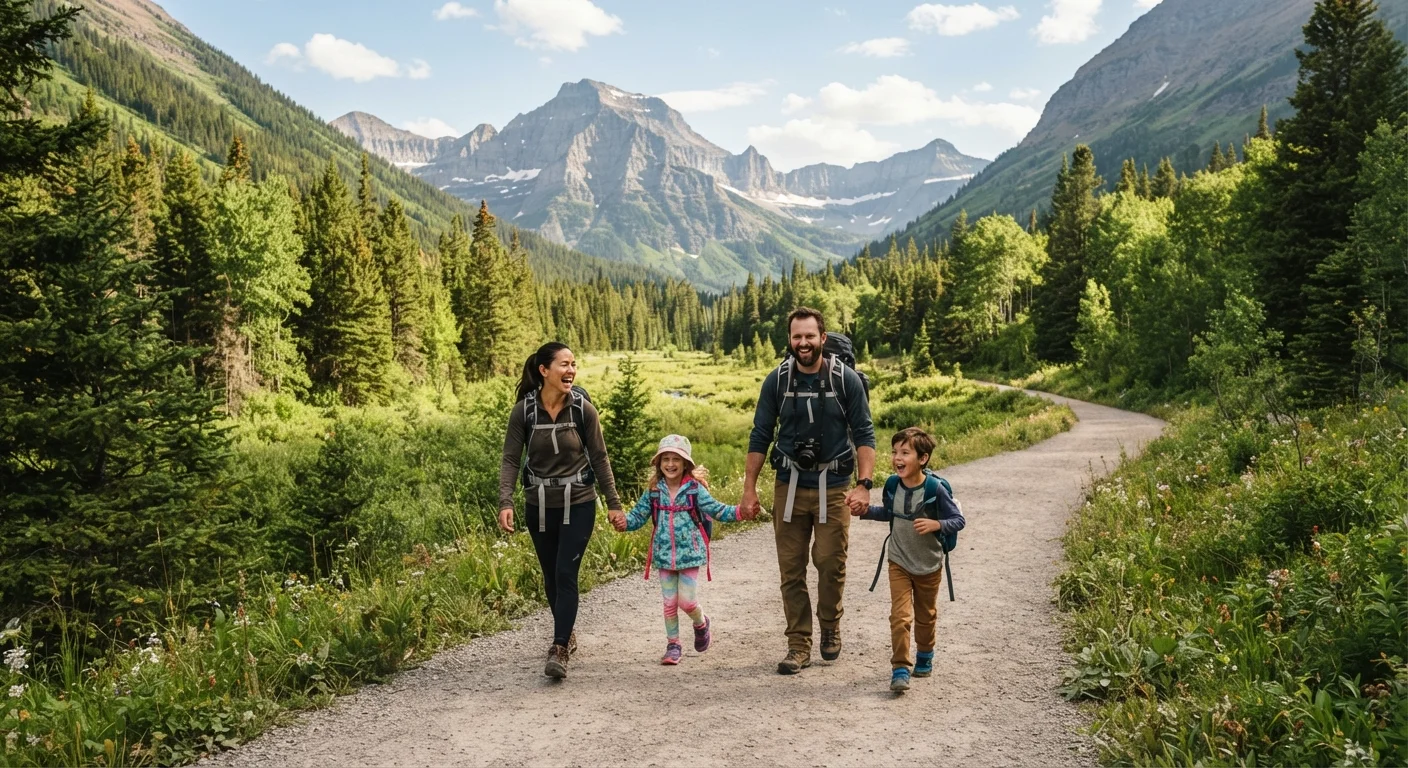
Why Park Choice Matters More Than You Think
Every national park is spectacular in its own way — but spectacular doesn't always mean manageable with a five-year-old and a diaper bag. Dramatic cliffs, strenuous elevation gains, and minimal shade can turn an eagerly anticipated family adventure into a survival test. The good news: dozens of parks across the U.S. are genuinely designed — or naturally suited — for families with young children.
What separates a great family park from a beautiful-but-brutal one? Think accessible trails under two miles, solid visitor facilities, engaging ranger programs, and scenery that wows without requiring a serious hike to reach it. If you're still deciding whether a park trip or a city trip fits your family better, our guide to choosing between city and nature trips walks through the key tradeoffs.
Below, we've highlighted parks that consistently deliver on the fundamentals for families with kids roughly ages 2–10.
Acadia National Park, Maine
Acadia is often called one of the most family-friendly parks in the country — and for good reason. Its famous carriage roads (over 45 miles of hard-packed gravel paths, closed to motor vehicles) give even stroller-pushing parents a smooth, scenic route through forest and along pond shores. The summit of Cadillac Mountain is accessible by car, meaning spectacular panoramic views require zero hiking.
The tidepools along the rocky coast double as a hands-on nature classroom that kids find endlessly fascinating. Ranger-led programs are robust, and the Jordan Pond House offers a rare in-park dining option that gives families a chance to sit down and recharge. Bar Harbor, just outside the park entrance, adds a charming small-town backdrop with ice cream shops and short bay cruises.
Acadia's car-free carriage roads let stroller-pushing parents explore the park alongside hikers.
Great Smoky Mountains National Park, Tennessee & North Carolina
Great Smoky Mountains is the most-visited national park in the country, and families are a huge reason why. Admission is free — always, no pass required — making it an especially accessible choice. The park's wide diversity of trail difficulties means you can find something for a toddler (the short, flat Clingmans Dome Road walk) and something more challenging for older siblings on the same trip.
Cades Cove is a particular hit with young children: a scenic loop drive through open meadow where deer, wild turkeys, and black bears are regularly spotted from the car. The Sugarlands Visitor Center near the Gatlinburg entrance has excellent interactive exhibits, clean facilities, and ranger staff who are experienced at engaging kids. Nearby Gatlinburg adds a full range of family-friendly lodging and dining options.
Great Smoky Mountains charges no entrance fee, ever — a rare budget-friendly advantage for families.
Olympic National Park, Washington
Olympic is three parks in one: temperate rainforest, rugged Pacific coastline, and alpine meadows. That variety is its greatest asset for families — you can tailor each day to match your kids' energy and the weather. The Hoh Rain Forest, with its moss-draped maple halls and flat walking paths, genuinely feels like stepping into a storybook, and children typically respond with wide-eyed awe rather than complaints about mileage.
Ruby Beach and Rialto Beach offer tide pool exploration at low tide, with sea stacks and driftwood making even the shoreline feel adventurous. The park's size means it rewards multi-day visits, so consider building a flexible itinerary — our Road Trip Planning hub has guidance on structuring multi-stop Pacific Northwest drives.
Olympic's rainforest trails are flat, otherworldly, and endlessly captivating for young imaginations.
Zion National Park, Utah
Zion's shuttle system — which handles most in-park transportation during peak season — is a genuine gift for families. No car-seat logistics mid-canyon, no parking stress. The Pa'rus Trail is paved, flat, stroller-friendly, and runs along the Virgin River, offering towering red-rock canyon walls on both sides without requiring any technical ability.
Children who are steady walkers can handle Riverside Walk (the paved trail to the Narrows entrance), which is two miles round-trip and rewards with extraordinary scenery. Note that the famous Angels Landing trail involves serious exposure and steep chains sections — it is not appropriate for young children, and the park now requires a permit for that specific route. Zion's visitor center is well-staffed, and the Junior Ranger program here is particularly well-regarded.
Zion's shuttle system eliminates car-seat mid-canyon logistics — a surprisingly big win for families.
Shenandoah National Park, Virginia
Shenandoah sits within easy driving distance of much of the East Coast population, making it a realistic weekend destination for millions of families. Skyline Drive runs the full 105-mile length of the park along the ridge of the Blue Ridge Mountains, and dozens of overlooks are reachable directly from the road — so even non-hikers get genuinely memorable views.
Dark Hollow Falls is a popular short hike (1.4 miles round-trip) that ends at a beautiful waterfall and is manageable for most kids ages 5 and up, though the return trip is uphill. Big Meadows is a great base-camp area with a lodge, campground, visitor center, and an open meadow where white-tailed deer are spotted nearly every evening. The park is also home to one of the most accessible stargazing experiences on the East Coast thanks to its low light pollution.
Skyline Drive delivers ridge-top views without requiring a single step on a trail.
Crater Lake National Park, Oregon
Crater Lake's single defining feature — the impossibly blue caldera lake — is visible from the rim road by car or from short rim walks, meaning the park's headline experience is genuinely accessible to all ages. The Rim Drive loops 33 miles around the lake with dozens of pullouts, and kids respond viscerally to the water's almost electric blue color (a result of exceptional depth and clarity).
The Cleetwood Cove Trail is the only legal route to the lake shore — it's steep and about 2.2 miles round-trip, suitable for kids roughly 7 and older who are comfortable hiking. The boat tours on the lake, when operating, are a highlight that older children especially enjoy. The park sits at high elevation (roughly 7,000 feet at rim level), so plan for cooler temperatures and sun exposure than expected, and hydrate accordingly.
Crater Lake's electric-blue water is visible from the car — no hiking required for the main event.
Planning Tips to Maximize the Experience
No matter which park you choose, a few principles apply universally when you're traveling with young kids. Arrive early — crowds and heat both peak mid-morning, and rangers are often most available right at opening. Pack snacks, sunscreen, and a change of clothes even for short walks; conditions change fast and kids' moods follow suit.
Sign Up for Junior Ranger Programs
Nearly every national park offers a free Junior Ranger booklet available at the visitor center. Kids complete age-appropriate activities — wildlife spotting, short hikes, exhibit questions — and earn an official badge at the end. It gives children a concrete goal for the visit and keeps engagement high across the whole trip. Many parks also offer digital Junior Ranger options through the NPS app.
Budget-conscious families will appreciate that the National Park Service's America the Beautiful pass covers entrance fees at all federal recreation lands for one year. Children under 15 always enter national parks free regardless. For more strategies on stretching your travel dollars, explore our Travel on a Budget hub and our breakdown of destination types that tend to be easier on family budgets.
If you're traveling with grandparents as well as kids, the multi-generational travel guide has specific advice for keeping everyone comfortable. And once you've picked your park, our itinerary-building walkthrough will help you pace the days so kids stay excited rather than exhausted.
The content provided on our blog site traverses numerous categories, offering readers valuable and practical information. Readers can use the editorial team’s research and data to gain more insights into their topics of interest. However, they are requested not to treat the articles as conclusive. The website team cannot be held responsible for differences in data or inaccuracies found across other platforms. Please also note that the site might also miss out on various schemes and offers available that the readers may find more beneficial than the ones we cover.