

Where You Go Shapes What You Spend
Most family travel budgeting focuses on how to save — booking early, packing snacks, skipping resort fees. But a more fundamental question often goes unasked: does the type of destination itself make a budget more or less likely to hold?
It does. Certain destination categories tend to carry lower baseline costs across lodging, food, activities, and transportation — not because they're less worthwhile, but because their tourism infrastructure is built differently. Understanding these patterns before you pick a destination can be one of the most effective budget moves a family makes. For a broader look at how every piece fits together, see our complete family travel planning framework.
The destination types below consistently offer families more room to breathe financially — here's why each one works the way it does.
National Parks and Public Lands
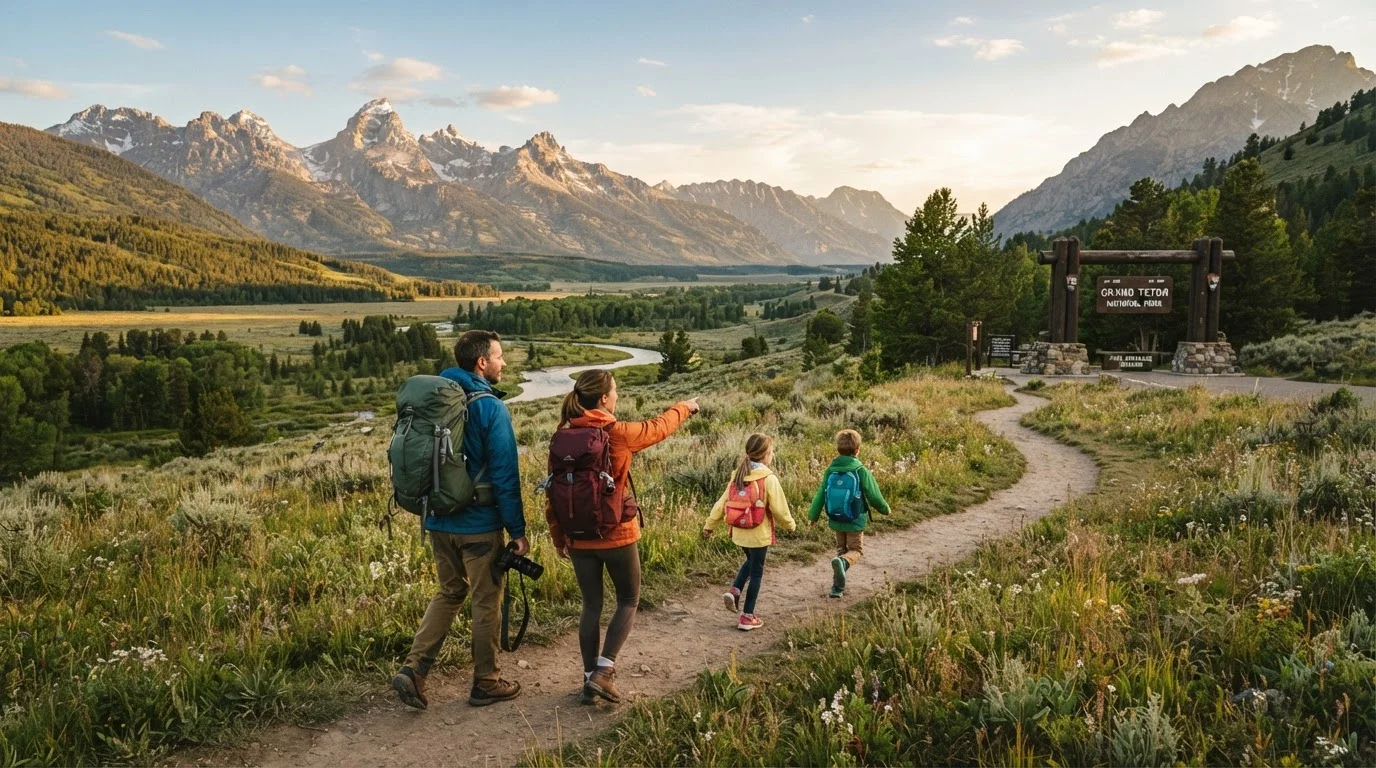
America's national parks represent some of the most family-friendly value in travel. Entry fees are modest — the America the Beautiful annual pass covers entrance to all federal recreation sites for one flat fee, making repeat visits even more economical. Once inside, the core experience is largely free: hiking, wildlife watching, ranger programs, and scenery that genuinely impresses kids at every age.
Campgrounds within or near parks are far less expensive than hotel rooms, and many parks have cabin options that land well below comparable resort pricing. Food costs drop naturally when families cook at a campsite or bring a cooler. See our guide to national parks that work well for families with young kids for parks that are particularly manageable with younger children.
Once inside a national park, the core experience — hiking, ranger talks, scenery — costs nothing extra.
Smaller Regional Cities
Mid-size cities — think state capitals, college towns, and regional hubs with populations under 500,000 — routinely offer lower hotel rates, cheaper restaurant meals, and far less competition for parking and attractions than major metros. Museums, aquariums, and children's museums in smaller cities often charge less for admission and are less crowded, which matters enormously when you're managing young kids.
These destinations are also more likely to be drivable from a wider range of starting points, eliminating airfare entirely. If a smaller city happens to have a walkable downtown, a riverfront, or a university campus with public green space, free entertainment options multiply quickly. Pair this with smart lodging strategies and the savings compound.
Mid-size cities often deliver comparable cultural experiences at a fraction of the cost of major tourist metros.
Rural and Agricultural Areas
Farm stays, rural bed-and-breakfasts, and small-town destinations in agricultural regions are among the most underused family travel options. Nightly rates are frequently lower than urban alternatives, and the surrounding landscape often provides built-in activity: pick-your-own farms, county fairs, nature trails, fishing, and open space that kids tend to find genuinely engaging.
Food costs can drop significantly when families are near farm stands and local markets rather than tourist-district restaurants. The tradeoff is that rural destinations almost always require a car, and distances between points of interest can be longer. Families who enjoy slower-paced travel and don't need a packed activity schedule tend to find rural destinations especially rewarding.
Rural destinations reward families who value open space and slower travel over packed itineraries.
Beach Destinations Away from Peak Resort Zones
Coastal travel doesn't have to mean expensive resort towns. Many stretches of the U.S. coastline — particularly along the Gulf Coast, mid-Atlantic shores, and parts of the Pacific Northwest — offer beach access through state parks or public beaches with minimal or no entry fees. Towns adjacent to these areas often have far lower lodging rates than their well-marketed neighbors.
The savings come from sidestepping the resort infrastructure: the branded beach clubs, overpriced boardwalk dining, and high-occupancy hotel clusters that drive costs up in famous beach destinations. A vacation rental with a kitchen in a quieter beach town can deliver the same ocean experience at a fraction of the price. Vacation rentals versus hotel rooms is worth reading before booking any coastal trip with multiple family members.
Public beaches in lower-profile coastal towns offer the same water and sand at a dramatically lower cost.
Domestic Nature and Outdoor Destinations Beyond National Parks
State parks, national forests, Bureau of Land Management areas, and wildlife refuges rarely get the same attention as branded national parks, but they often provide comparable outdoor experiences with lower entry fees, less crowding, and more available camping or lodging options. Many are genuinely spectacular and simply haven't been heavily marketed.
Activity costs at these destinations trend toward zero: swimming holes, hiking trails, fishing access, and scenic drives are typically free or very low cost. Families with kids who respond well to unstructured outdoor time — and who don't need a theme park-style experience — often find these destinations deliver the highest satisfaction-per-dollar ratio of any trip type. See free and low-cost activity options for a closer look at what's available across destination categories.
State parks and national forests often match national park scenery with far less competition and lower fees.
A Few Things to Keep in Mind
No destination type guarantees a cheap trip. Costs within any category vary enormously depending on season, lodging choices, and how many paid attractions a family adds on. The patterns described here reflect general tendencies, not fixed rules — and your family's specific needs (children's ages, accessibility requirements, driving tolerance) matter just as much as destination type.
Shoulder Season Amplifies Any Destination's Savings
Visiting any of these destination types just before or just after peak season can meaningfully reduce lodging rates, eliminate crowds, and open up reservations that would otherwise be unavailable. For national parks and beach destinations especially, shoulder-season timing often improves the experience while cutting costs simultaneously. Check the specific destination's peak window — it varies more than most families expect.
It's also worth being honest about hidden costs. Rural destinations may require a longer drive or a rental car. National parks can get crowded, meaning advance reservations are often essential. Smaller cities may have fewer direct flights, adding connections. Our article on where family travel budgets quietly unravel walks through exactly these kinds of overlooked costs. Before you leave, the pre-trip checklist for budget-conscious families can help you catch what's easy to miss.
The goal isn't to pick the cheapest destination in isolation — it's to match your family's travel style to a destination type where your dollars go furthest and everyone still has a genuinely good time.
The content provided on our blog site traverses numerous categories, offering readers valuable and practical information. Readers can use the editorial team’s research and data to gain more insights into their topics of interest. However, they are requested not to treat the articles as conclusive. The website team cannot be held responsible for differences in data or inaccuracies found across other platforms. Please also note that the site might also miss out on various schemes and offers available that the readers may find more beneficial than the ones we cover.