

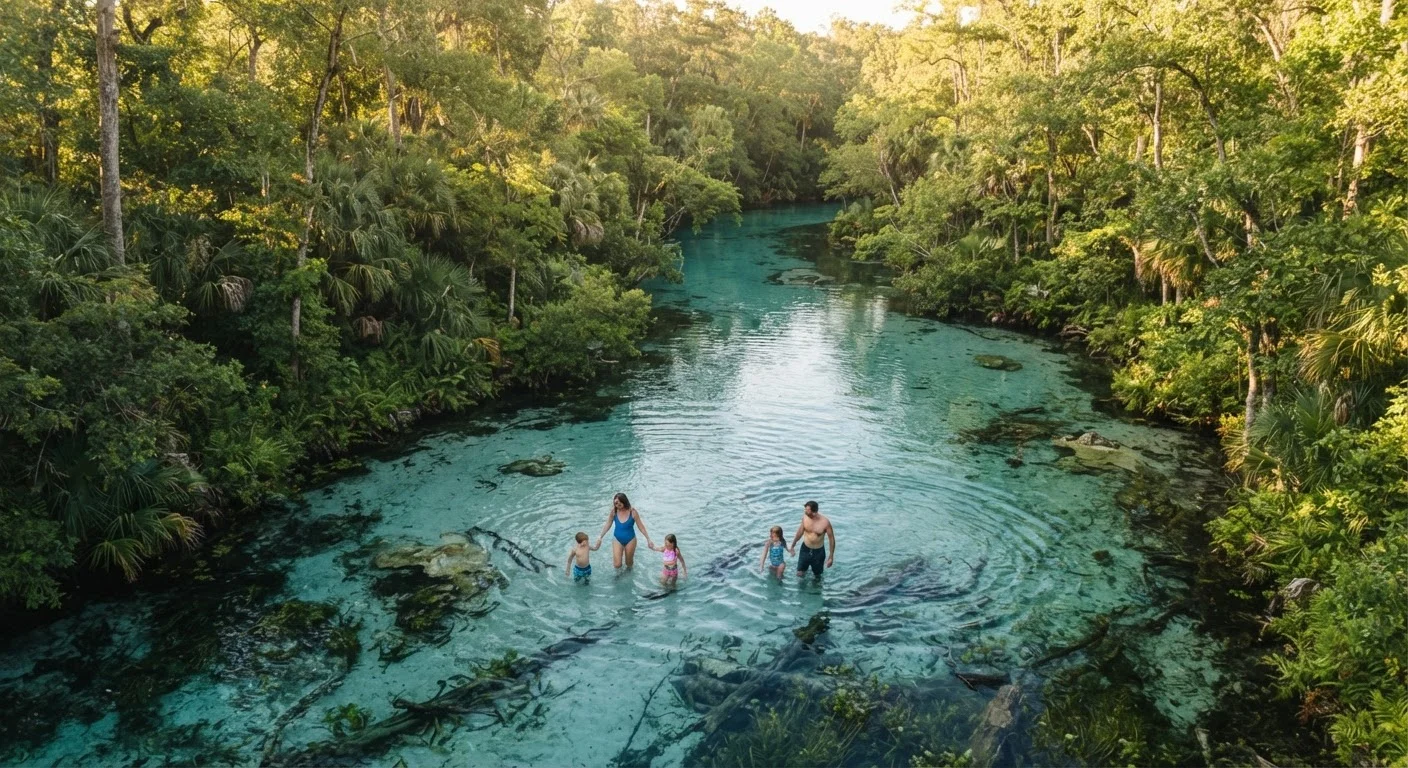
Why Families Look Past Orlando's Theme Parks
There's nothing wrong with a theme park day — but when a family of four can spend hundreds of dollars before lunch, it pays to know what else is on the map. Orlando sits in a region rich with natural and cultural assets that most visitors simply don't see because the big parks dominate every travel guide headline.
For families wrestling with budget pressure or kids who tire quickly of queues, the alternatives aren't consolation prizes. Many are genuinely memorable experiences in their own right. Understanding what's available helps you build a trip that's more balanced, more affordable, and honestly more varied. If you're still deciding what kind of trip suits your family best, our article on choosing between a city trip and a nature trip lays out the tradeoffs clearly.
30+
Natural springs within 90 minutes of Orlando
Florida's extensive aquifer system feeds more than 700 springs statewide, with dozens accessible within a 90-minute drive of central Orlando.
~68°F
Year-round water temperature at Florida springs
Florida's freshwater springs maintain a near-constant temperature courtesy of the Floridan Aquifer System, making them swimmable in most seasons.
4 floors
Exhibit space at the Orlando Science Center
The Orlando Science Center's multi-floor layout covers science, technology, nature, and astronomy in a format designed for hands-on family exploration.
Florida's Natural Springs: A Hidden Family Gem
Central Florida sits above one of the most productive aquifer systems in the world, and its freshwater springs are among the most undervisited attractions in the state. Wekiwa Springs State Park, about 30 miles northwest of Orlando, offers spring-fed swimming, canoe and kayak rentals, nature trails, and picnic areas. The water temperature holds near 68°F year-round — refreshing in summer, surprisingly warm relative to air temps in winter.
Blue Spring State Park in Orange City (roughly an hour north) is a designated manatee refuge during winter months, making it one of the few places families can observe manatees in the wild from a safe, well-managed viewing area. Rangers are present and interpretive signage is excellent for curious kids.
Plan Springs Visits on Weekday Mornings
Florida's most popular springs can reach capacity on weekend afternoons, especially in summer and during school breaks. Arriving early on a weekday gives families the best chance of securing entry without a wait. Some parks now require advance reservations — check the Florida State Parks website well before your visit date.
Always verify current reservation requirements and park capacity rules directly with Florida State Parks before you go — some sites require day-use passes that book out quickly on weekends and holidays.
Museums and Science Centers Worth the Detour
The Orlando Science Center spans four floors and covers topics from physics and engineering to natural history and astronomy. Its hands-on format keeps kids engaged, and the planetarium adds a dimension most children find genuinely awe-inspiring. Admission runs well below a theme park ticket, and the pace is entirely self-directed — a welcome change for families with mixed-age kids.
In Winter Park, the Morse Museum of American Art houses the world's most comprehensive collection of works by Louis Comfort Tiffany, including stained glass windows that stop even restless kids in their tracks. It's free on Friday evenings, making it an easy add-on to a Park Avenue afternoon. For families mindful of where the trip budget goes, our piece on why family trips cost more than planned helps identify where costs tend to quietly add up.
Neighborhoods, Parks, and Low-Key Afternoons
Winter Park's Park Avenue is a walkable stretch of independent shops, restaurants, and green space alongside a chain of scenic lakes. The Central Park strip that runs alongside it is free, shaded, and genuinely pleasant — a good option for a slower morning before or after a travel day. The area also has a farmer's market on Saturday mornings that appeals to families looking for something local and low-pressure.
Downtown Orlando's Lake Eola Park features a landmark swan boat lake, a playground, an amphitheater, and a Sunday farmer's market. It's an easy, free way to spend a few hours without adding to an already stretched itinerary.
If you're still figuring out where to stay while you explore the broader region, take a look at what to confirm before booking a family resort — the details families often overlook at the booking stage can matter a lot when kids are involved. And if you're considering shifting your travel dates to stretch the budget further, off-season travel tradeoffs is worth a read before you commit.
Orlando's Outdoor Heat Is a Real Factor
Central Florida's summer heat and humidity can be intense, particularly for young children. When planning outdoor activities like springs visits or park walks during warmer months, bring adequate water, sun protection, and a plan for afternoon thunderstorms, which are common from late spring through early fall. The Florida Department of Health offers heat safety guidance that families should review before extended outdoor activity.
Frequently Asked Questions
Yes — several Orlando-area attractions carry little or no admission cost. Wekiwa Springs State Park charges a modest per-vehicle entry fee. The Cornell Fine Arts Museum in Winter Park is free. Lake Eola Park in downtown Orlando is open to the public at no charge. See our <a href="/family-travel/travel-on-a-budget/free-and-low-cost-activities-at-popular-family-destinations">guide to free and low-cost family activities</a> for the types of options commonly available at destinations like Orlando.
Most popular springs are between 30 and 90 minutes from central Orlando. Wekiwa Springs is roughly 30 miles northwest of the city. Blue Spring State Park in Orange City is about 60 miles north. Always check current park conditions and reservation requirements with the Florida State Parks system before visiting, as some sites require advance passes during busy periods.
Absolutely. Families focused on nature, science, arts, or simply a slower pace can fill several days entirely outside the major parks. The surrounding region offers wildlife, paddling, cultural museums, farmers markets, and neighborhood dining that many families find more relaxing. That said, Orlando's infrastructure — hotels, transportation, dining — was built around theme park tourism, so plan logistics accordingly.
Winter Park and the Mills 50 district are both accessible and family-friendly. Winter Park offers a scenic chain of lakes, a charming main street, and the Morse Museum of American Art. Mills 50 has a vibrant local food scene. Downtown Orlando's Lake Eola area is pleasant for an evening stroll and occasionally hosts family-friendly events.
Florida's cooler, drier months — roughly October through April — are generally considered the most comfortable for outdoor activities like springs swimming and nature trails. Summer brings heat, humidity, and afternoon thunderstorms, though springs maintain a consistent cool temperature year-round. Always monitor weather forecasts and heat-safety guidelines when visiting with young children.
The content provided on our blog site traverses numerous categories, offering readers valuable and practical information. Readers can use the editorial team’s research and data to gain more insights into their topics of interest. However, they are requested not to treat the articles as conclusive. The website team cannot be held responsible for differences in data or inaccuracies found across other platforms. Please also note that the site might also miss out on various schemes and offers available that the readers may find more beneficial than the ones we cover.