

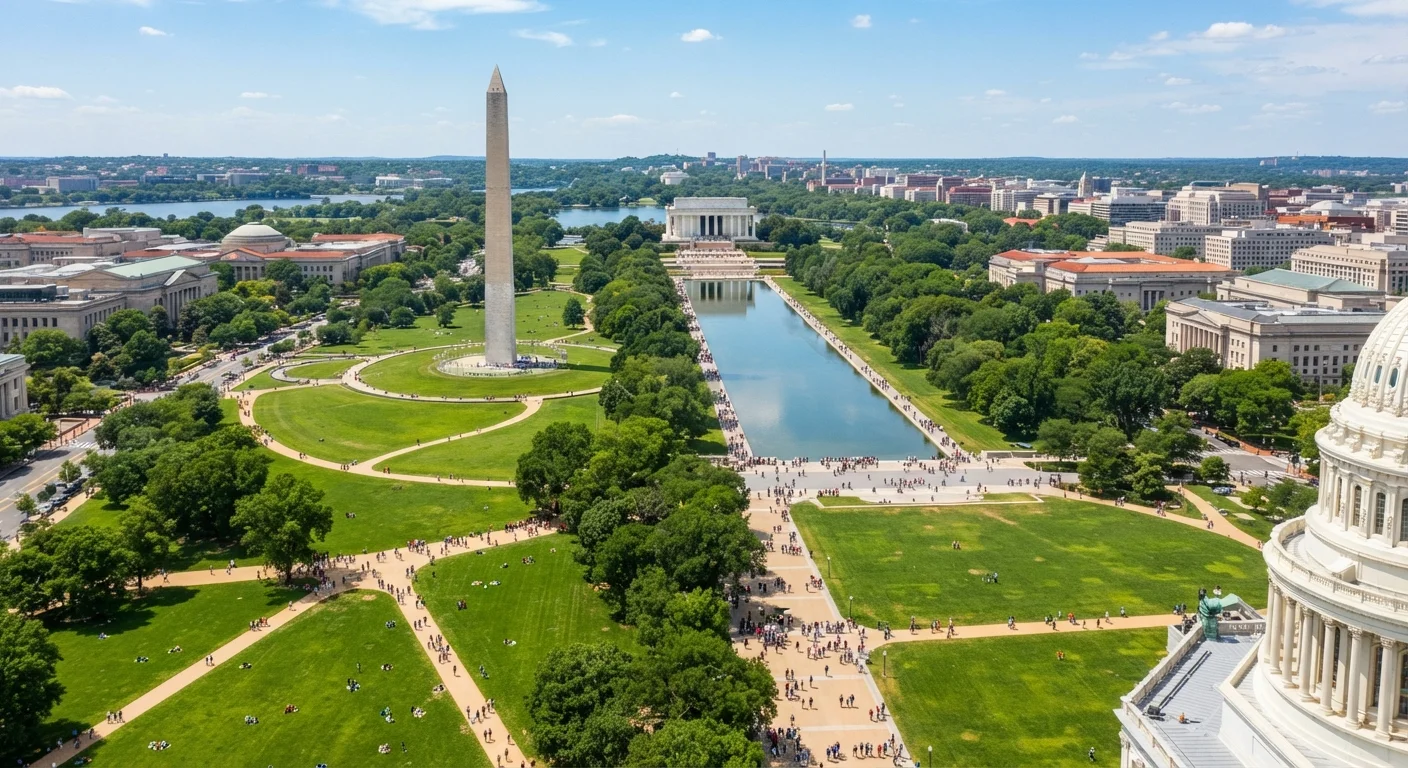
Why D.C. Works for Families
Washington, D.C. is one of the few American cities where the best things to do are genuinely free. The Smithsonian Institution operates 19 museums and galleries in the D.C. area, all without admission fees — a remarkable advantage when you're traveling with multiple kids. Add iconic outdoor monuments, accessible public transit, and a compact core that's walkable for most ages, and the city checks a lot of boxes that parents care about.
It also scales well across age groups. A seven-year-old can be awed by dinosaur skeletons at the Natural History Museum while a teenager digs into aerospace history at Air and Space. If you're coordinating across generations, our guide on multi-generational family travel covers how to keep everyone comfortable when grandparents are part of the mix.
Book Washington Monument timed-entry passes the moment they become available — the National Park Service releases them on a rolling 30-day window, and popular dates fill within hours.
The Monument is a bucket-list experience for most families, and showing up without a pass means missing it entirely; advance booking is the only reliable strategy.
Plan your heaviest walking days first, while the family still has energy reserves — save lighter museum days for the middle or end of the trip when fatigue sets in.
Family travel research consistently shows that over-scheduling early in a trip leads to burnout by day three; front-loading outdoor monuments and reserving indoor museums as rest-day anchors smooths the energy curve.
When to Go: Crowds, Weather, and Timing
Timing your visit can make or break the experience. The cherry blossom season — typically late March through mid-April — draws massive crowds to the Tidal Basin, and summer school breaks pack the Mall. Both periods mean longer lines, higher hotel rates, and more heat on long outdoor walks.
Fall (late September through November) is widely considered one of the most pleasant windows: mild temperatures, thinner crowds, and foliage color along the Mall. January through February is the least crowded but cold, and some outdoor spaces feel bleak. If summer is your only option, aim for early-morning starts — monuments are accessible 24 hours a day, and hitting the Lincoln Memorial at 7 a.m. beats the midday rush entirely.
Peak Season Crowds Are Significant
Cherry blossom season and summer school breaks bring some of the highest visitor volumes in D.C. all year. Expect longer waits at popular museums, limited availability for timed-entry passes, and higher lodging prices. If your schedule is flexible, a fall visit between late September and November typically offers a more comfortable experience.
Whatever season you choose, verify the current hours and any timed-entry requirements for specific attractions directly with the relevant institution or the National Park Service before you travel, as these can change.
Getting There and Getting Around
D.C. is served by three airports: Reagan National (DCA), closest to downtown; Dulles International (IAD), about 26 miles west; and Baltimore/Washington International (BWI), roughly 30 miles northeast. Reagan offers the easiest Metro connection directly into the city.
Once there, skip the rental car if you can. Parking in central D.C. is expensive and scarce, and traffic around the Mall is reliably slow. The Washington Metro is clean, air-conditioned, and has stations within reasonable walking distance of most major attractions. Children under five ride free. For families arriving by car, our road trip planning guide covers route strategy and rest-stop logistics for the drive in.
19
Free Smithsonian museums in the D.C. area
The Smithsonian Institution operates 19 museums and galleries in Washington, D.C. and nearby Virginia, all free to the public.
Under 5
Age for free Metro rides
Washington Metropolitan Area Transit Authority (WMATA) allows children under age five to ride the Metro at no charge when accompanied by a paying adult.
For neighborhoods farther from Metro lines — Georgetown, for instance — buses and rideshare fill the gap. Load the WMATA trip planner before you go so you're not decoding the system with tired kids in tow.
Top Kid-Friendly Attractions
With so many options, prioritizing matters. Below are the anchor experiences most families find genuinely engaging across age ranges:
- National Museum of Natural History — The 45-foot blue whale model, Hope Diamond, and live insect zoo tend to land well with kids of all ages. Free entry.
- National Air and Space Museum — Both the Mall location and the larger Udvar-Hazy Center near Dulles feature actual spacecraft and flight simulators. Free entry (parking fee at Udvar-Hazy).
- National Zoo — Part of the Smithsonian, free admission. Giant pandas, Asian elephants, and a dedicated Kids' Farm area make this a reliable half-day stop.
- Washington Monument — Requires a timed-entry pass (reserve in advance via the National Park Service; passes are released on a rolling basis). The 360-degree view from the top is a genuine wow moment.
- Lincoln Memorial and Reflecting Pool — Fully free and accessible at any hour. Walking the steps at dusk is a low-cost, high-impact experience.
- International Spy Museum — One of the few major D.C. attractions with an admission fee, but its interactive exhibits engage kids and adults equally well. Worth comparing against your budget.
For help structuring which sites to hit on which days, see our walkthrough on building a family itinerary kids won't dread.
Budgeting for Your D.C. Trip
D.C.'s free museum ecosystem changes the math considerably. A family of four can spend three full days at world-class attractions without a single admission charge — a meaningful advantage over theme-park or resort destinations. Your real costs will cluster around lodging, food, and transportation.
Save on Lodging With Suburban Stays
Hotels in Arlington, VA and Bethesda, MD typically cost less than comparable rooms on the Mall corridor, and both areas have direct Metro lines into the city center. Look for properties within a five-minute walk of a Metro station to keep transit simple with kids in tow.
Lodging: Hotels on or near the Mall carry a premium. Families willing to stay in Arlington, Alexandria, or Bethesda — all with direct Metro access — often find meaningfully lower nightly rates. Booking a unit with a kitchen lets you reduce food costs by handling breakfasts and some dinners yourself.
Food: The food hall scene in D.C. (Union Market is a popular example) tends to offer more variety and value than sit-down restaurants near tourist corridors. Packing lunches for Mall days is a reliable money-saver.
For a complete framework on managing all the pieces of a family trip budget, see our family travel budget guide and the pre-trip checklist for budget travelers to catch any overlooked costs before you leave home.
Neighborhoods, Food, and Logistics
Beyond the Mall, a few neighborhoods reward wandering with kids. Georgetown has a lively waterfront area and canal towpath good for strolling. Capitol Hill's Eastern Market runs a Saturday farmer's market and artisan vendors popular with families. Penn Quarter near the National Portrait Gallery has a cluster of family-friendly restaurants and is centrally located for transit.
A few practical logistics worth locking down before departure:
- Reserve Washington Monument passes as soon as your travel dates are confirmed — they go quickly during peak periods.
- Most Smithsonian museums have a coat check and stroller parking; bring a carrier for toddlers if you have one, as some gallery spaces are tight.
- The National Mall has limited shade in summer; pack sunscreen, hats, and a refillable water bottle. Water fountains are available throughout.
- Metro farecard machines accept credit and debit cards. Load a SmarTrip card for the family to avoid per-trip fees and simplify boarding.
More budget-friendly strategies for families exploring the region are collected in our Travel on a Budget hub. D.C. rewards preparation — families who go in with a loose plan and realistic expectations about daily mileage tend to come home with the best memories.
This article provides general travel information for planning purposes. Hours, admission policies, timed-entry requirements, and other details can change; verify current information directly with attraction operators, the National Park Service, and official tourism resources before you travel.
The content provided on our blog site traverses numerous categories, offering readers valuable and practical information. Readers can use the editorial team’s research and data to gain more insights into their topics of interest. However, they are requested not to treat the articles as conclusive. The website team cannot be held responsible for differences in data or inaccuracies found across other platforms. Please also note that the site might also miss out on various schemes and offers available that the readers may find more beneficial than the ones we cover.