

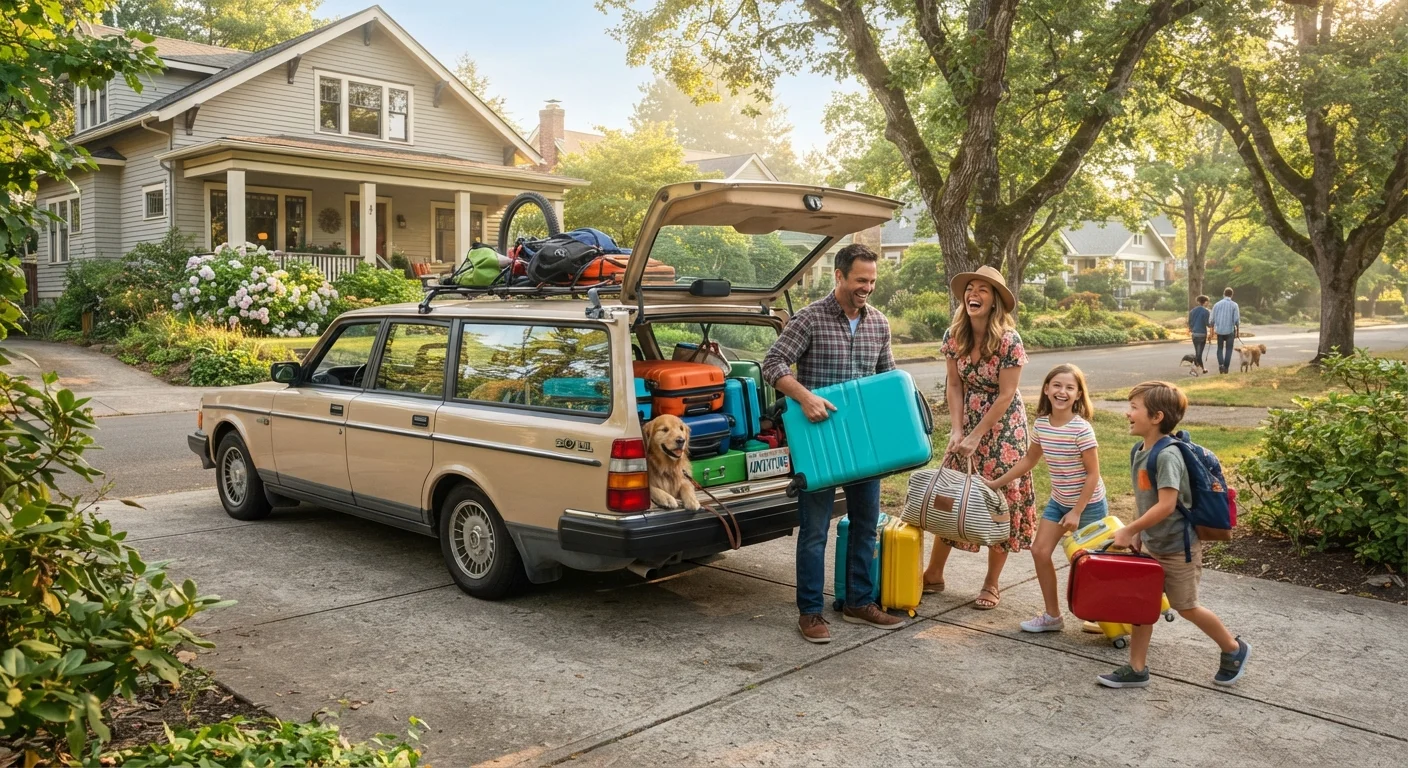
Choosing Your Route and Setting Realistic Goals
The biggest mistake families make is treating a road trip like a race to the finish line. A realistic route starts with an honest look at who's in the car — toddlers, tweens, and teens all have wildly different tolerances for time in a seat. As a general guideline, most family travel experts suggest limiting driving to 6–8 hours per day, with planned breaks built in from the start.
When mapping your route, ask yourself what kind of trip this is: is the drive itself the experience, or is the destination the main event? Scenic routes through national park corridors or coastal highways can turn hours in the car into memorable moments. If you're destination-focused, consider whether you can break the journey over two days with an overnight stop that's worth visiting on its own.
For families new to long-distance driving with kids, our first-time family road trip guide walks through what to realistically expect at every stage. And if you're still hunting for where to go, browse family-friendly destinations for inspiration across the U.S. and beyond.
97 million
Americans who road trip each summer
According to AAA travel research, nearly 97 million Americans travel by car during peak summer months, making road trips the most common form of family vacation.
6–8 hrs
Recommended max daily drive time with kids
Family travel researchers and pediatric safety organizations generally suggest capping driving at 6–8 hours per day to reduce driver fatigue and child discomfort.
40%
Families who don't check tires before a trip
Consumer tire safety surveys have found that a significant share of drivers — often cited around 40% — don't check tire pressure before a long road trip.
Vehicle Readiness: Don't Skip This Step
Nothing derails a road trip faster than a breakdown on the interstate with three hungry kids in the backseat. Before departure, run through the basics: tire pressure and tread, oil level, coolant, brakes, windshield wipers, and all lights. If your vehicle is due for a service, book it at least a week before you leave — not the morning of.
For a thorough, season-by-season maintenance framework, the year-round car maintenance roadmap for family vehicles is an excellent reference. Also confirm your roadside assistance plan is active — whether through an auto club or your insurer — and save the contact number somewhere accessible offline.
Check Your Car Insurance Before You Go
Confirm that your auto insurance policy covers out-of-state travel and review your roadside assistance coverage. If you're crossing into Canada or Mexico, standard U.S. auto insurance may not apply — contact your insurer directly before the trip. Don't assume coverage extends automatically to every situation.
Pack a basic emergency kit: jumper cables or a jump starter, a reflective triangle or flares, a first-aid kit, a flashlight, bottled water, and a phone charger. These don't take up much space but can make an enormous difference in a roadside situation.
Packing Smart for Every Age
Overpacking is a near-universal family road trip mistake. The goal is one bag per person plus a shared gear bag — anything more tends to create chaos. Lay everything out before it goes in the vehicle and ask: do we need this, or are we just packing it because it fits?
- Toddlers and young children: Pack a backpack they can access themselves with a favorite toy, snacks, and a change of clothes. Familiar comfort items reduce meltdowns.
- School-age kids: Activity kits — colored pencils, small journals, card games — give hands something to do during quiet stretches.
- Teens: Noise-canceling headphones and downloaded playlists or podcasts go a long way. Give teens some say in route decisions or rest stop picks; autonomy improves moods.
For a room-by-room, category-by-category packing checklist, the Family Road Trip Readiness Checklist has you covered before you reverse out of the driveway.
The One-Bag Rule Really Works
Enforcing one bag per person — and packing it the night before — dramatically reduces morning chaos on departure day. Label bags clearly and load the vehicle the evening before so the morning is calm and focused. Kids who pack their own bags also tend to take better care of their belongings on the road.
Keeping Kids Happy on Long Drives
Entertainment strategy matters as much as route planning. The key is variety — no single activity holds attention for four hours, regardless of age. Think in 45-to-90-minute blocks and rotate between screen time, audio content, and hands-on activities.
Audiobooks and podcasts designed for kids (adventure stories, science shows, comedy) engage the whole car and spark conversation. Classic road trip games like 20 Questions, the license plate game, or storytelling rounds cost nothing and build real family memories. Save downloaded movies and apps for the longer, duller stretches.
Create a 'road trip box' that stays packed between trips — card games, a whiteboard, crayons — so you're never scrambling to gather entertainment the night before departure.
Having a dedicated kit reduces pre-trip stress and ensures you always have go-to activities that have already been vetted by your own kids.
Introduce new audiobooks or podcast episodes at the start of a long driving stretch, not mid-journey — the novelty grabs attention right when you need it most.
Behavioral research on attention in children consistently shows that novelty is one of the most effective attention anchors, especially in monotonous environments.
Avoid the trap of thinking kids will simply sleep through long drives — common road trip myths like this one rarely hold up in practice. Plan for kids to be awake and in need of engagement for most of the journey.
Rest Stops, Meals, and Staying on Schedule
Plan a rest stop every 90 minutes to two hours — not just for kids but for drivers. Fatigue is a genuine safety risk, and short movement breaks improve everyone's mood and focus. Look for stops with green space where kids can run; interstate rest areas with playgrounds or picnic areas are worth seeking out on your route map in advance.
For meals, a mix of packed food and planned sit-down stops tends to work better than relying entirely on drive-throughs. Packing a cooler with sandwiches, fruit, and drinks saves money and prevents the sugar-and-salt cycle of fast food that often amplifies restlessness. When you do stop for a sit-down meal, choose it as a deliberate local experience — a diner or regional spot that makes the stop feel like part of the adventure.
For families traveling on a tighter budget, the Travel on a Budget hub offers broader strategies for keeping total trip costs manageable without sacrificing the experience.
National Parks Require Advance Planning
Many popular national parks — including Glacier, Zion, and Rocky Mountain — now require timed entry reservations during peak season. These can book out weeks in advance. Check the official National Park Service website well before your departure date to avoid arriving at a closed entry gate.
Safety, Flexibility, and What to Do When Plans Change
Build at least one buffer hour into each day of driving. That's not wasted time — it's the margin that turns an unexpected detour into a discovery rather than a disaster. Road trips reward flexibility, and the families who enjoy them most tend to hold their itineraries loosely.
Before you leave, check road conditions and weather for your corridor and confirm that any planned stops (national parks, attractions) don't require advance reservations. For international legs or border crossings, always verify entry requirements directly with official government sources — these change and should never be assumed.
If something goes wrong — weather, illness, a mechanical issue — have a simple decision framework ready: can we adapt the route? Is there a safe place to pause? Keep travel insurance information and emergency contacts where every adult in the car can access them quickly.
For a deeper look at what commonly goes sideways and how to avoid it, why road trips feel longer than they should unpacks the planning missteps most families make — and what to do differently.
Don't Drive Fatigued — Full Stop
Driver fatigue is a leading factor in road accidents, particularly on long highway stretches. If you feel drowsy, pull over at the next safe exit — not a roadside shoulder — and rest before continuing. Switch drivers if possible, and plan overnight stops for trips longer than one full day of driving. No schedule is worth the risk.
Above all, remember that the goal isn't a perfect trip — it's a memorable one. The detours, the backseat debates, the unexpected roadside find: these are the moments families talk about for years. Plan well, pack smart, and then give yourself permission to enjoy the ride.
The content provided on our blog site traverses numerous categories, offering readers valuable and practical information. Readers can use the editorial team’s research and data to gain more insights into their topics of interest. However, they are requested not to treat the articles as conclusive. The website team cannot be held responsible for differences in data or inaccuracies found across other platforms. Please also note that the site might also miss out on various schemes and offers available that the readers may find more beneficial than the ones we cover.