

Summary
28 items · 45–90 minutes
Why a Pre-Trip Checklist Actually Matters
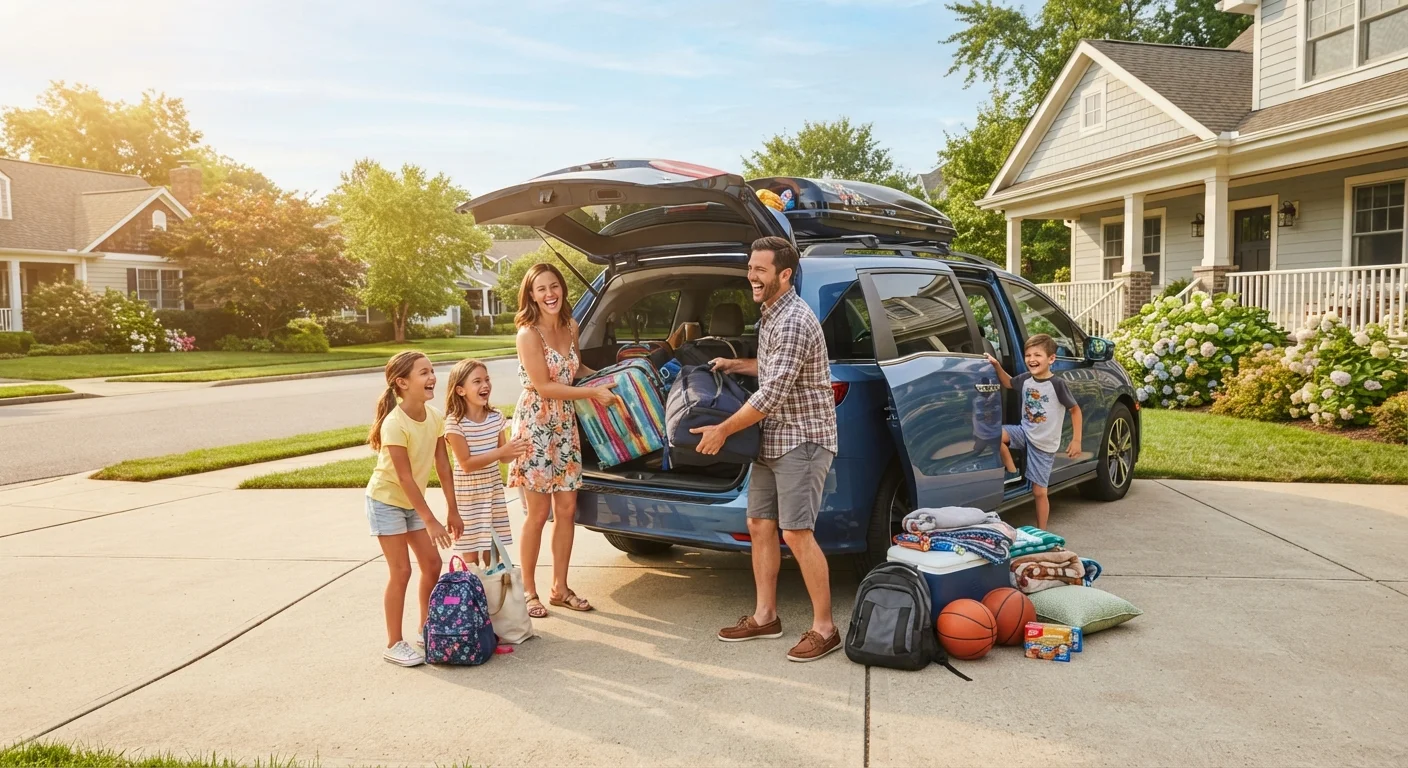
The driveway moment is electric — kids are buckled, bags are crammed in, and the adventure is officially starting. But nothing deflates that energy faster than discovering a low tire forty miles from home or realizing the tablets aren't charged. A short, methodical checklist run-through the night before — or morning of — departure prevents exactly those moments.
This isn't about perfection. It's about catching the most common slip-ups that derail family road trips: forgotten medications, dead device batteries, ignored dashboard warning lights, and a back seat stocked with zero snacks for a six-hour drive. Think of this checklist as your family's pre-flight routine — pilots use checklists not because they're forgetful, but because it works.
For a deeper look at building the whole trip from scratch, see our complete family road trip planning guide. If you're brand-new to long drives with kids, our first-timer's guide is a great place to start.
Vehicle Safety
Navigation & Route Planning
Packing & Essentials
Snacks & Hydration
Entertainment & Comfort
Home & Security
Tools That Make the Prep Go Faster
You don't need special gear to run through this checklist — but a few simple tools make the process significantly quicker and more thorough. Keep them on hand the evening before you leave.
Tire pressure gauge
Accurately reads PSI in all tires, including the spare, so you start the trip on properly inflated wheels.
Portable jump starter pack
Lets you restart a dead battery anywhere without needing another vehicle — a practical upgrade over standard jumper cables.
Offline map app (e.g., downloaded map data)
Provides turn-by-turn navigation in areas without cellular coverage, eliminating dead-zone panic.
Insulated cooler bag
Keeps drinks and perishable snacks cold and accessible throughout the driving day.
Reusable water bottles
Reduces rest stop frequency and keeps every family member hydrated on long stretches.
Portable battery pack (power bank)
Recharges phones and tablets on the road, ensuring devices stay powered through long driving days.
Traveling on a tight budget? Run this checklist alongside our pre-trip budget checklist to catch overlooked costs before you hit the road. And for the vehicle-specific safety items below, our detailed family vehicle safety walkthrough goes deeper on tires, fluids, and emergency gear.
Don't Skip the Car Seat Check
Car seat installation errors are more common than most parents realize. Even a correctly installed seat can loosen over time from normal use. Before any significant road trip, give every car seat and booster a firm tug and a visual inspection against the manufacturer's instructions. Many local fire stations and certified technicians offer free car seat inspection checks — it's worth a quick call to locate one near you.
Once you've worked through the lists, do a final visual sweep of the driveway — it's surprisingly common to leave a bag, a bike helmet, or even a pet behind. If your family travels with a dog, check out our vet visit readiness checklist to make sure your pup is road-trip-ready too.
Always Verify Safety Rules With Official Sources
Vehicle safety standards, car seat regulations, and road rules vary by state and can change. The checklist items here reflect general best practices, not legal or regulatory advice. Always verify current requirements with your state's DMV, the National Highway Traffic Safety Administration (NHTSA), and your vehicle's manufacturer documentation before traveling.
The content provided on our blog site traverses numerous categories, offering readers valuable and practical information. Readers can use the editorial team’s research and data to gain more insights into their topics of interest. However, they are requested not to treat the articles as conclusive. The website team cannot be held responsible for differences in data or inaccuracies found across other platforms. Please also note that the site might also miss out on various schemes and offers available that the readers may find more beneficial than the ones we cover.