

Start here
Why a Road Trip Works for Families
Next
Choosing Your First Route
Then
What to Pack (And What to Leave Home)
When you're ready
Keeping Kids Happy on Long Drives
Final step
What First-Timers Don't Expect
Why a Road Trip Works for Families
There's a reason the family road trip endures as an American tradition: it's genuinely flexible in a way that flights simply aren't. You set the pace, you control the stops, and there's no luggage weight limit threatening your carefully packed stroller. For families traveling with children of different ages, that flexibility is priceless.
Road trips also create shared moments that kids remember long after the destination fades — the roadside diner with the enormous pie slices, the unexpected field of wildflowers, the game everyone invented on mile 200. If you're scanning ideas for where to head, our family destinations hub is a great place to start dreaming.
Rest stop
A designated pull-off area along a highway where travelers can park, use restrooms, stretch, and sometimes grab food or information about the area.
Buffer time
Extra time built into your schedule to absorb unexpected delays — restroom stops, traffic, or a detour — without throwing off the whole day's plan.
In-vehicle bin
A small container or bag kept accessible inside the car (not in the trunk) holding items you'll need frequently during the drive, like snacks, wipes, and chargers.
Layered entertainment
A variety of entertainment options — games, audio, screens, physical activity — cycled throughout a drive so no single approach gets worn out too quickly.
Cell coverage gap
A stretch of road where mobile network signals are weak or absent, which can affect navigation apps and emergency calls. Knowing where these gaps exist on your route helps you plan around them.
Choosing Your First Route
The single best thing you can do for your first trip is to resist the urge to go big. A destination two to four hours away gives you the full road-trip experience without a brutal driving day. Once your family has one trip under its belt, longer routes feel far less daunting.
When evaluating a route, look at rest stop density, whether the road has cell coverage (useful in emergencies), and whether there are interesting stops along the way rather than one distant finish line. A trip that feels like a journey — not just a commute — keeps everyone more engaged.
Start Short, Then Scale Up
If your family has never done a long drive together, consider a short shakedown trip of an hour or two before your main journey. This low-stakes practice run reveals how your kids handle car time, what comfort items matter most, and which entertainment strategies actually work — before you're five hours from home.
For families watching their budget, our travel on a budget hub has practical strategies for keeping costs in check without draining the fun out of the trip.
What to Pack (And What to Leave Home)
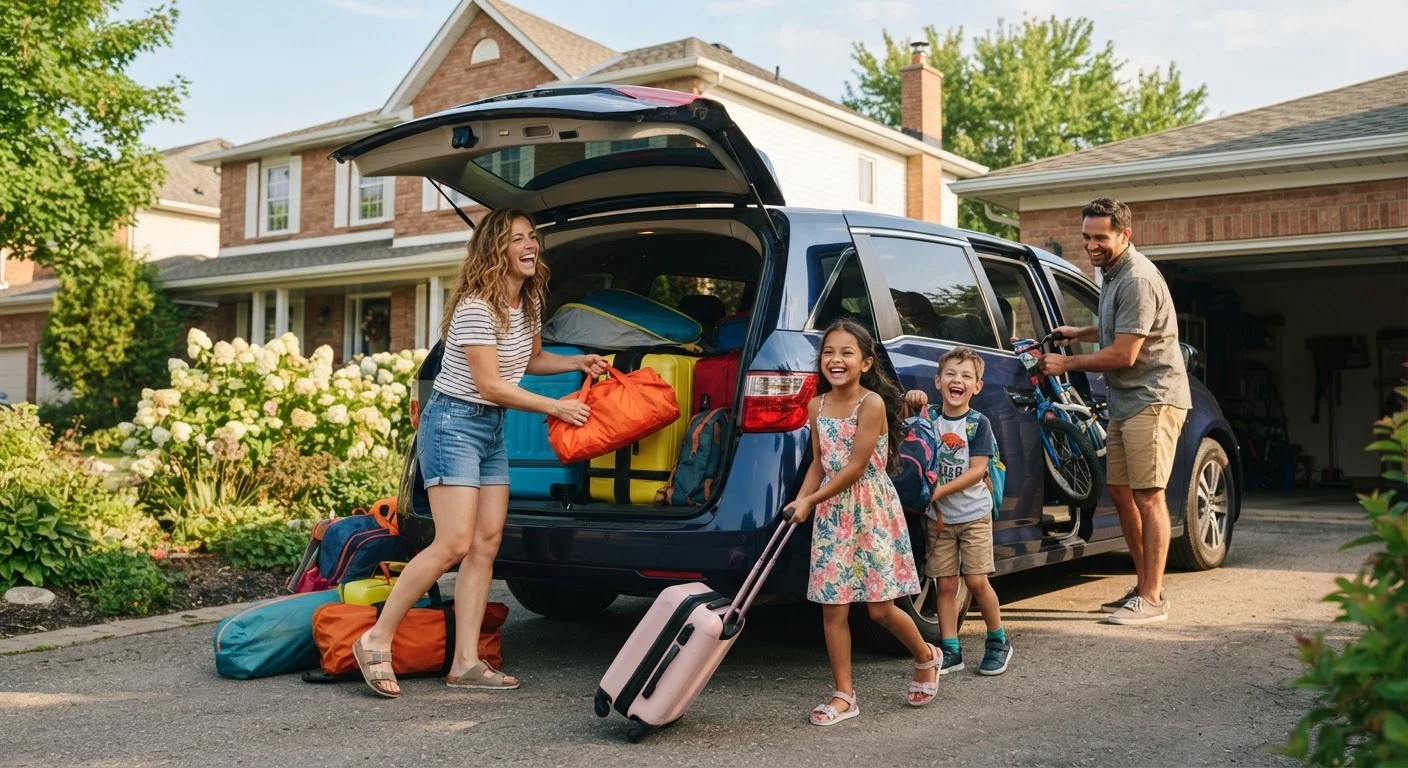
Overpacking is almost universal on a first road trip. The car feels enormous when you're loading it at home and claustrophobic after hour three. A good rule: each person gets one bag, plus a shared car bin for in-vehicle essentials.
- In-vehicle bin: snacks, reusable water bottles, wet wipes, a small first-aid kit, phone chargers, and paper maps as a backup.
- Entertainment bag: books, travel-size games, headphones, and a few small activities rotated throughout the drive.
- Comfort kit: a favorite blanket or stuffed animal for each child, especially important for younger kids.
Before you pull out of the driveway, run through a structured checklist. Our pre-departure readiness checklist covers everything from vehicle checks to downloaded playlists so nothing critical gets missed.
Keeping Kids Happy on Long Drives
Screens get a lot of credit for saving road trips — and they do help — but relying on them exclusively tends to backfire when batteries die or a child gets motion-sick from close screen time. Build a layered entertainment plan instead.
Games that need nothing but attention: license plate bingo, the alphabet sign game, "I spy," or storytelling rounds where each person adds one sentence. These also spark surprisingly real conversations.
Audiobooks and podcasts for kids: a well-chosen audiobook can hold a mixed-age group for hours. Many public libraries offer free digital audiobook borrowing through apps, so there's no extra cost involved.
Scheduled micro-events: tell kids in advance when the next stop is coming. Knowing a playground or ice cream stand is 45 minutes away gives them something concrete to look forward to, which makes the in-between time much easier.
Watch for Signs of Motion Sickness
Some children are prone to motion sickness, particularly when reading or watching screens in a moving vehicle. Signs include paleness, quietness, or complaints of a stomachache. Frequent fresh air breaks, keeping kids looking toward the horizon, and limiting close-focus activities can help. If a child regularly experiences motion sickness, consult your family's healthcare provider before the trip for guidance.
What First-Timers Don't Expect
Even the most carefully planned road trip will surprise you — usually in small, manageable ways, occasionally in bigger ones. First-time road trip families consistently report the same set of surprises, so consider yourself forewarned.
Everything takes longer than the map says. Navigation apps calculate drive time without accounting for the reality of traveling with children. Add a generous time buffer to every leg.
Kids regulate differently in the car. Some children who sleep easily at home won't nap at all in a moving vehicle. Others crash immediately. You won't fully know your child's road personality until you're out there.
The journey itself is the memory. Many families find the moments they talk about most aren't at the destination — they're the detours, the roadside discoveries, and the car singalongs. Let yourself be flexible enough to follow those moments.
It's also worth knowing which common assumptions about road trips tend to unravel in practice. Our piece on road trip myths that can derail your drive is a candid look at expectations versus reality. And when you're ready to level up, our complete road trip planning guide takes you through every stage from first mile to last.
Frequently Asked Questions
For a first trip with kids, a journey of two to four hours each way is a manageable starting point. It's long enough to feel like a real adventure but short enough to course-correct if something doesn't go to plan. You can always aim further once your family has a feel for the rhythm.
A general rule of thumb is a break every 90 to 120 minutes, though younger children may need stops more frequently. Stretch breaks, bathroom stops, and quick snack moments do double duty: they prevent restlessness and give everyone a mental reset before returning to the road.
Opt for foods that are easy to eat without utensils, not overly messy, and don't require refrigeration for short periods — think crackers, apple slices, string cheese, trail mix, and pre-cut veggies. Avoid anything crumbly or sticky that can become a major car-cleaning project.
Nighttime driving can seem tempting, but it significantly increases driver fatigue risk, which is one of the leading contributors to road accidents. If you want kids to sleep, an early-morning departure often works better — children doze off naturally and the driver is well-rested.
Overplanning the driving schedule is the most common pitfall. Families often underestimate how long restroom stops, meals, and small detours actually take. Build at least 25–30% more time than a mapping app suggests, and treat your arrival time as a range rather than a deadline.
For toddlers, novelty is everything — a bag of small, new or rarely-seen toys introduced one at a time can hold attention surprisingly well. Audiobooks aimed at young children, simple window-spotting games, and familiar sing-along music also help. Keep expectations realistic: short drives with frequent stops work far better than marathon hauls.
The content provided on our blog site traverses numerous categories, offering readers valuable and practical information. Readers can use the editorial team’s research and data to gain more insights into their topics of interest. However, they are requested not to treat the articles as conclusive. The website team cannot be held responsible for differences in data or inaccuracies found across other platforms. Please also note that the site might also miss out on various schemes and offers available that the readers may find more beneficial than the ones we cover.