

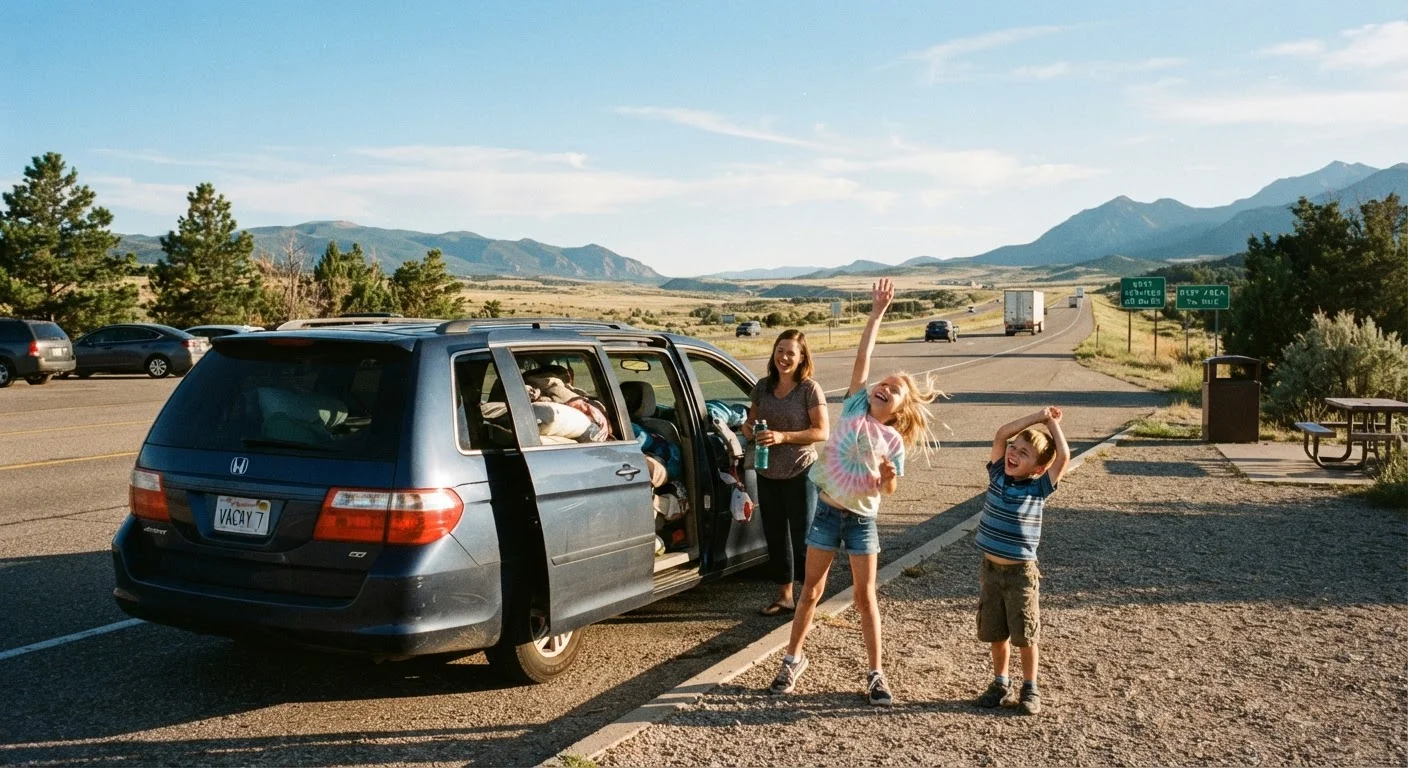
The Real Reason Road Trips Feel Endless
You mapped it out. You packed the night before. And yet, somewhere around hour four, the car feels like a pressure cooker. Sound familiar? The good news is that a draining road trip is almost never bad luck — it's a predictable result of a handful of very fixable planning missteps.
Most families make the same errors trip after trip, often without realizing it. Understanding why these mistakes happen — and what to do instead — can transform a grind into the adventure it's supposed to be. For a broader planning foundation, see our complete family road trip planning guide.
Drive Time Estimates Don't Account for Kids
Navigation apps calculate drive time for a vehicle that never stops. With children on board, a 6-hour map estimate can easily become 8–9 hours once meals, bathroom breaks, and energy resets are factored in. Always pad your estimated arrival time generously — and share that adjusted window with everyone in the car.
Common Mistakes That Stretch Every Mile
These are the planning errors that quietly derail family drives — and the practical fixes that keep trips on track.
Trusting the GPS estimated arrival time as a realistic goal.
Why it happens: Navigation apps are built around continuous driving, so families accept that number as their target without adjusting for children's needs.
Leaving without a packed activity plan for kids.
Why it happens: Parents assume a tablet loaded with shows will handle everything, but children — especially younger ones — grow restless even with screens after an hour or two.
Packing the car with no system for what's accessible during the drive.
Why it happens: Everything gets loaded quickly before departure, burying snacks, wipes, and entertainment under luggage in the trunk.
Skipping planned rest stops to maintain pace.
Why it happens: Families fixate on arrival time and treat stopping as lost time, not understanding that rest stops actively prevent the fatigue and irritability that slow everyone down later.
Choosing a route purely based on the shortest mileage.
Why it happens: Shorter distance looks efficient on a map, but families often end up on routes that lack adequate rest areas, food options, or interesting scenery to break the monotony.
Departing at an inconvenient time for the family's natural rhythm.
Why it happens: Many families default to early morning departures thinking they'll "get ahead of traffic," without considering whether that start time works for their children's sleep or hunger schedules.
90 min
Recommended maximum stretch between breaks for families with young children
Travel safety researchers and pediatric travel experts generally advise stopping every 90–120 minutes to allow children to move, use restrooms, and reset.
2–3 hrs
Average underestimate of total drive time on family road trips
Travel industry surveys consistently find that families with children underestimate total trip duration by two to three hours compared to navigation app estimates.
Route decisions matter more than families typically realize. Before your next trip, it's worth reviewing US road trip routes worth knowing to spot family-friendly corridors with good rest-stop infrastructure. And if you want to stress-test your prep before departure, our pre-departure checklist catches the details that are easy to forget.
Many of these mistakes are also rooted in assumptions families carry without questioning. Common road trip myths — like "the kids will sleep through it" — deserve a closer look before you hit the road.
Setting Yourself Up for a Better Drive
The families who consistently enjoy road trips aren't the ones with the newest gear or the most flexible kids — they're the ones who plan with reality in mind. They budget extra time, keep the cabin organized, and treat rest stops as a feature, not a failure.
If this is your first time tackling a long drive with children, what to expect on your first family road trip offers a reassuring walk through each stage of the journey. And if budget is a concern on top of logistics, family travel on a budget has strategies for keeping costs in check without sacrificing the experience.
One last thing worth remembering: the goal of a road trip isn't just to arrive. The drive itself is part of the trip. When you stop racing the GPS and start building in breathing room, the whole journey tends to feel shorter — not longer.
The content provided on our blog site traverses numerous categories, offering readers valuable and practical information. Readers can use the editorial team’s research and data to gain more insights into their topics of interest. However, they are requested not to treat the articles as conclusive. The website team cannot be held responsible for differences in data or inaccuracies found across other platforms. Please also note that the site might also miss out on various schemes and offers available that the readers may find more beneficial than the ones we cover.