

Our Verdict
No single lodging type wins for every family or every night of a road trip. Campgrounds reward budget-conscious families who pack light and plan ahead; motels serve spontaneous or tired travelers best; vacation rentals make the most sense for larger groups staying multiple nights; and RV parks suit those who've invested in the rolling home lifestyle. The smartest road-tripping families often mix and match across a single trip.
| Best for | Recommended |
|---|---|
| Families on a tight budget who enjoy the outdoors | Tent campgrounds or RV parks |
| Travelers prioritizing flexibility and easy booking | Budget or mid-range motels |
| Larger families needing kitchen access and multiple bedrooms | Vacation rentals |
| Families who want comfort without unpacking nightly | RV parks with full hookups |
Why Your Lodging Choice Matters More Than You Think
On a road trip, overnight stops aren't just places to sleep — they set the pace and mood of the entire journey. A rough night in an uncomfortable motel can make the next day's drive miserable, while a gorgeous lakeside campsite can become the highlight kids talk about for years. Before committing to one approach, it helps to weigh each option honestly against your family's specific priorities: budget, children's ages, how much gear you're willing to haul, and how far in advance you like to plan.
For a broader look at how these choices fit into the full planning picture, see our complete family road trip planning guide.
| Tent Camping | RV Park | Budget Motel | Vacation Rental | |
|---|---|---|---|---|
| Typical nightly cost | $10–$30 | $40–$80 | $60–$120 | $80–$200+ |
| Advance booking required | Often yes | Recommended | Usually no | Yes, often days ahead |
| Kitchen access | Camp stove only | RV kitchen | None or mini-fridge | Full kitchen |
| Setup effort | High | Moderate | None | Low |
| Best for family size | Small groups | Any with RV | 2–4 people | 4+ people |
| Flexibility for schedule changes | Moderate | Moderate | High | Low |
| Kid-friendly amenities | Nature, playgrounds | Pools, playgrounds | Limited | Varies widely |
Tent Camping and RV Parks: The Outdoor Options
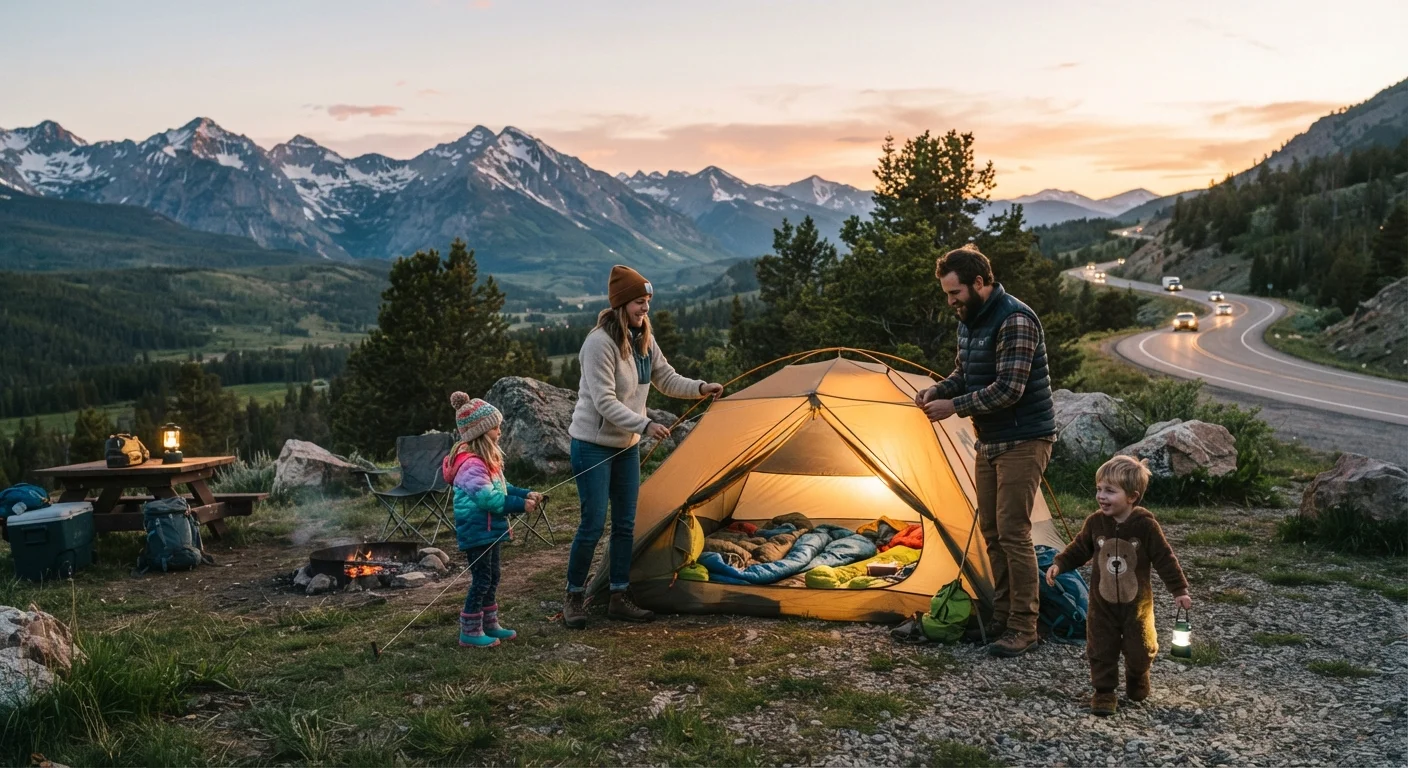
Tent camping at a public or private campground is generally the most affordable overnight option on a road trip. National forest campgrounds and many state park sites can cost as little as $10–$30 per night, though popular spots — especially those run by the National Park Service — often require reservations weeks or months ahead. Families with young children should factor in setup time, proximity to restrooms, and the real possibility of a restless night if a toddler decides 2 a.m. is adventure time.
RV parks occupy a comfortable middle ground. If your family already owns or rents an RV or travel trailer, full-hookup sites (water, electric, sewer) typically run $40–$80 per night at private parks, with amenities like pools, playgrounds, and laundry on-site. The trade-off is the upfront investment in the vehicle itself and the learning curve of driving something large.
Reserve Campgrounds Early for Peak Season
Popular campgrounds — especially those inside national parks — fill up months in advance during summer. Recreation.gov and state park reservation systems typically open booking windows 6 months out. If your road trip is during peak travel months, treat campground reservations with the same urgency as hotel bookings. A backup plan (a nearby private campground or a motel) is always smart for the unexpected.
Motels and Hotels: The Plug-and-Play Approach
For families who prize convenience above all else, a motel or standard hotel room removes nearly every logistical hurdle. You pull in, check in, and the beds are already made. Many budget-friendly chains along major interstates allow same-day bookings, which suits families who prefer a flexible, see-how-far-we-get driving style. The downside: costs rise quickly when you need two rooms or a suite for a family of five, and eating every meal out adds up fast without a kitchen.
That cost-versus-convenience tension is explored in detail in our piece on road trip vs. fly-and-stay vacation formats, which breaks down how lodging overhead affects your total trip budget.
Watch for Hidden Costs at Motels
Advertised nightly rates don't always include resort fees, pet fees, or the cost of parking in urban areas. For a family needing two connecting rooms, the final bill can be significantly higher than the listed price per room. Always check the total at checkout — not just the headline rate — before confirming a booking.
Vacation Rentals: Home Base on the Road
Whole-home vacation rentals have grown dramatically as a road trip option, particularly for families of four or more. A three-bedroom house rented for two or three nights can cost less per person than equivalent hotel rooms, and the kitchen access alone can cut food costs significantly. Rentals also offer genuine living space — a backyard, a washer-dryer, and room for kids to decompress after a day in the car.
The catch: minimum-stay requirements, cleaning fees, and strict check-in windows make vacation rentals less flexible than a motel. They work best as anchors in your itinerary — a two-night stay midway through a longer route — rather than nightly stops. For a deeper dive, our comparison of vacation rentals vs. hotel rooms covers what families of different sizes should consider.
Mixing Lodging Types: A Strategy Worth Considering
Many experienced road-tripping families find that no single lodging type works for every night of a trip. A practical approach: book a vacation rental for multi-night destination stays, rely on motels for flexible transit nights, and drop in a campground night or two when the scenery calls for it. This mix-and-match strategy keeps costs manageable while building variety into the trip itself.
Whatever combination you choose, planning lodging in tandem with your driving segments helps avoid the trap of arriving exhausted to a town with no availability. Lodging cost strategies that work across trip types offers practical approaches to keeping nightly rates in check regardless of which option you choose. And if common planning assumptions are tripping you up, road trip myths that can derail your drive is worth a read before you hit the road.
The content provided on our blog site traverses numerous categories, offering readers valuable and practical information. Readers can use the editorial team’s research and data to gain more insights into their topics of interest. However, they are requested not to treat the articles as conclusive. The website team cannot be held responsible for differences in data or inaccuracies found across other platforms. Please also note that the site might also miss out on various schemes and offers available that the readers may find more beneficial than the ones we cover.