

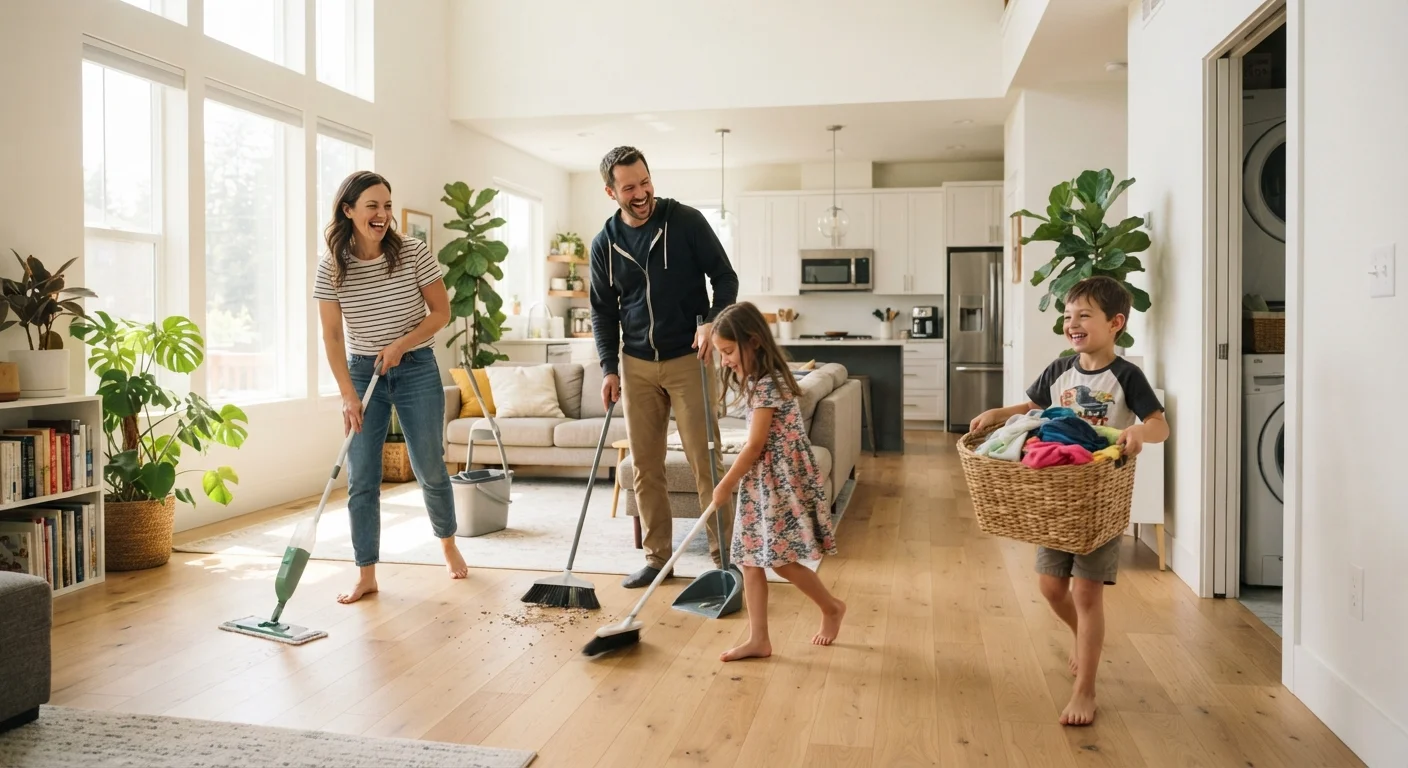
Why Chores Count as Real Physical Activity
It might feel like a stretch to call vacuuming a workout, but the science is straightforward: physical activity is any movement that requires your muscles to work and your body to use energy. The U.S. Department of Health and Human Services' Physical Activity Guidelines for Americans make clear that activity doesn't have to happen in a gym to be meaningful — it just has to happen.
For families managing packed schedules, this reframe is practically significant. Most households already spend meaningful time each week on tasks involving sustained movement: scrubbing, carrying, bending, reaching, and walking. When approached with some intentionality — consistent pace, full effort, and the whole family involved — these tasks shift from obligation to opportunity. As explored in why everyday movement matters more than gym time, incidental daily activity can be just as meaningful for family health as structured sessions.
This isn't about replacing dedicated exercise. It's about reducing the gap between what families intend to do and what actually happens. Chores are already on the schedule. The goal is to extract more physical value from time you're already spending.
This Is General Information, Not Medical Advice
The guidance in this article is intended as general health education for typical healthy families. It is not a substitute for advice from a qualified healthcare professional. If any family member has a health condition, injury, or concern about physical activity, consult their doctor before making changes to their routine.
How to Structure Your Family Chore Workout
The steps below walk you through a practical approach — from auditing your current chores to building a repeatable weekly schedule. The goal is a light structure that amplifies the fitness value of tasks your family is already doing, without turning housework into a performance or adding stress.
What you will need
Audit Your Household Chores for Movement Potential
Before adding structure, take stock of the chores your household already does each week. List tasks like vacuuming, mopping, scrubbing bathrooms, taking out bins, mowing the lawn, raking leaves, and carrying groceries. Each involves sustained physical effort — bending, lifting, pushing, or walking — that qualifies as moderate-intensity physical activity when performed at a reasonable pace.
Research from public health bodies, including the U.S. Department of Health and Human Services, recognizes that activity doesn't need to be structured exercise to count toward weekly movement targets. Identify which tasks in your home already get your heart rate up and which ones could with a little more effort.
Assign Tasks by Age and Physical Demand
Distribute chores so that each family member is working at a level that's both safe and physically engaging for them. A rough guide:
- Young children (ages 4–7): Wiping surfaces, carrying light items to another room, picking up toys, sorting laundry by color.
- Older children (ages 8–12): Vacuuming, mopping, sweeping, unloading the dishwasher, taking out lighter bins.
- Teenagers: Scrubbing bathrooms, mowing, carrying heavy groceries, raking or shovelling.
- Adults: Any task, with attention to lifting technique and working at a brisk, sustained pace.
Rotating assignments weekly prevents boredom and ensures everyone develops a range of movement patterns — pushing, pulling, squatting, and reaching.
Set a Pace That Elevates Your Heart Rate
The difference between a chore as a passive task and a chore as exercise often comes down to pace. Moving deliberately and continuously — rather than pausing frequently to check a phone — is what shifts light activity into the moderate range. A practical test: you should be able to hold a conversation but find singing comfortably difficult. That's the sweet spot.
Try working in 10–15 minute focused blocks without stopping. This mirrors the guidance that bouts of activity as short as 10 minutes can contribute meaningfully to weekly totals, according to broadly accepted public health frameworks.
Add Simple Movement Upgrades to Routine Tasks
Small modifications can significantly increase the physical benefit of ordinary chores without adding time:
- Vacuuming: Use wide, deliberate strokes that engage your core; do a walking lunge between rooms.
- Laundry: Squat down to the basket rather than bending at the waist; carry loads one at a time to increase trips.
- Grocery carrying: Walk from the car in multiple trips instead of loading up both arms.
- Gardening: Kneel, squat, and change positions regularly to activate different muscle groups.
- Mopping or scrubbing: Increase upper-body engagement by using longer, fuller strokes.
These aren't gimmicks — they simply ensure you're getting more out of time you're already spending.
Build a Weekly Family Chore-Workout Schedule
Consistency is the ingredient that turns scattered activity into a genuine fitness habit. Designate two or three chore sessions per week as intentional family movement times — not just to-do list items. Block 20–30 minutes, assign roles ahead of time, and treat the session like any other family commitment.
You might combine a Saturday morning clean with outdoor tasks like raking or gardening, then reserve a weekday evening for indoor tasks. This approach complements a broader family fitness routine — see building a family fitness routine from the ground up for guidance on structuring weekly activity across different contexts.
Reflect and Reinforce After Each Session
After a chore workout, take two minutes to acknowledge what everyone contributed. This doesn't need to be elaborate — a simple "we got a lot done and kept moving the whole time" reinforces the connection between effort and outcome. For children especially, positive reinforcement around physical effort builds intrinsic motivation that outlasts any reward chart.
Over time, track whether the household is hitting broader movement goals. For further context on how incidental activity fits into the bigger picture, explore why everyday movement matters more than gym time.
Make It a Game, Not a Grind
Set a upbeat playlist and challenge the family to finish a room before a song ends. Framing chores as a timed challenge rather than a chore list reduces resistance from kids and keeps everyone moving at a brisk, beneficial pace. Rotate who picks the playlist each week to maintain buy-in.
For a broader view of how this fits alongside other family movement habits, the guide on family fitness from all angles covers how movement, play, and rest work together over time. And if you're looking to get the whole family genuinely invested in shared home responsibilities, getting the whole family on board with home organization offers practical strategies for building consistent participation.
This article provides general health and wellness information for educational purposes only. It is not intended as medical advice. Please consult a qualified healthcare professional before making any significant changes to your or your family's physical activity routine, particularly if any family member has an existing health condition.
The content provided on our blog site traverses numerous categories, offering readers valuable and practical information. Readers can use the editorial team’s research and data to gain more insights into their topics of interest. However, they are requested not to treat the articles as conclusive. The website team cannot be held responsible for differences in data or inaccuracies found across other platforms. Please also note that the site might also miss out on various schemes and offers available that the readers may find more beneficial than the ones we cover.