

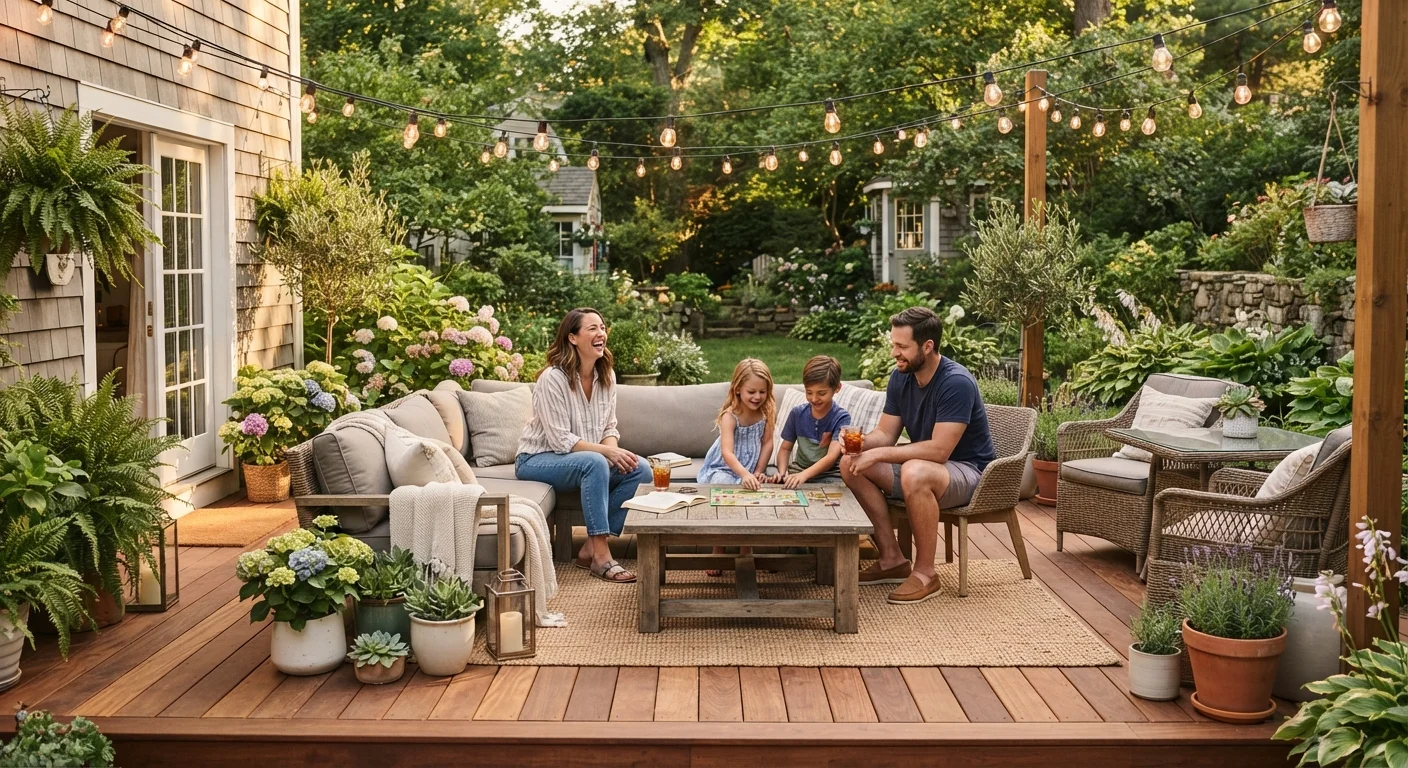
Why Most Outdoor Spaces Go Unused
Most families have outdoor space they rarely use. A concrete patio with two lawn chairs, a deck that bakes in afternoon sun, or a yard that feels like a maintenance obligation rather than a retreat — these are common stories. The problem usually isn't a lack of space; it's a lack of intentional design.
An outdoor living area that actually gets used has a few things in common: it's comfortable across different weather conditions, it's organized so setup is minimal, and it serves the real activities your family enjoys. None of that requires a major renovation budget. What it requires is a clear-eyed look at what's working against you — and a few targeted improvements.
The tips below cover the changes that consistently make the biggest difference, drawing on principles of outdoor design that balance comfort, durability, and practicality. Whether you're starting from a bare patch of grass or refining an existing patio, these strategies will help you build a space your family genuinely wants to spend time in. If you're also thinking about the surrounding yard, our spring yard prep checklist is a great companion resource.
Start with one zone, not the whole yard
It's tempting to redesign your entire outdoor space at once, but that approach often stalls. Instead, identify the single area where your family is most likely to spend time — usually near the back door — and make that spot as comfortable and functional as possible first. Once that zone is working well, expanding is much easier and more rewarding.
Seven Ways to Build an Outdoor Space Your Family Will Actually Use
Create distinct zones for different activities
A single undifferentiated patio serves no one particularly well. Instead, think of your outdoor space the way you'd think about rooms in a house. Designate areas for dining, lounging, play, and gardening. Even in a modest backyard, a simple outdoor rug, a potted plant boundary, or a change in surface material can signal a shift from one zone to another.
Zoning encourages everyone in the family to find their spot — kids have a place to play, adults have a place to relax, and the grill isn't sitting in the middle of the seating area. It also makes the space feel larger and more intentional without adding square footage.
Distinct zones make a small backyard feel purposeful and large enough for the whole family.
Solve the shade problem first
Heat is the single biggest reason families retreat indoors during summer. If your patio or deck gets direct afternoon sun, no amount of comfortable furniture will keep people outside for long. A shade sail, pergola, or large market umbrella can dramatically extend usable hours — and they don't require permanent construction.
When evaluating shade options, consider the direction your space faces. A west-facing patio will need afternoon coverage; a north-facing one may rarely need it at all. Retractable awnings offer flexibility if your needs change with the season or time of day.
Solving afternoon heat exposure is the single highest-impact change you can make to an outdoor space.
Add lighting to extend evenings outdoors
Once the sun goes down, most outdoor spaces go dark — and unused. String lights, solar-powered path lighting, and low-voltage deck lighting can transform an evening backyard into a genuinely comfortable environment. Lighting also improves safety, reducing trip hazards on steps and uneven surfaces.
Solar string lights require no wiring and are easy to reposition seasonally. For a more permanent solution, low-voltage landscape lighting systems are relatively straightforward for an experienced DIYer — though any work involving your home's main electrical system should be handled by a licensed electrician.
Outdoor lighting turns a backyard into an evening destination, not just a daytime one.
Invest in weather-resistant comfort
Outdoor furniture that looks inviting but feels uncomfortable, or cushions that have to be lugged inside every time it rains, quickly become reasons to stay indoors. Look for seating with durable, all-weather frames and cushions covered in solution-dyed acrylic fabrics, which resist fading and mildew better than standard outdoor textiles.
Side tables, footrests, and outdoor throws make a meaningful difference in how long people actually stay outside. You don't need an outdoor sectional to create comfort — a few well-chosen, genuinely comfortable chairs and a sturdy table go further than a large set that no one wants to sit in.
Furniture that's both comfortable and weatherproof removes the biggest daily barrier to outdoor use.
Plan for storage so setup is effortless
One of the quietest obstacles to outdoor enjoyment is the friction of setup. If games, cushions, and gardening tools are scattered across the garage, using the outdoor space requires a minor excavation every time. A dedicated outdoor storage bench, deck box, or small shed puts everything where it belongs — and makes tidying up just as easy.
Good storage also protects your investment. Cushions stored in a ventilated box last significantly longer than those left exposed to moisture. Our guide to seasonal home organization covers how to rotate outdoor gear efficiently as the seasons change.
When setup takes two minutes instead of twenty, families are far more likely to head outside spontaneously.
Choose low-maintenance plantings strategically
Plants make an outdoor space feel alive and inviting, but high-maintenance gardens can make the whole area feel like a chore. Native and regionally adapted plants typically require less watering, fewer pesticides, and minimal seasonal intervention once established — making them ideal for busy families.
Container gardening is a flexible middle ground: pots can be moved, swapped out seasonally, and managed with far less effort than in-ground beds. Even a few well-placed pots of herbs, flowering perennials, or ornamental grasses can significantly change how a space feels. If you're ready to go further, our first-season family garden roadmap offers a practical starting point.
Native and container plants give you the beauty of a garden without the burden of constant upkeep.
Keep kids moving outside with purpose-built play areas
A yard that has no clear place for children to play often means children who drift back indoors. Carving out even a modest activity zone — a flat grassy area for lawn games, a sandbox tucked in a corner, or a simple climbing structure — gives kids a reason to stay outside independently while adults relax nearby.
The activity zone doesn't need to be elaborate. Chalk, bubbles, a sprinkler, and a badminton net represent minimal investment for significant outdoor time. For broader ideas on keeping children active in every season, see our guide on keeping kids moving year-round.
A dedicated play zone keeps children outside longer and gives adults space to genuinely relax nearby.
Deck maintenance matters too
Any improvements you make to a deck surface are only as good as the structure underneath them. Before adding furniture, lighting, or planters, it's worth checking that your deck is in sound condition. Our season-by-season deck maintenance guide walks through what to inspect and when, so your investment stays safe and protected.
Keep It Simple and Enjoy It More
The outdoor spaces that get used most aren't necessarily the most elaborate — they're the most friction-free. When cushions are stored nearby, when the grill is accessible, and when there's shade at 3 p.m., families naturally gravitate outside. Focus on removing the small obstacles that make going outdoors feel like more effort than it's worth.
Pair your outdoor improvements with what's happening inside your home. Seasonal organization indoors can make it easier to rotate outdoor gear in and out as the weather shifts, keeping both spaces functional all year long.
The content provided on our blog site traverses numerous categories, offering readers valuable and practical information. Readers can use the editorial team’s research and data to gain more insights into their topics of interest. However, they are requested not to treat the articles as conclusive. The website team cannot be held responsible for differences in data or inaccuracies found across other platforms. Please also note that the site might also miss out on various schemes and offers available that the readers may find more beneficial than the ones we cover.