

Summary
18 items · 1–3 hours across a weekend
Why Spring Prep Sets the Whole Season Up for Success
A garden that thrives in summer is almost always one that was properly set up in spring. The weeks just before and after the last frost are your window to fix soil, refresh beds, and get tools in working order — before plants are depending on you. Skipping this window rarely saves time; it usually just moves the problems to June when you're busier and the weeds are winning.
This checklist is designed for families who want a productive, enjoyable outdoor space without turning it into a second job. Work through the groups in order, tackle items in spare weekend hours, and check them off together. If you're gardening in a limited space, our container gardening guide covers the same seasonal principles adapted for pots and small patios.
Yard Cleanup
Soil Preparation
Tools and Equipment
Mulching and Weed Control
Planting Planning
Tools, Soil, and Supplies You'll Need
Before you begin checking items off, gather what you need. Running back to the garage mid-task breaks momentum and frustrates kids who are trying to help. Lay tools out the night before so the morning gets off to a fast start.
Garden fork or spade
Loosens and turns compacted soil in preparation for planting.
Pruning shears
Trims back dead growth on perennials and shapes shrubs before new growth emerges.
Soil pH test kit
Measures soil acidity and nutrient levels so amendments can be targeted correctly.
Compost or aged organic matter
Replenishes soil nutrients and improves drainage and moisture retention.
Garden rake
Levels amended soil and collects debris from beds and lawn areas.
Mulch (wood chip or straw)
Suppresses weeds and helps retain soil moisture once beds are prepared.
Hose with adjustable nozzle
Allows gentle watering of seedlings and newly planted areas without disturbing soil.
Seed starting trays and grow lights
Used indoors to germinate warm-season vegetables 6–8 weeks before the last frost.
Not sure which soil type you're working with? Our guide to common garden soil types can help you identify what you have and what it needs. Understanding your soil before you amend it prevents wasted money on the wrong products.
Don't Work Wet Soil
Digging or walking on saturated spring soil compacts it heavily, destroying the air pockets that roots need. Squeeze a handful: if it forms a ball and doesn't crumble when poked, wait a few more days before working the bed. Patience here pays off all season long.
Frost Date Timing Matters
Planting tender seedlings outdoors too early — even a week before your last frost date — can kill them overnight and waste weeks of indoor growing effort. Always check a local weather resource or your regional extension service for the most current frost date estimates for your ZIP code.
Making It a Family Effort
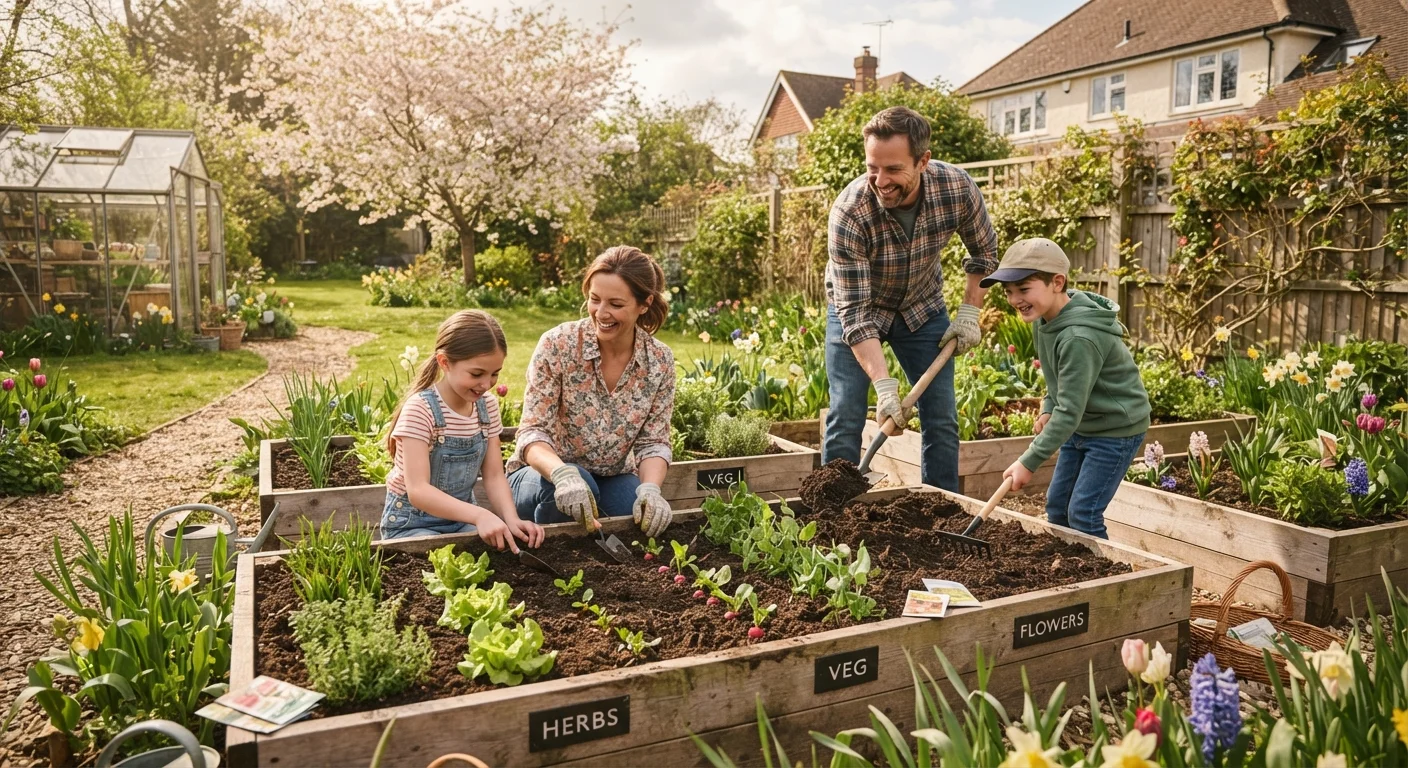
Spring yard prep genuinely works as a family project — most tasks require energy and enthusiasm more than skill. Assign younger children the jobs of raking light debris, watering in amendments, or pressing seeds into prepared soil. Older kids can handle sharpening tools with adult supervision, turning compost, and reading seed packet instructions.
Once the yard is prepped and planted, the maintenance becomes much lighter. For ideas on making your outdoor space one the family actually spends time in all season long, see our article on outdoor living spaces that get used all season. If your spring to-do list extends beyond the garden to the deck, check out deck maintenance through the seasons for a companion checklist.
Know Before You Dig: Call 811 First
Before you break ground on any new bed, install edging, or drive stakes deeper than a few inches, contact 811 — the national dig-safe hotline — to have underground utility lines marked. This is required by law in most states and takes only a few days to arrange. Striking a buried line is dangerous and can result in serious injury or costly repairs.
Planning your garden budget alongside seasonal household expenses is smart. The Home Improvement hub has practical resources for prioritizing outdoor projects, and if spring spending is making you think about the family budget more broadly, the Family Budgeting hub is a useful companion resource.
The content provided on our blog site traverses numerous categories, offering readers valuable and practical information. Readers can use the editorial team’s research and data to gain more insights into their topics of interest. However, they are requested not to treat the articles as conclusive. The website team cannot be held responsible for differences in data or inaccuracies found across other platforms. Please also note that the site might also miss out on various schemes and offers available that the readers may find more beneficial than the ones we cover.