

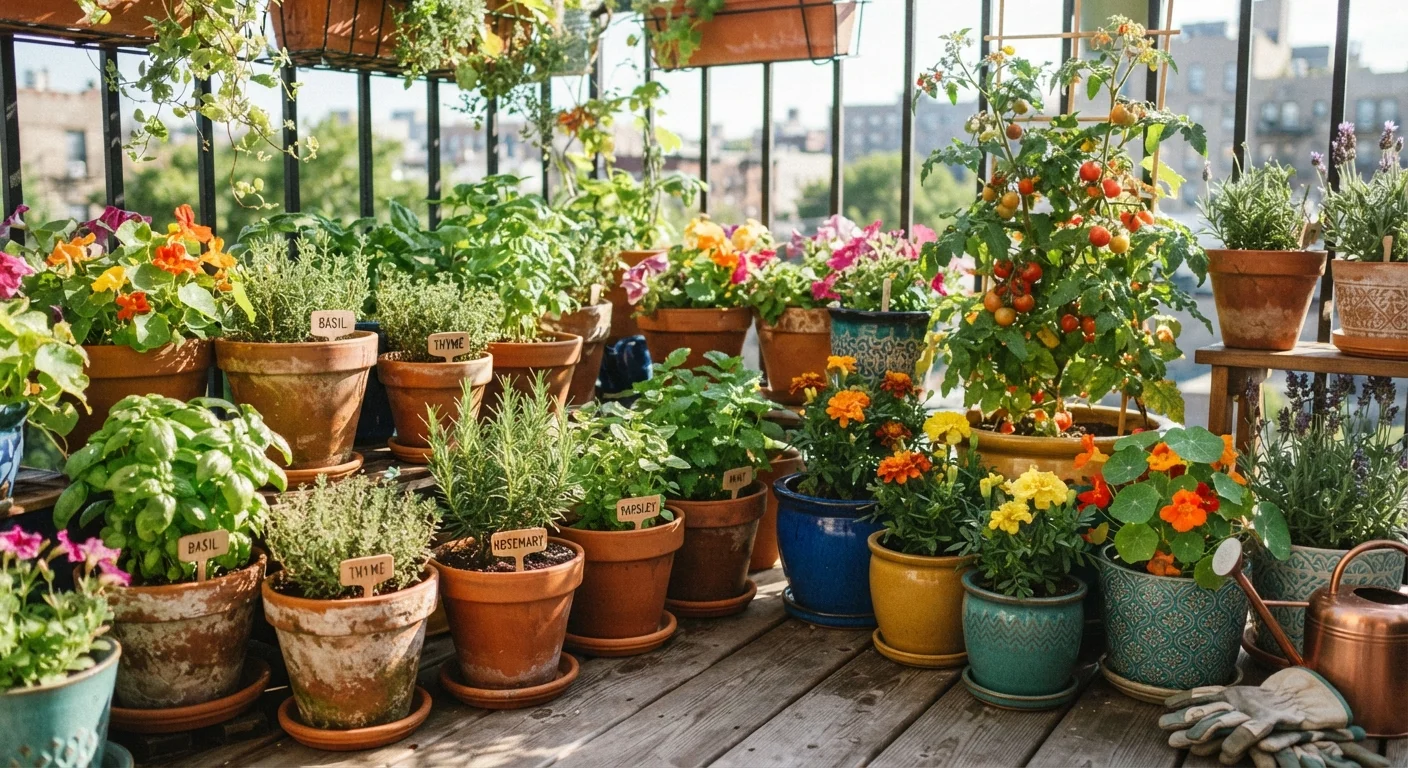
Why Container Gardening Works for Families
You don't need a sprawling backyard to grow food, flowers, or fragrant herbs. Container gardening — growing plants in pots, planters, window boxes, or any suitable vessel — lets families garden on patios, balconies, driveways, stoops, and rooftops. It requires no tilling, no major landscaping investment, and very little square footage.
Beyond the small footprint, containers offer real practical advantages. You control the soil quality entirely, which means fewer weeds and fewer soil-borne pest problems. You can move pots to chase sunlight or shelter plants from frost. Kids can take ownership of a single pot, making it a low-stakes entry point into gardening. And when the season ends, cleanup is as simple as emptying a planter.
If you're weighing container gardening against other approaches, see our comparison of raised beds versus in-ground plots to understand how each method fits different yard types and goals.
80%
U.S. households with some outdoor space
According to the National Gardening Association, the vast majority of American households have access to at least a patio, balcony, or small yard suitable for container gardening.
5 gallons
Minimum pot size for tomatoes
Horticultural guidelines generally recommend at least a 5-gallon container for compact tomato varieties to allow adequate root development.
6+ hours
Daily sunlight most vegetables need
Most food-producing container plants require a minimum of six hours of direct sun per day, according to standard horticultural recommendations.
Choosing the Right Containers
The container you choose affects drainage, root health, weight, and how often you'll need to water. Here's what to consider:
- Drainage holes: Every container must have at least one drainage hole at the bottom. Without it, water pools around roots and causes rot — one of the most common reasons container plants fail.
- Size: Bigger is generally better. Small pots dry out quickly and restrict root growth. Tomatoes and peppers need at least a 5-gallon container; dwarf varieties can manage in less. Herbs and lettuce do well in shallower, 6–8 inch pots.
- Material: Terracotta is breathable and attractive but dries out faster and can crack in freezing temperatures. Plastic is lightweight and retains moisture longer — practical for balconies with weight limits. Fabric grow bags promote healthy root structure by allowing air pruning (when roots reach the air at the bag's edge, they stop growing and branch inward).
- Color: Dark-colored containers absorb more heat. In hot climates, lighter colors help keep roots from overheating in mid-summer.
Place a small square of window screen or a coffee filter over the drainage hole before adding soil — it keeps mix from washing out while still allowing water to drain freely.
Soil loss through drainage holes is a common frustration that leads to uneven watering and mess on patios; this simple step eliminates the problem.
Group containers together during hot, dry spells — clustered pots create a slightly more humid microclimate and reduce how quickly each plant loses moisture.
Transpiration from leaves raises ambient humidity slightly, which can slow water loss and reduce how often you need to water during peak summer heat.
Avoid using containers that previously held chemicals, motor oil, or other toxic materials, even after cleaning — residue can persist in porous materials.
Picking the Best Soil Mix
Garden soil — the kind you'd dig from your yard — is too dense for containers. It compacts under repeated watering, blocks oxygen from reaching roots, and drains poorly. Containers require a potting mix specifically formulated for the confined environment.
A quality potting mix is typically light and porous, containing ingredients such as peat moss or coconut coir (which retains moisture), perlite or vermiculite (which improves drainage and aeration), and sometimes composted bark. These components keep the mix from compacting and allow roots to breathe.
If your mix doesn't include slow-release fertilizer, you'll need to feed plants separately. Some gardeners blend a small amount of finished compost into their potting mix at the start of the season for a gentle nutrient boost. Learn more about making your own compost with our guide to composting kitchen scraps at home.
Refresh Potting Mix Each Season
Potting mix breaks down over time, losing its light, airy structure and much of its nutrient content. Rather than reusing the same mix year after year, top off or replace it at the start of each growing season. Blending in a cup or two of finished compost is an economical way to reinvigorate older mix.
For a deeper look at how soil types behave differently, our guide to common garden soil types explains clay, loam, sandy, and silty soils clearly.
What to Plant in Containers
Almost any plant that grows in the ground can grow in a container — with the right pot size and care. Here are reliable categories for families starting out:
Vegetables
- Tomatoes: Choose compact or dwarf varieties labeled for container growing. They need a large pot (at least 5 gallons) and a stake or cage for support.
- Lettuce and salad greens: Fast-growing and shallow-rooted, ideal for window boxes.
- Peppers: Thrive in containers and handle heat well.
- Radishes and carrots: Choose shorter carrot varieties and deep pots (at least 12 inches).
Herbs
Herbs are among the most rewarding container plants — compact, useful in the kitchen, and forgiving for beginners. Basil, parsley, chives, cilantro, and mint are all excellent choices. Note that mint spreads aggressively, so it's actually better contained in its own pot. Our related guide on growing herbs indoors and outdoors covers which varieties succeed in each setting.
Flowers
Marigolds, petunias, geraniums, and zinnias add color and can help deter some pests near vegetable containers. For families interested in supporting local ecosystems, consider native flowering plants that attract pollinators.
Watering and Feeding Your Container Garden
Watering is where most container gardens succeed or fail. Because pots have limited soil volume and drain completely with each watering, they dry out significantly faster than in-ground beds — sometimes needing water every day during hot summer weather.
A simple test: push your finger about an inch into the soil. If it feels dry at that depth, it's time to water. Water thoroughly until liquid runs freely from the drainage holes, which ensures the entire root zone gets moisture and flushes away salt buildup from fertilizers.
Don't Let Containers Sit in Standing Water
Saucers placed under pots to protect surfaces can trap water, keeping the drainage hole submerged. This quickly leads to root rot. Empty saucers after heavy rain or watering, or raise pots slightly on pot feet or bricks to ensure water flows away freely.
Nutrients are a critical piece of the container-gardening puzzle. Unlike garden beds where soil microbes and organic matter slowly release nutrients, potting mix is essentially inert — and frequent watering leaches out whatever nutrients are present. Plan to apply a balanced liquid fertilizer every two to four weeks during the growing season, or use a slow-release granular fertilizer worked into the soil at planting. If your plants look pale or are growing slowly, nutrient deficiency is a likely cause. See our guide on common reasons vegetable gardens underperform for a broader diagnosis checklist.
Troubleshooting Common Container Problems
Even well-planned container gardens run into issues. Here's how to address the most common ones:
- Wilting despite moist soil
- This often signals root rot from poor drainage or overwatering. Check that drainage holes aren't blocked and that you're not watering before the top inch of soil dries.
- Leggy, stretched growth
- Plants reaching awkwardly toward light are not getting enough sun. Move containers to a sunnier location — most vegetables and herbs need at least six hours of direct sunlight daily.
- Yellow leaves
- Could indicate overwatering, nutrient deficiency, or natural aging of lower leaves. Evaluate your watering frequency and consider whether it's time to fertilize.
- Salt crust on soil surface
- A white crusty layer is mineral buildup from water and fertilizer. Flush the pot thoroughly with water every few weeks to rinse salts out through the drainage holes.
- Roots growing out of drainage holes
- Your plant has outgrown its container. It's time to repot into a larger vessel or divide the plant.
If you're thinking about expanding your container setup into a broader seasonal garden routine, our spring yard prep checklist walks through how to get any outdoor space ready as warmer weather arrives.
“Containers let gardeners experiment without commitment — if a plant isn't thriving where you put it, you simply move it. That flexibility is something in-ground gardening can never offer.”
— Extension Horticulture Educator, University Cooperative Extension Service
The content provided on our blog site traverses numerous categories, offering readers valuable and practical information. Readers can use the editorial team’s research and data to gain more insights into their topics of interest. However, they are requested not to treat the articles as conclusive. The website team cannot be held responsible for differences in data or inaccuracies found across other platforms. Please also note that the site might also miss out on various schemes and offers available that the readers may find more beneficial than the ones we cover.