

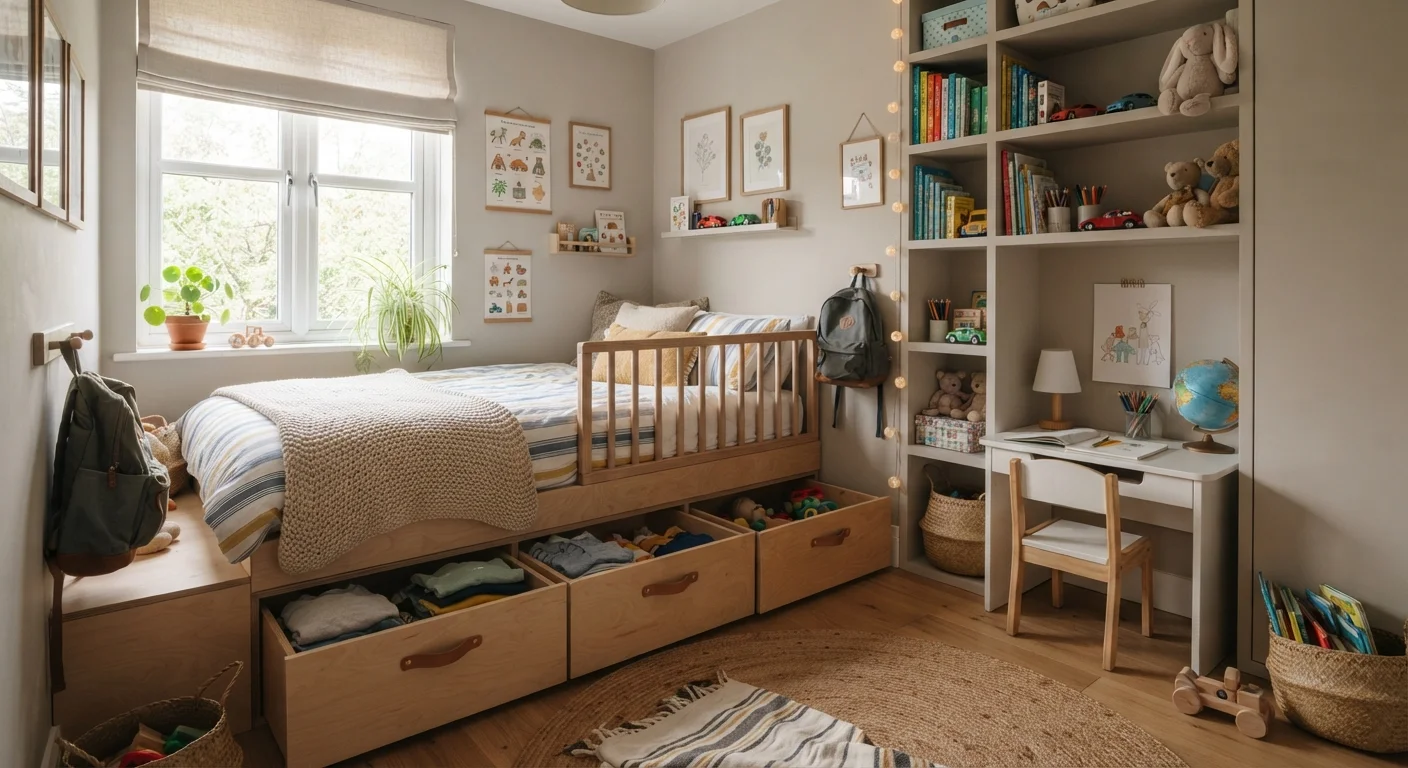
Why small bedrooms demand a different approach
In a busy family home, bedrooms often serve as more than just sleeping spaces. They're study spots, play areas, and personal retreats — all crammed into rooms that may not have been designed with growing families in mind. When square footage is limited, the margin for disorganization is much smaller, and the impact of clutter on daily life is felt faster.
The strategies below don't require a renovation or a significant budget. They're about rethinking how existing space is used — and building habits that keep the room functional over time. This article is part of a broader look at how families can bring order to every corner of the home; the room-by-room home organization walkthrough covers the full picture if you're tackling multiple rooms at once.
Storage products aren't always the answer
It can be tempting to solve a clutter problem by buying more bins, baskets, or organizers. But adding storage containers before decluttering often just moves the mess into tidier-looking piles. Assess what you actually need to store before investing in any organizing products — the right solution depends on what stays in the room, not on what looks good in a store display.
Six storage strategies that actually work
Declutter before you organize
No storage strategy works well on top of too much stuff. Before rearranging or purchasing anything, spend time sorting through each person's belongings. Donate, repurpose, or discard items that no longer fit, get used, or have a clear home. This step is harder when kids are involved — for practical guidance on making it stick, see how to declutter with kids in the house.
A good rule of thumb: if an item doesn't have a designated spot in the room, it either needs one or it needs to leave. Starting lean means your storage systems stay manageable longer.
Storage systems only work when there's less to store in the first place.
Use vertical wall space strategically
Most families default to floor-level storage — dressers, toy bins, laundry baskets — leaving the upper half of the room completely unused. Shelves mounted above door frames, tall bookcases anchored safely to walls, and pegboards for accessories can dramatically increase storage without consuming any additional floor area.
For a deeper look at how wall-mounted storage compares to floor-based approaches, rethinking vertical versus floor space walks through both options side by side. In a shared kids' room, upper shelves work well for items that adults manage — seasonal clothes, spare bedding, or craft supplies — keeping daily-use items within kids' reach at lower levels.
Walls offer untapped storage potential that most families walk past every day.
Maximize under-bed storage
The space beneath a bed is often overlooked or filled haphazardly with items that are then forgotten. Low-profile storage bins or drawers designed specifically for under-bed use can hold off-season clothing, extra linens, shoes, or even books — freeing up closet and dresser space for everyday items.
When purchasing or replacing beds, consider frames with built-in drawers. If that's not feasible, bed risers can elevate a standard frame enough to fit standard storage containers beneath it. Keep the contents labeled clearly so the space stays functional rather than becoming a catch-all.
Under-bed space, used deliberately, can nearly double a small room's effective storage.
Choose multi-function furniture
In a small bedroom, every piece of furniture should earn its place. An ottoman that opens for storage, a bed with a trundle for a sibling or sleepover guest, a nightstand with drawers — these choices reduce total furniture count while increasing what the room can hold.
Storage benches at the foot of a bed are particularly versatile in kids' rooms: they provide seating, hold toys or extra blankets, and visually anchor the space. When budgeting for furniture upgrades, the smart budgeting strategies hub offers practical frameworks for prioritizing purchases without overspending.
Every furniture piece in a small room should serve at least two purposes.
Organize the closet from the inside out
A standard closet rod and single shelf leave much of the closet's volume unused. Adding a second hanging rod below the first doubles hanging capacity for shorter items like children's clothes. Over-door organizers, shelf dividers, and stackable bins make use of corners and dead zones that standard setups ignore.
Group items by category and person rather than cramming everything in together. In a room shared by siblings, designating clearly separate closet zones — even with a simple divider or color-coded bins — reduces conflict and helps kids put things back in the right place.
A reorganized closet interior often reveals storage space that was already there.
Build in a consistent reset routine
Even the most thoughtfully organized small bedroom will drift toward chaos without a maintenance habit. A brief daily or weekly reset — putting items back in their designated spots, returning laundry to hampers, clearing surfaces — takes far less time than a full reorganization and prevents the sense of overwhelm that builds when things pile up.
For families tackling organization room by room, the room-by-room home organization walkthrough provides a structured approach to building these habits throughout the whole house. Involving kids in the reset, even briefly, builds responsibility alongside tidiness.
A five-minute daily reset prevents the avalanche of a full weekly clean-out.
Label everything your kids can read
Systems only work when everyone in the household can use them independently. For younger children, pair text labels with simple picture icons on bins and shelves. When kids can identify where things belong without asking an adult, items are far more likely to make it back to the right spot — reducing the daily reset burden for everyone.
Building a system that lasts
The most effective storage strategies are ones a family can actually maintain. That means starting with less stuff, using the space that's already available more intentionally, and choosing furniture and systems that fit the way your household actually lives — not an idealized version of it.
If budget is a consideration when updating storage furniture or supplies, realistic saving approaches for tight budgets offers grounded guidance on making small financial moves add up. Small, consistent improvements to a room's organization will compound over time, making daily life a little calmer even when the square footage stays exactly the same.
The content provided on our blog site traverses numerous categories, offering readers valuable and practical information. Readers can use the editorial team’s research and data to gain more insights into their topics of interest. However, they are requested not to treat the articles as conclusive. The website team cannot be held responsible for differences in data or inaccuracies found across other platforms. Please also note that the site might also miss out on various schemes and offers available that the readers may find more beneficial than the ones we cover.