

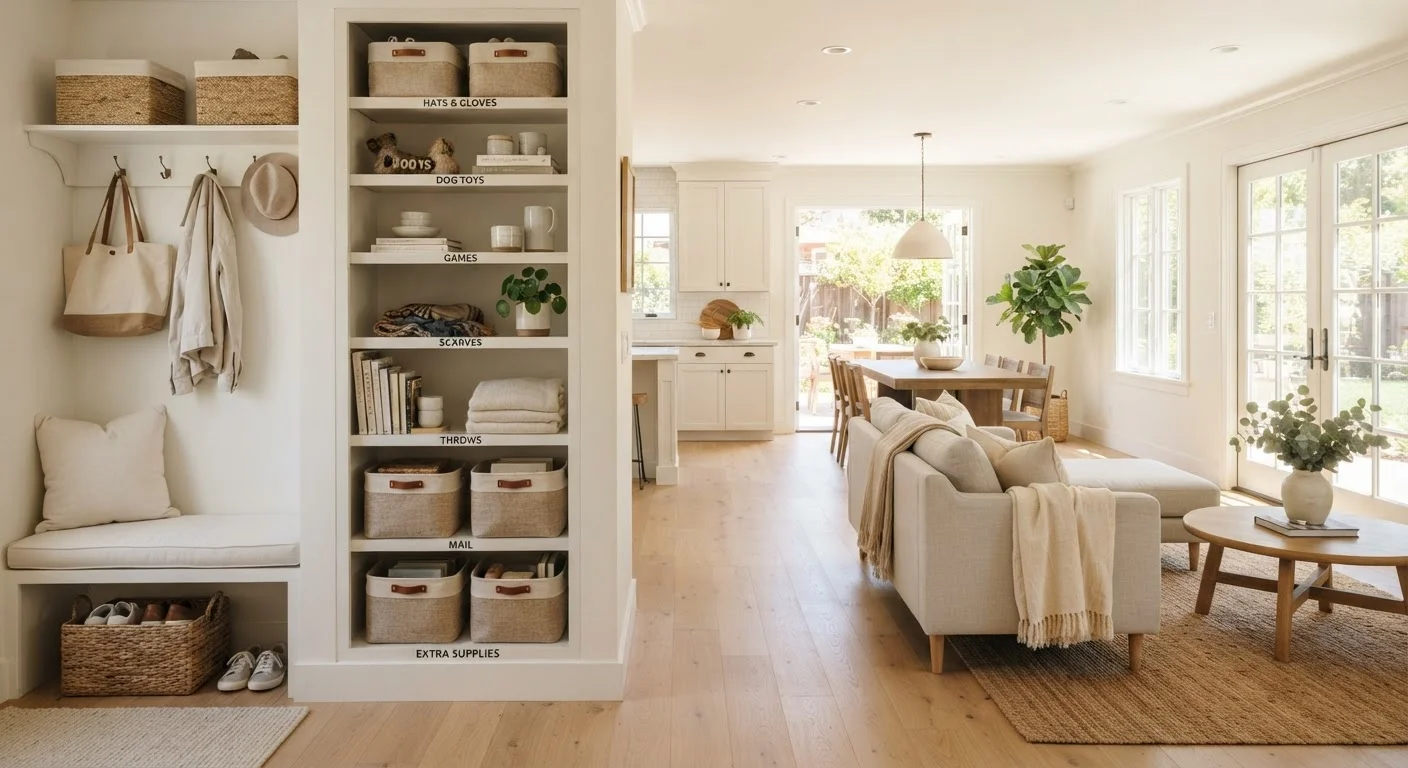
Why Room-by-Room Works Better Than a Whole-House Overhaul
The most common reason home organization fails isn't lack of effort — it's trying to do everything at once. Pulling apart every closet on a Saturday morning feels productive until exhaustion sets in, decisions stall, and piles migrate from room to room. A room-by-room approach breaks the project into manageable wins that build real momentum.
Start by identifying which room causes the most daily friction — the spot where mornings get derailed or evenings feel stressful. That's your starting point. Complete it before moving on. You'll build both confidence and a repeatable process you can apply throughout the house.
If you've been putting off organizing because it feels too big, common myths about home organization may be part of what's holding you back. Many families assume they need a large budget or a full free weekend — neither is true.
25%
Time lost daily searching for misplaced items
Research cited by the National Association of Professional Organizers suggests Americans spend roughly 25% of their day looking for things they've misplaced.
80%
Of household clutter from indecision, not volume
Professional organizers commonly report that the majority of clutter accumulates not because families own too much, but because no clear decision has been made about where items belong.
Entryway: Stop the Chaos Before It Starts
The entryway is the first and last point of contact every day, making it the highest-leverage space in a family home. Shoes, backpacks, keys, mail, and outerwear all compete for the same few square feet. Without a clear system, this zone becomes the default dump zone — and clutter spreads inward from there.
The most effective entryway setups share three elements: a landing spot for bags and jackets (hooks at child height included), a contained zone for shoes, and a single location for outgoing items like permission slips or library books. A shallow tray or small basket works well for keys and daily essentials.
The Two-Minute Entryway Rule
If an item can be put away in two minutes or less, do it immediately when you walk in. This single habit prevents the entryway pile-up that tends to spread into the rest of the home. Attach the habit to something you already do — hanging up your coat, removing your shoes — so it becomes automatic.
Limit the entryway to only the items that belong to today. Everything else — sports gear used weekly, seasonal coats — lives elsewhere. Rotate items in and out rather than letting the space absorb everything at once.
Kitchen and Dining: Function Over Perfection
Family kitchens are rarely Instagram-ready, and that's fine. The goal is a kitchen that supports meal prep, homework snacks, and weeknight dinners without a treasure hunt for the right pan or spatula. Organization here is almost entirely about zones: prep, cooking, storage, and cleanup each need their own logical area.
Start by pulling everything out of one cabinet or drawer at a time. Discard expired items, donate duplicates, and return only what you actively use. Group items by use — all baking supplies together, all lunch-packing tools together. Frequency matters too: daily-use items belong at eye level and arm's reach; seasonal pieces go higher or deeper.
Before buying any new storage product, spend one week living with the space as-is and noting exactly what's causing friction. Buy solutions for real problems, not hypothetical ones.
Most families over-purchase containers before understanding root causes, which results in organized-looking storage that still doesn't function well day-to-day.
In shared kitchens, label shelves and drawers — not just bins. When a label lives on the surface, items get returned correctly even when containers are removed for cleaning.
Labels on surfaces rather than only on containers significantly improve compliance across household members of all ages, including young children who are learning to read.
For the dining area, a simple rule helps: surfaces are for eating, not storing. A single small basket or drawer nearby can absorb the everyday paper clutter — school newsletters, coupons, mail — without letting it colonize the table.
Living Room: Taming Shared Family Space
Living rooms serve so many purposes — movie nights, homework, play, relaxation — that clutter accumulates from all directions. The key is accepting the room's real function and building storage that matches it, rather than designing for a family that doesn't exist.
Baskets, ottomans with interior storage, and low open shelves all work well when labeled clearly. Assign each family member a personal basket for their own items left in shared space. At the end of each evening, those baskets get returned to bedrooms — a simple habit that prevents permanent drift.
Getting the whole family on board with these habits matters more than the containers themselves. Systems only stick when everyone understands where things go and why.
“A place for everything, and everything in its place — but the place has to make sense for the people actually living there. Systems that don't match real behavior will always fail, no matter how beautiful they look.”
— Julie Morgenstern, Professional organizer and author of 'Organizing from the Inside Out'
Bedrooms and Closets: Personal Spaces That Actually Work
Bedrooms — especially kids' rooms — tend to accumulate items from every phase of life simultaneously. Clothes that no longer fit share space with current favorites. Toys from three years ago sit next to today's obsessions. A twice-yearly audit (think seasonal clothing switches) is the most practical way to keep these spaces from silently filling up.
For closets, the standard advice applies reliably: group by category (all pants together, all tops together), use vertical space with shelf dividers or stackable bins, and keep the floor clear. Even small improvements here make a meaningful daily difference. For households where space is genuinely limited, storage strategies for small bedrooms offer targeted approaches beyond standard closet organization.
When children share rooms or have limited closet space, under-bed storage with labeled flat bins is one of the most underused options available.
Children's Rooms: Involve Kids in Decisions
Removing or donating a child's belongings without their input — even items that seem unused — can erode trust and create resistance to future organizing efforts. Where developmentally appropriate, give children real choices about what stays, what goes, and where things live. This builds ownership of the system and makes maintenance far more likely to stick.
Garage and Utility Areas: Functional Storage, Finally
Garages and utility rooms are where organization efforts often stall permanently. These spaces tend to receive everything that doesn't fit elsewhere, which makes them feel impossible to tackle. The same room-by-room principle applies: start with one wall or one category — tools, sports equipment, holiday items — rather than the whole space at once.
Wall-mounted storage (pegboards, wall rails with hooks) dramatically increases usable space without consuming floor area. Tall metal shelving units provide flexible, durable storage for bins and larger items. Label every bin; assume that if a category isn't labeled, it won't be found or returned correctly.
Safety matters in these spaces. Store chemicals, sharp tools, and power equipment out of reach of children, and ensure flammable materials are kept away from heat sources. If your garage connects to living areas, consider a simple door hook or shelf system so the clutter barrier between spaces stays clear.
Keeping the Whole System Running
Organizing a home once is only half the work. Maintenance is where most families struggle. The good news is that a well-designed system requires far less effort to maintain than to build — provided a few key habits stay in place.
A nightly 10-minute reset, where everyone returns items to their designated homes, prevents small disorder from becoming overwhelming backlog. Monthly, do a single quick pass through each high-traffic area to check for drift. Twice a year, revisit storage zones as seasons and family needs shift.
Habits like the one-in, one-out rule keep incoming items from overwhelming the systems you've built. And if children are part of the household, decluttering with kids present requires its own set of approaches — from age-appropriate decision-making to making the process feel collaborative rather than punitive.
No system is permanent. Expect to adjust as your family grows and routines change. The goal isn't perfection — it's a home that supports your actual daily life.
Avoid Reorganizing Before Decluttering
One of the most common mistakes is purchasing storage containers and reorganizing items before deciding what to keep. This locks clutter into a tidy-looking system and makes future decluttering harder. Always sort and reduce first; organize what remains second. Buying containers before the edit is complete almost always results in wasted money and mismatched solutions.
The content provided on our blog site traverses numerous categories, offering readers valuable and practical information. Readers can use the editorial team’s research and data to gain more insights into their topics of interest. However, they are requested not to treat the articles as conclusive. The website team cannot be held responsible for differences in data or inaccuracies found across other platforms. Please also note that the site might also miss out on various schemes and offers available that the readers may find more beneficial than the ones we cover.