

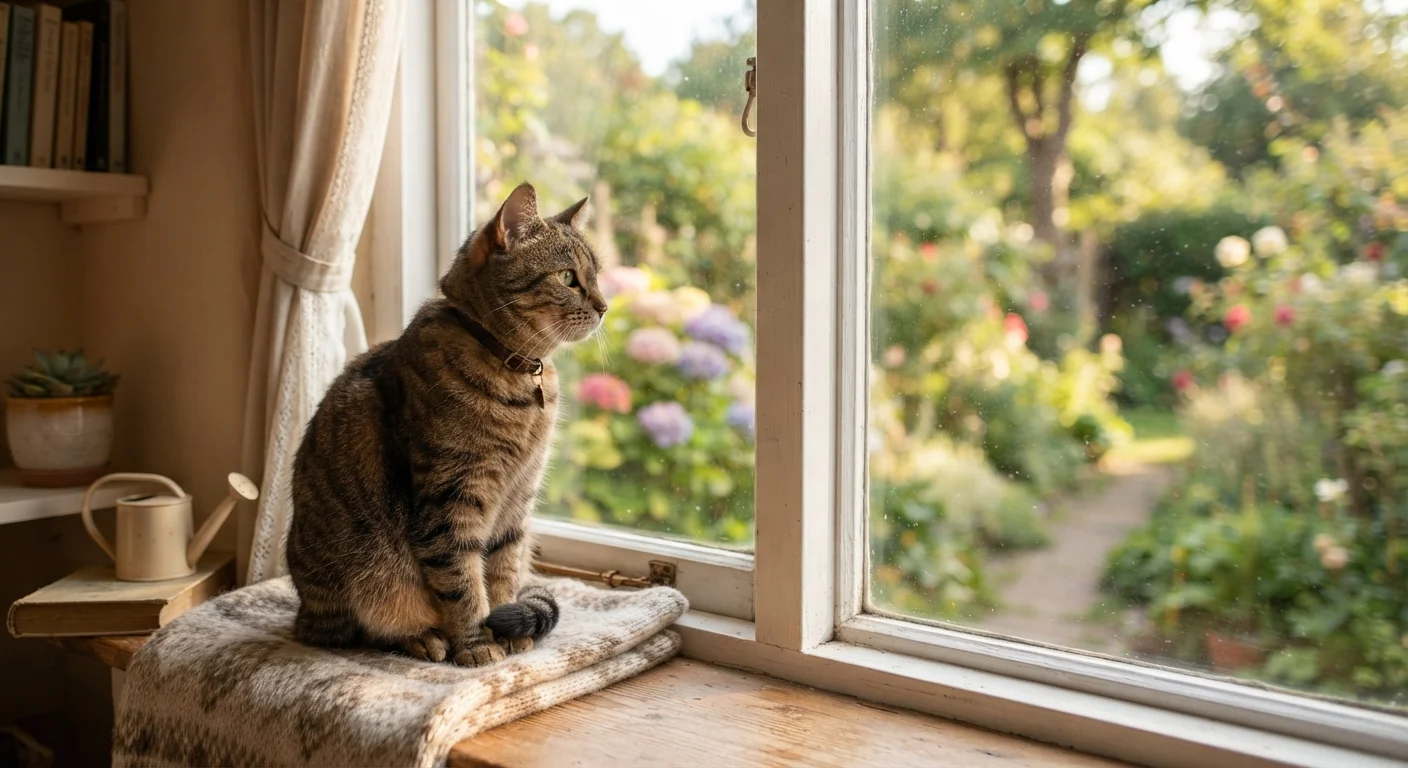
Option A
Indoor Cat
The protected, home-centered companion.
Best for: Families in urban or suburban areas who want a lower-risk, lower-maintenance lifestyle for their cat.
Option B
Outdoor Cat
The independent, stimulation-seeking explorer.
Best for: Households in rural or low-traffic areas where supervised or semi-free roaming is feasible and manageable.
The Core Difference: Risk vs. Enrichment
At the heart of the indoor vs. outdoor debate is a trade-off most cat owners feel instinctively: the outdoors offers stimulation, but it also carries danger. Understanding what each lifestyle actually involves — day to day — helps families make a choice that fits both their cat's nature and their own circumstances.
Indoor cats live in a controlled environment where threats like cars, predators, and infectious disease are largely removed. Outdoor cats have access to territory, prey, and sensory variety that no living room can fully replicate. Neither lifestyle is inherently wrong, but each demands something different from you as an owner.
| Criterion | Indoor Cat | Outdoor Cat |
|---|---|---|
| Average lifespan | 12–18 years (estimated) | 2–5 years (estimated) |
| Injury and accident risk | Low | High (traffic, fights, predators) |
| Disease exposure | Lower | Higher (FIV, FeLV, parasites) |
| Behavioral enrichment | Requires intentional effort | Naturally high |
| Owner management required | Moderate (enrichment, vet care) | High (vaccines, ID, monitoring) |
| Impact on local wildlife | None | Can be significant (birds, small animals) |
What Indoor Life Really Looks Like
A well-cared-for indoor cat can be genuinely content — but that contentment doesn't happen automatically. Cats are predatory animals with strong instincts to hunt, climb, scratch, and explore. When those needs aren't met, you may notice excessive vocalization, destructive scratching, overeating from boredom, or aggression.
The good news is that enrichment is very achievable. Window perches give indoor cats access to bird-watching and sunlight. Puzzle feeders engage their problem-solving instincts. Scheduled interactive play with wand toys mimics the hunt-catch-kill-eat cycle that cats find deeply satisfying. For families considering more structural changes, our guide to cat-proofing your home room by room can help you set up a space that's both stimulating and safe.
Indoor cats also need consistent veterinary care, including annual wellness exams and vaccinations — even without outdoor exposure, they're not immune to all illness.
Indoor Doesn't Mean Immune
Even cats that never step outside can contract certain illnesses — through contact with clothing, shoes, or other pets that do go outdoors. Core vaccinations (rabies, FVRCP) are generally recommended for all cats regardless of lifestyle. Talk with your veterinarian about which vaccines and parasite preventatives make sense for your cat's specific situation.
What Outdoor Life Really Looks Like
Free-roaming cats experience genuine enrichment: they patrol territory, climb, hunt, and engage with the world on their own schedule. For cats with strong independent temperaments or outdoor histories, this lifestyle can feel natural and fulfilling.
But the risks are real and worth naming plainly. Outdoor cats face vehicle traffic, dog attacks, territorial fights with other cats (which can transmit diseases like FIV and FeLV), exposure to toxic plants and yard chemicals, and in some regions, predation by coyotes or birds of prey. These aren't rare worst-case scenarios — they're common causes of injury and premature death.
Responsible outdoor cat ownership includes up-to-date vaccinations, flea and tick prevention, microchipping, and ideally a breakaway collar with ID. Many veterinarians also recommend keeping outdoor cats in at night, when many dangers peak.
12–18 yrs
Typical indoor cat lifespan
Veterinary and animal welfare organizations generally cite indoor cats living significantly longer than their outdoor counterparts, often noting a median of 12–18 years.
2–5 yrs
Estimated outdoor-only cat lifespan
The American Veterinary Medical Association and various humane societies have noted that free-roaming cats face dramatically elevated mortality risk, reducing median lifespan to an estimated 2–5 years.
1–4 billion
Birds killed by outdoor cats annually in the U.S.
A study published in Nature Communications estimated that free-ranging domestic cats kill between 1.3 and 4 billion birds per year in the United States, making it a significant conservation concern.
For families thinking through how outdoor activity fits with diet and feeding, our overview of wet food vs. dry food touches on how activity level can influence nutritional needs.
The Middle Ground: Supervised and Contained Outdoor Access
Many families find that a hybrid approach works best. A catio — an enclosed outdoor enclosure attached to a window or door — gives cats fresh air, sunlight, and outdoor sights and sounds without unsupervised roaming. Leash training is another option; some cats adapt to harness walks with patience and positive reinforcement, though it works better with younger or more adaptable cats.
If you're weighing how a second cat might change your household dynamic alongside the indoor/outdoor question, one cat or two explores how companionship affects behavior and territory — relevant whether your cats go outside or not.
The right answer for your family depends on where you live, your cat's personality and history, and how much active management you can realistically provide. Whatever you decide, the goal is the same: a cat that is safe, mentally engaged, and genuinely thriving.
This article is for general informational purposes only and does not constitute veterinary advice. Consult a licensed veterinarian for guidance specific to your cat's health and circumstances.
The content provided on our blog site traverses numerous categories, offering readers valuable and practical information. Readers can use the editorial team’s research and data to gain more insights into their topics of interest. However, they are requested not to treat the articles as conclusive. The website team cannot be held responsible for differences in data or inaccuracies found across other platforms. Please also note that the site might also miss out on various schemes and offers available that the readers may find more beneficial than the ones we cover.