

Why the Introduction Process Matters So Much
Bringing a new cat home is exciting — but for the animals already living there, it can feel like an unwelcome intrusion into their established territory. Cats, unlike many social species, are not naturally wired to welcome strangers. A rushed or poorly managed introduction can create lasting tension that's genuinely hard to undo.
The good news is that a slow, structured approach — built on scent familiarity before visual contact, and visual contact before physical interaction — works remarkably well for most households. If you have resident dogs or small pets such as birds or rabbits, the same core principle applies, though the specifics vary. You'll find more context for multi-species households in our guide to bringing a new dog home and in resources about preparing for small pets.
If you're still in the early planning stages, it's worth reading what every new cat owner should prepare before the cat even arrives. Getting the basics right — litter box placement, feeding routines, and a cat-safe environment — makes the introduction phase considerably smoother. Our room-by-room cat-proofing walkthrough is also a practical starting point.
What you will need
Separate base room
A dedicated space where the new cat lives during the early introduction phase, away from resident pets.
Baby gate or screen door
Creates a visual barrier that allows animals to see each other safely before sharing the same space.
Soft bedding or worn T-shirt
Used to transfer familiar scents between the new cat and resident pets during scent-swapping exercises.
High-value treats
Reward calm, relaxed behavior near the other animal to build positive associations.
Pheromone diffuser
Releases synthetic calming signals that may help reduce anxiety in cats during transitions.
Separate feeding stations
Prevents resource guarding and keeps mealtimes stress-free for every animal.
Step-by-Step Introduction Process
Follow these steps in order, and resist the urge to skip ahead. Every animal moves at their own pace, and what looks like slow progress is usually the process working exactly as it should.
Set up a dedicated base room for the new cat
Before the new cat arrives, prepare a quiet room — a spare bedroom or bathroom works well — stocked with everything they need: food, water, a litter box, a scratching post, and at least one cozy hiding spot. This room becomes their safe haven and their home base for the first phase of the introduction.
Keep this room off-limits to resident pets so the new cat can decompress without pressure. Cats can take days or even weeks to feel safe in an unfamiliar environment, and this protected space sets the foundation for everything that follows.
Let them smell each other under the door
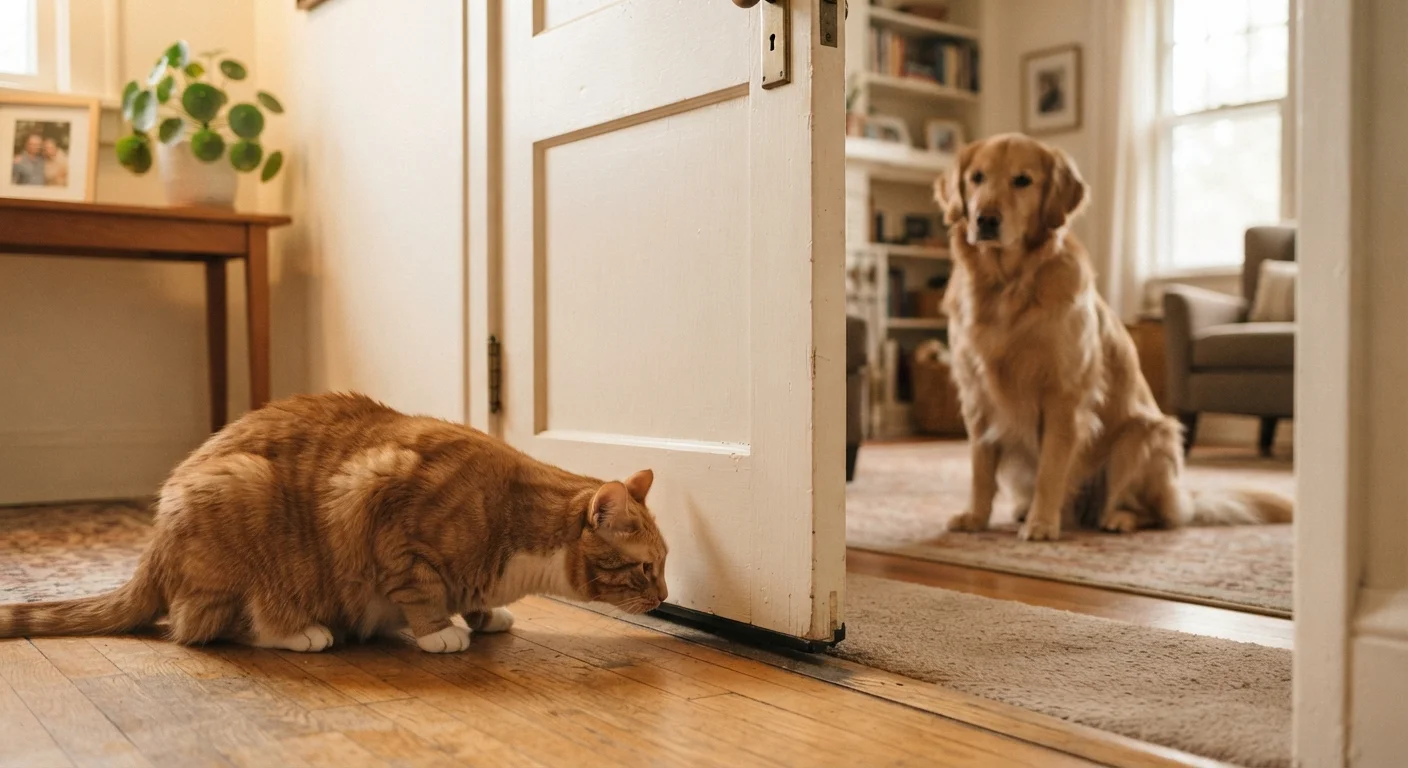
For the first several days, allow both sides to discover each other purely through scent — the most important sense for cats. You'll likely notice both animals sniffing along the gap at the bottom of the door. This is healthy curiosity, not aggression.
Accelerate scent familiarity by swapping soft bedding between the new cat and your resident pets once a day. Place the new cat's blanket near your resident pet's resting spot and vice versa. Watch their reactions — relaxed sniffing is a green light; hissing or avoidance means you need more time at this stage.
Swap spaces to deepen scent exchange
Once both animals seem relaxed around each other's bedding, take it a step further: let the new cat explore the main living area while the resident pets take a turn in the base room. Neither animal is present in the space at the same time — just their scents.
This gives the new cat a chance to map out the home's layout and smell resident animals everywhere without the added stress of a face-to-face encounter. Most animals become noticeably calmer about the process after a few of these swaps.
Introduce visual contact with a barrier
When both animals are consistently relaxed around each other's scent, crack open the door slightly, prop a baby gate across the base room entrance, or use a screen door. Now they can see each other without any risk of physical contact.
Keep these sessions short — five to ten minutes at first. Offer high-value treats to both animals throughout so they link the sight of each other with something positive. If either animal freezes, flattens their ears, or growls, calmly end the session and try again the next day.
Allow supervised, open-room meetings
Once visual sessions are consistently calm, open the base room door and allow the animals to share a space for the first time — with you actively supervising every moment. Keep the first meeting brief and upbeat. Have treats ready, stay relaxed yourself (animals read your energy), and resist the urge to pick anyone up or force closeness.
A few hisses or swats at this stage are normal cat communication — watch for context. If either animal becomes cornered, highly agitated, or the interaction escalates quickly, separate them gently and try a shorter session the following day. Over several weeks, gradually increase session length as comfort grows.
Maintain separate resources and monitor long-term
Even after introductions go smoothly, keep resources separated: individual food stations, one litter box per cat plus one extra, and multiple resting spots throughout the home. Competition over resources is one of the most common reasons otherwise compatible cats begin to clash.
Continue watching for subtle stress signals in all your pets — changes in appetite, hiding more than usual, over-grooming, or litter box avoidance. These are worth a conversation with your veterinarian, as chronic stress can affect a pet's health over time.
Patience Is the Most Powerful Tool You Have
There is no universal timeline for a successful introduction. Some cats reach peaceful coexistence within two weeks; others need two months or more. Pushing the process too fast is the single most common mistake families make. If you hit a setback, simply go back one step — it isn't failure, it's just the process.
Dogs and Cats Need Extra Caution
If your resident pet is a dog, the introduction protocol above still applies, but the stakes at the face-to-face stage are higher. Even a friendly, well-socialized dog can trigger a cat's panic response. Keep your dog on a leash during all open-room meetings until calm, mutual tolerance is well established. Never leave them unsupervised together until you are fully confident in both animals' behavior. If your dog has a high prey drive, consult a certified animal behaviorist for tailored guidance before proceeding.
Vet Check Before Any Introduction Begins
Schedule a veterinary examination for the new cat before they enter your home, or immediately upon arrival if that isn't possible. Infectious diseases and parasites can spread quickly to resident animals. Your vet can check for common conditions and advise on whether any quarantine period beyond the normal introduction phase is needed. This step protects every pet in the household, not just the newcomer.
When Things Aren't Going Smoothly
If weeks have passed and the animals are still showing significant stress or aggression, don't assume it's hopeless. Some combinations simply need more time, more space, or a different approach. A certified cat behavior consultant or your veterinarian can help you identify what's driving the tension and suggest practical adjustments.
Persistent litter box avoidance is one common stress signal that's easy to misread as stubbornness — it's often the cat's way of communicating anxiety. Our guide on common litter box mistakes walks through the most frequent setup errors and how to fix them. If you're also weighing whether to add a second cat in the future, our honest look at the case for and against two cats can help you think it through before you commit.
Above all, trust what you observe. You know your pets better than anyone. A calm, unhurried approach — and a willingness to go back a step when needed — gives every animal in your household the best possible chance of a peaceful life together.
The content provided on our blog site traverses numerous categories, offering readers valuable and practical information. Readers can use the editorial team’s research and data to gain more insights into their topics of interest. However, they are requested not to treat the articles as conclusive. The website team cannot be held responsible for differences in data or inaccuracies found across other platforms. Please also note that the site might also miss out on various schemes and offers available that the readers may find more beneficial than the ones we cover.