

Start here
Is a Cat the Right Pet for Your Family?
Next
Essential Supplies to Have Ready Before Arrival
Then
Setting Up a Safe, Welcoming Space
Before the appointment
Your Cat's First Vet Visit and Health Basics
Long-term success
Building a Routine Your Cat Can Count On
Is a Cat the Right Pet for Your Family?
Cats are often described as independent, but that description can be misleading. A cat still needs daily feeding, fresh water, a clean litter box, playtime, and genuine affection. Before anyone falls in love at the shelter, it's worth having an honest family conversation about who will handle each of those tasks — especially on school nights and vacation weeks.
Allergies are another real consideration. Cat allergens come primarily from a protein in saliva and skin secretions, not just fur, so no breed is truly hypoallergenic. If anyone in your household has asthma or pet sensitivities, speak with an allergist before adopting. Financially, factor in food, litter, routine vet care, and an emergency fund — cats can live 15 years or more, and unexpected health costs happen. If you're also weighing other pets, our first-time dog ownership guide and overview of small and other pets can help you compare what each animal truly needs.
Whisker fatigue
Discomfort that occurs when a cat's sensitive whiskers repeatedly touch the sides of a deep or narrow bowl. Shallow, wide bowls prevent it.
FVRCP vaccine
A combination vaccine that protects cats against feline viral rhinotracheitis, calicivirus, and panleukopenia — three common and serious feline illnesses.
Microchipping
A small chip implanted under a cat's skin that carries a unique ID number. If your cat is lost and scanned at a shelter or vet clinic, the chip links back to your contact information.
Scent-based introduction
A method of introducing animals by first exchanging bedding or items with each other's scent, allowing them to get used to one another before meeting face to face.
Enrichment
Activities, toys, and environmental features that stimulate a cat's natural instincts — hunting, climbing, exploring — to keep it mentally and physically healthy.
Essential Supplies to Have Ready Before Arrival
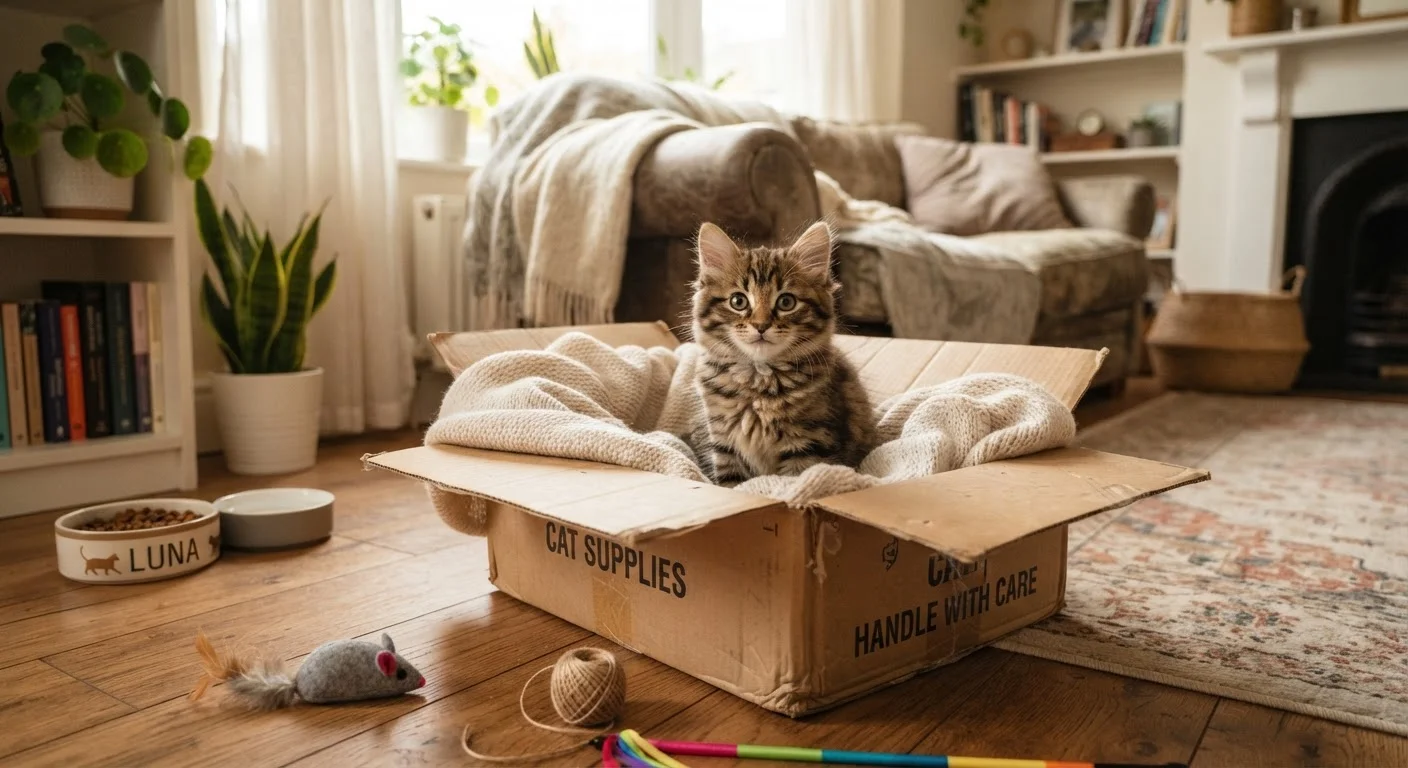
Having everything in place before your cat crosses the threshold prevents a stressful scramble on day one. Here's what to gather:
- Litter box and litter: One box per cat plus one extra is the standard recommendation. Unscented, clumping litter suits most cats. Place boxes in quiet, low-traffic spots.
- Food and water bowls: Wide, shallow bowls reduce whisker fatigue. Ceramic or stainless steel are easy to clean and don't harbor bacteria the way plastic can over time.
- Age-appropriate food: Kittens need kitten-formula food; adults need adult formula. Ask the shelter or breeder what the cat is currently eating so you can transition gradually if you change it.
- Scratching post: Scratching is a natural, necessary behavior. Provide a sturdy vertical post at least as tall as your cat can fully stretch — this saves your furniture and keeps your cat's claws healthy.
- Carrier: A secure carrier is essential for vet trips. Leave it out with a soft blanket inside so your cat learns to see it as a safe spot rather than a stressful signal.
- Toys: Wand toys, crinkle balls, and puzzle feeders provide mental and physical stimulation. Rotate toys to keep things interesting.
Buy Supplies Before You Bring the Cat Home
Set up the litter box, food station, and hiding spot the day before your cat arrives — not the day of. This lets you identify any placement issues calmly and ensures your new cat walks into a fully prepared space rather than a work in progress.
Setting Up a Safe, Welcoming Space
Many first-time owners let the new cat roam the whole house immediately — and then wonder why it hides for a week. A better approach is to start small. Set up a single room — a spare bedroom or bathroom works well — with food, water, a litter box, a hiding spot, and bedding. Let your cat decompress there for a few days before gradually opening up the rest of the home.
Once your cat is ready to explore, do a thorough safety check. Common hazards include toxic houseplants (lilies are particularly dangerous to cats), loose electrical cords, open washing machine or dryer doors, and unsecured cabinets containing cleaning products. Our room-by-room cat-proofing guide walks through every space in detail. If you already have other animals at home, a slow, scent-based introduction is far less stressful for everyone — see our guide on introducing a new cat to a home with existing pets.
Lilies Are Extremely Toxic to Cats
All parts of true lilies (including Easter lilies, tiger lilies, and daylilies) are highly toxic to cats and can cause acute kidney failure even in small amounts. Remove them from your home entirely before your cat arrives. If you suspect your cat has ingested any part of a lily, contact your veterinarian or an animal poison control line immediately.
Your Cat's First Vet Visit and Health Basics
Book a wellness exam within the first week of bringing your cat home. Your veterinarian will check for parasites, confirm or start a vaccination schedule, discuss spaying or neutering if not already done, and give you a baseline for your cat's weight and overall condition. Bring any records the shelter or breeder provided.
Core vaccines for cats typically include rabies and FVRCP (feline viral rhinotracheitis, calicivirus, and panleukopenia). Your vet may also recommend flea, tick, and heartworm prevention based on your region and whether your cat will spend any time outdoors. Microchipping at this first visit is a practical step — it dramatically improves the chance of reunion if your cat ever slips outside. Keep this visit low-stress by using a familiar-smelling carrier and, if possible, placing a worn T-shirt inside it before the appointment.
This article provides general educational information about cat care and is not a substitute for advice from a licensed veterinarian. Always consult your vet for guidance specific to your cat's health needs.
Building a Routine Your Cat Can Count On
Cats are creatures of habit, and a predictable daily rhythm helps them feel secure. Feed at the same times each day, scoop the litter box at least once daily, and set aside dedicated interactive play sessions — even 10 to 15 minutes twice a day makes a meaningful difference in your cat's mood and behavior.
As your cat settles in, you may find yourself thinking about whether a companion would enrich its life. That's a real question worth exploring thoughtfully — our article on whether to get a second cat covers the honest trade-offs around companionship, territory, and cost. For now, focus on the relationship you're already building. A well-loved, well-cared-for cat — whether it's your only pet or one of several — is one of the most rewarding companions a family can have.
ASPCA Animal Poison Control Center
A reliable reference for identifying plants, foods, and household substances that are toxic to cats. Bookmark it before you need it.
Cat-Proofing Your Home Room by Room
Our step-by-step safety walkthrough covers toxic plants, loose cords, open appliances, and every other hazard to address before your cat explores freely.
Frequently Asked Questions
At minimum, you need a litter box and unscented clumping litter, food and water bowls, age-appropriate cat food, a scratching post, and a safe carrier. A cozy bed or hiding box and a few toys will help your cat feel at home faster.
Most cats need one to three weeks to feel comfortable in a new home, though shy or previously stressed cats can take a month or more. Giving your cat a quiet starter room and respecting its pace goes a long way.
Yes. Annual wellness exams catch issues early, keep vaccinations current, and give your vet a baseline for your cat's health. Cats are skilled at hiding discomfort, so regular check-ups matter even when everything looks fine.
The general guideline is one litter box per cat, plus one extra. For a single cat in a multi-story home, place a box on each level so your cat always has easy access.
Adult cats generally tolerate being alone during the workday, especially once settled. Kittens under six months benefit from more supervision and interaction. Enrichment toys and a window perch can help prevent boredom.
Both can thrive in family homes. Kittens require more time and supervision but adapt readily; adult cats often arrive with established personalities, making it easier to find a good temperament match for your household.
The content provided on our blog site traverses numerous categories, offering readers valuable and practical information. Readers can use the editorial team’s research and data to gain more insights into their topics of interest. However, they are requested not to treat the articles as conclusive. The website team cannot be held responsible for differences in data or inaccuracies found across other platforms. Please also note that the site might also miss out on various schemes and offers available that the readers may find more beneficial than the ones we cover.