

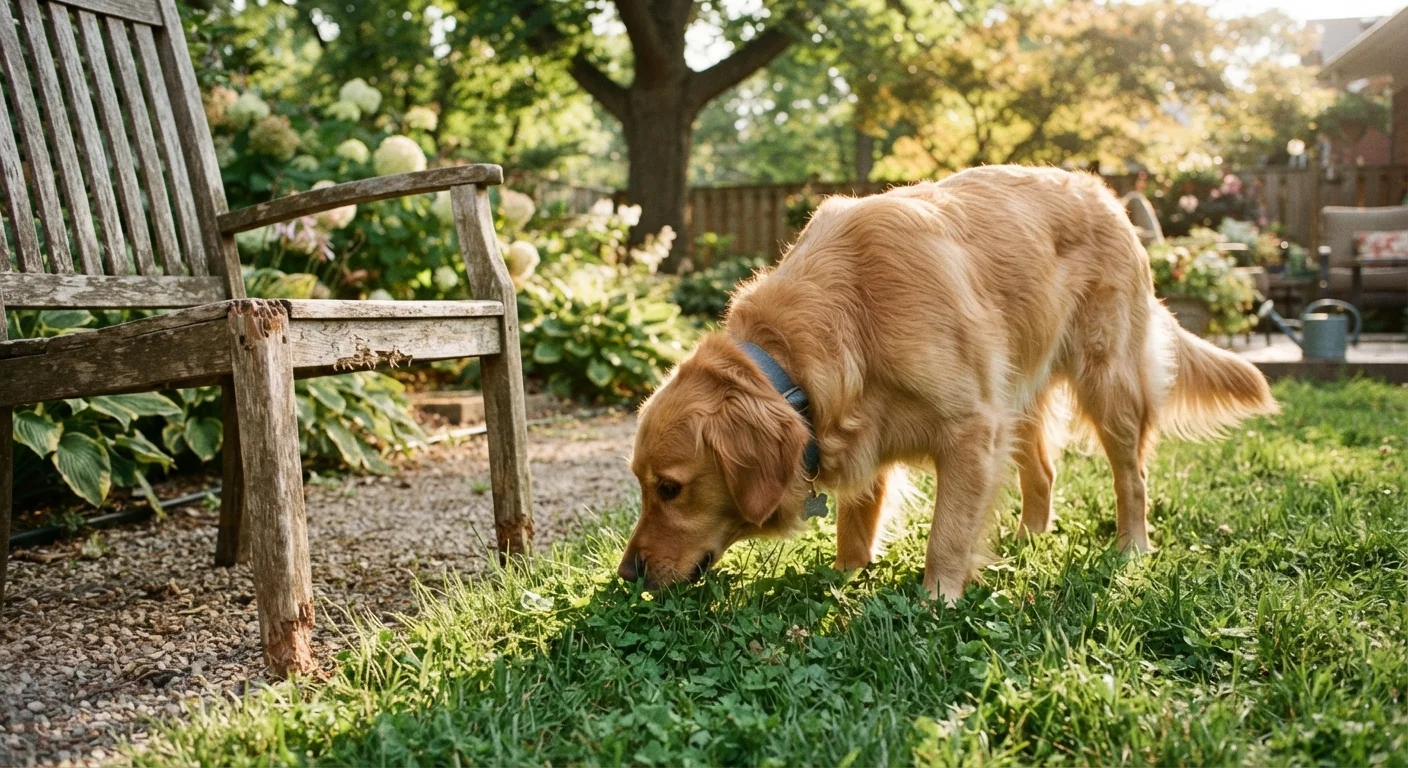
The Grass-Eating Mystery
One of the most frequently Googled dog questions is some version of: Why is my dog eating grass? The short answer is that researchers aren't entirely sure, and that's okay — because multiple explanations are plausible and not mutually exclusive.
Some dogs appear to eat grass to soothe an upset stomach, and a portion do vomit afterward. But studies suggest that most dogs who eat grass show no signs of illness beforehand and don't vomit afterward, which points toward other motivations — including simple enjoyment. Grass may be appealing in texture or taste, especially in spring when it's fresh and sweet.
A less common but important possibility is that a dog is seeking fiber or specific micronutrients their regular diet is missing. If your dog grazes constantly and enthusiastically, it may be worth discussing diet quality with your veterinarian. The main safety concern isn't the grass itself but what may be on it: pesticides, herbicides, and fertilizers can be harmful. Keep your dog away from treated lawns.
Check Your Lawn Before Your Dog Graze
If your dog is a regular grass eater, the most important safety step is knowing what's on that grass. Herbicides, pesticides, and synthetic fertilizers can be harmful to dogs. Stick to areas you know are untreated, and avoid letting your dog graze on lawns near roadsides where runoff chemicals may accumulate.
Chewing, Digging, and Destructive Habits
A chewed couch leg or excavated backyard isn't a dog plotting revenge — it's almost always a dog expressing a need that isn't being met. Chewing is a natural, self-soothing behavior for dogs. Puppies chew to relieve teething pain. Adult dogs chew when they're bored, anxious, or have excess energy with nowhere to go.
Digging carries its own instinctive logic. Terriers and hounds were bred specifically to dig after prey; even a pampered city dog carries that drive. Some dogs dig to create a cool resting spot in summer, to bury prized items, or to escape a yard that's producing anxiety.
Building a consistent daily routine that includes physical exercise and mental enrichment — puzzle feeders, training sessions, interactive toys — tends to dramatically reduce destructive behavior. If chewing or digging appears suddenly in an older dog who never did it before, that behavioral shift is worth flagging to a vet, as pain or cognitive changes can sometimes emerge this way. See also our guide to signs your dog may be in pain.
Destructive Chewing vs. Compulsive Behavior
Most chewing in dogs is normal, if inconvenient. However, if a dog chews or licks obsessively to the point of causing self-injury, or cannot be redirected even with enrichment and exercise, this may cross into compulsive behavior territory. A veterinary behaviorist can help distinguish between the two and recommend appropriate support.
Circling, Scooting, and Other Body-Language Clues
Dogs circle before lying down because their wild ancestors patted down grass and checked for snakes or insects before settling. It's an inherited ritual so deeply wired that even dogs who have never touched a blade of grass still do it on a memory foam bed.
Scooting — dragging the rear end along the floor — is less charming but equally communicative. It usually means irritation around the anal area, most commonly from full or impacted anal glands, skin allergies, or intestinal parasites. It's one of those behaviors that definitely deserves a vet visit rather than home guesswork.
Tail chasing, the zoomies (sudden bursts of frantic running), and rolling in smelly things all fit a similar pattern: they look bizarre but have evolutionary roots. Rolling in odors may have helped wild canids mask their own scent. Zoomies — officially called Frenetic Random Activity Periods (FRAPs) — are a normal energy release, especially in younger dogs after rest or excitement.
Learning to read these cues is rewarding for the whole family. Our guide to dog body language goes deeper into how posture, ears, and tail position communicate what words can't.
~68%
Dog owners report grass-eating behavior
A survey published in the journal Applied Animal Behaviour Science found that grass eating is among the most commonly observed plant-eating behaviors in domestic dogs.
~25%
Dogs showing signs of separation anxiety
Research suggests roughly one in four dogs experiences some degree of separation-related distress, which is a leading driver of destructive behaviors like chewing.
When Quirky Becomes a Concern
Most of the behaviors above fall within the wide range of normal dog behavior. The question families should ask isn't just why is my dog doing this? but has this changed recently, or is it getting worse? A sudden shift in behavior — new obsessive licking, unexplained aggression, appetite changes, or unusual repetitive movements — can be an early signal of pain, illness, or cognitive decline, particularly in older dogs.
Dogs' needs change significantly across life stages, and behaviors that are perfectly normal in a puppy can mean something different in a senior dog. If you're ever unsure, your veterinarian is the right first call — not a search engine. Observing and describing the behavior clearly (when it happens, how often, and what else was going on) will help your vet give you the most useful guidance.
This article is for general informational and educational purposes only and is not a substitute for professional veterinary advice. Always consult a licensed veterinarian regarding your dog's health and behavior.
Frequently Asked Questions
For most dogs, occasional grass eating is considered normal and not harmful. However, if your dog is eating large amounts and vomiting frequently, or if the grass has been treated with pesticides or herbicides, it's worth a conversation with your vet to rule out digestive issues.
Chewing in your absence is often a sign of separation anxiety or under-stimulation. Dogs are social animals and can become distressed when left alone for long periods. Providing enrichment toys and establishing a consistent routine can help reduce this behavior.
This behavior traces back to wild ancestors who would circle to flatten grass, check for hidden threats, and get comfortable. It's generally a normal, harmless ritual. Excessive circling or difficulty settling, however, can signal joint discomfort and should be assessed by a vet.
Scooting typically signals irritation or discomfort around the anal area. Common causes include full anal glands, allergies, or intestinal parasites. A veterinarian should examine a dog that scoots regularly to identify and treat the underlying cause.
The scientific term is coprophagia, and it's more common than many owners realize. Causes range from nutritional deficiencies and learned behavior to boredom or maternal instinct in nursing dogs. Persistent coprophagia should be discussed with a vet to rule out dietary gaps or health issues.
Any behavior that is sudden, escalating, accompanied by physical symptoms, or significantly interfering with your dog's daily life warrants professional attention. When in doubt, a call to your veterinarian is always a good first step.
The content provided on our blog site traverses numerous categories, offering readers valuable and practical information. Readers can use the editorial team’s research and data to gain more insights into their topics of interest. However, they are requested not to treat the articles as conclusive. The website team cannot be held responsible for differences in data or inaccuracies found across other platforms. Please also note that the site might also miss out on various schemes and offers available that the readers may find more beneficial than the ones we cover.