

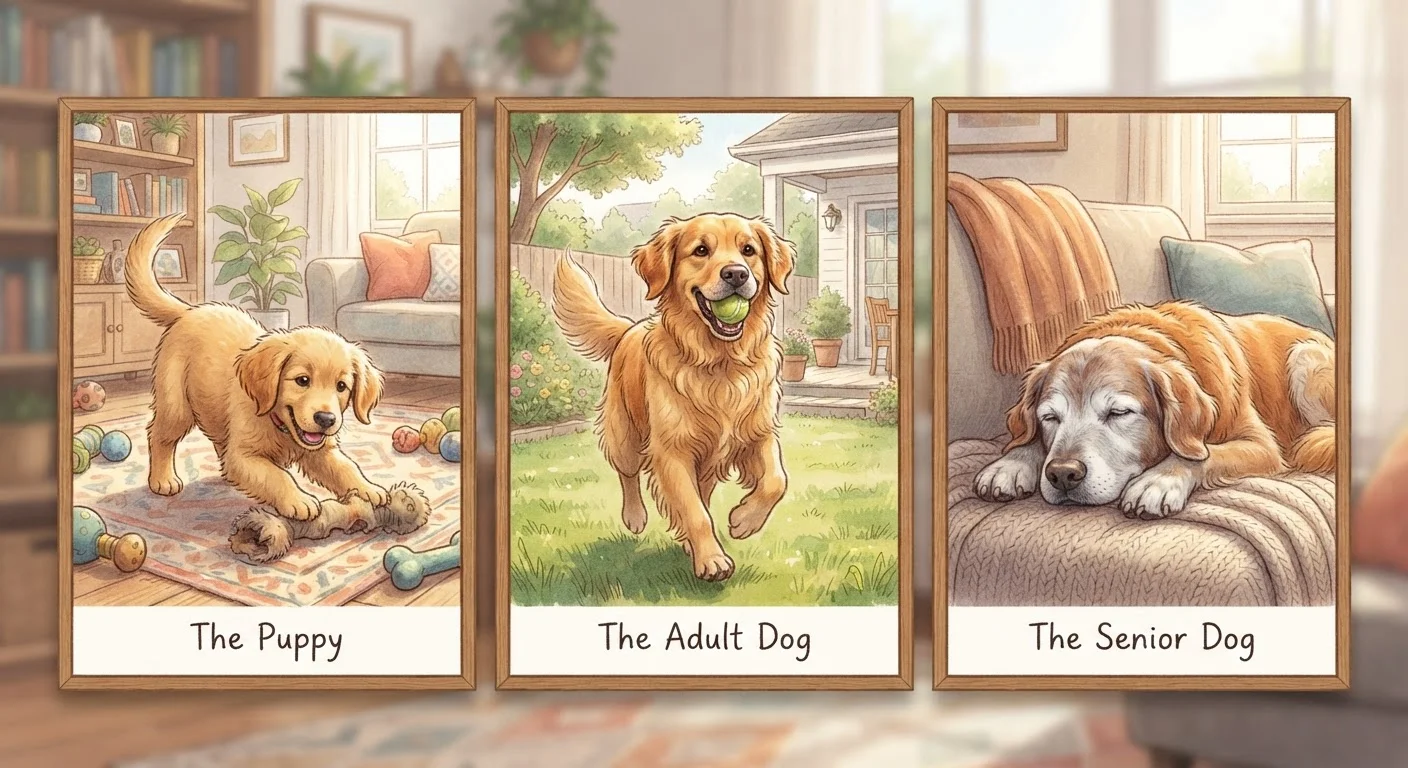
The Puppy Stage: Fast Growth, Big Needs
From birth to roughly 12 months — or up to 18–24 months for large breeds — puppies are in a period of rapid physical and behavioral development. Their bones, muscles, and immune systems are building from scratch, which means their care requirements are intensive.
Nutrition is critical during this window. Puppies need food specifically formulated for growth, with adequate protein, calcium, and caloric density. Feeding adult food too early can miss key developmental needs, while overfeeding — especially in large breeds — can stress developing joints. Your vet can guide portion sizes and transition timing.
Socialization and training are just as important as physical care. The window between roughly 3 and 14 weeks is considered especially sensitive for learning how to interact with people, other animals, and new environments. What puppies experience during this time shapes behavior well into adulthood. If you're just starting out, our guide on bringing a dog home for the first time covers safe introductions and early essentials.
Start Handling Habits Early
Get puppies comfortable with having their paws, ears, and mouth touched from an early age. Dogs who are relaxed during handling as puppies are much easier to examine at the vet, groom, and medicate as adults and seniors. A few minutes of gentle practice each day goes a long way.
Adolescence: The Challenging Middle Ground
Somewhere between 6 and 18 months, most dogs enter adolescence — a phase many families find surprisingly difficult. Hormonal changes can temporarily disrupt training gains, increase impulsive behavior, and make dogs seem like they've "forgotten" everything they learned. This is normal, not a sign of failure.
Energy levels peak during adolescence. Exercise needs are high, but high-impact repetitive activity (like long runs on hard surfaces) should be approached carefully in large breeds whose growth plates may not yet be closed — a point worth discussing with your vet.
6–18 months
Typical adolescence window in dogs
The American Kennel Club notes that adolescence timing varies widely by breed and size, with larger breeds often staying in this phase longer.
2x per year
Recommended vet visits for senior dogs
Veterinary organizations generally advise biannual checkups for senior dogs to catch age-related conditions earlier.
6–7 years
Age large breeds may reach senior status
In contrast, small breeds may not be considered senior until 10–12 years, according to general veterinary guidelines.
Consistency is the most powerful tool during this phase. Structured daily routines reduce anxiety and reinforce expectations at a time when dogs are testing limits. Spaying or neutering is often discussed during this period; your vet can help you weigh the right timing for your dog's size and breed.
Adulthood: The Maintenance Years
Once a dog reaches full physical and behavioral maturity — typically 1–3 years depending on size — they enter adulthood, which can last anywhere from a few years to a decade. This is often the most stable phase, where personality is set, routines are established, and care becomes more predictable.
Adult dogs still need regular exercise, dental care, annual vet visits, and a balanced diet. The exact amounts depend heavily on breed, size, and activity level. A working-breed dog living with an active family has very different needs from a lap dog in a quieter household. If you're managing a larger dog, our article on the trade-offs of owning a large breed dog offers honest perspective on what that commitment involves.
Weight Creep Is Common in Adult Dogs
Many dogs gain weight gradually during adulthood as their activity level stabilizes but food portions stay the same. Even modest excess weight increases stress on joints and organs over time. Your vet can assess your dog's body condition score and suggest adjustments if needed — no dramatic diet overhaul required.
Behavioral changes in adult dogs — sudden aggression, anxiety, or unusual habits — are worth investigating rather than dismissing. Sometimes these reflect a health issue rather than a training gap. Our article on puzzling dog behaviors and what they signal can help you decode what you're seeing.
The Senior Years: Adapting Care as Needs Evolve
Senior dogs ask more of their families — in attentiveness, patience, and vet visits — but they also offer a kind of steady, deep companionship that many owners treasure. Knowing what to expect makes this stage more manageable and more meaningful.
Common physical changes include reduced activity tolerance, weight gain or loss, joint stiffness, dental disease, and vision or hearing changes. Senior dogs may sleep more and tire more quickly on walks. Twice-yearly vet visits become important because conditions like kidney disease, hypothyroidism, or arthritis can develop gradually and benefit from early management.
Pain is easy to miss in dogs. They rarely whimper in ways humans expect. Subtle signs — reluctance to climb stairs, changes in posture, reduced interest in play — can indicate discomfort. Our guide on signs your dog may be in pain is worth bookmarking for this stage. If you also share your home with a senior cat, our piece on caring for a senior cat explores how aging looks different across species.
This article provides general educational information about dog life stages and is not a substitute for personalized veterinary advice. Always consult a licensed veterinarian regarding your dog's health, nutrition, and care.
Frequently Asked Questions
The old "multiply by seven" rule is an oversimplification. Dogs age rapidly in their first two years and then more slowly. A one-year-old dog is roughly equivalent to a 15-year-old human, and the rate varies by breed size. Your vet can give you a more accurate picture based on your specific dog.
Most small breeds aren't considered senior until around 10–12 years, while large and giant breeds may reach senior status as early as 6–7 years. Your veterinarian can help you determine when to shift to senior-focused care for your dog.
Yes. Puppies need calorie-dense food formulated for growth, adults need balanced maintenance diets, and seniors may benefit from lower-calorie or joint-supportive formulas. Always consult your vet before changing your dog's diet, especially during health-sensitive transitions.
Veterinarians generally recommend twice-yearly checkups for senior dogs rather than the once-a-year visits typical for healthy adults. More frequent monitoring allows for earlier detection of age-related conditions like arthritis, kidney changes, or dental disease.
Slowing down can be part of normal aging, but it can also signal pain or illness. If your dog's activity level drops noticeably, consult your vet rather than assuming it's just age. Our guide on <a href="/pets-animals/dog-care/signs-your-dog-may-be-in-pain-and-what-to-do-next">recognizing pain signals in dogs</a> covers key behavioral cues to watch for.
It does, meaningfully. Smaller breeds tend to mature quickly early in life but then age more slowly, often living 14–16 years. Large and giant breeds mature later but have shorter lifespans, often 8–11 years. This affects when you should adjust food, exercise, and vet schedules.
The content provided on our blog site traverses numerous categories, offering readers valuable and practical information. Readers can use the editorial team’s research and data to gain more insights into their topics of interest. However, they are requested not to treat the articles as conclusive. The website team cannot be held responsible for differences in data or inaccuracies found across other platforms. Please also note that the site might also miss out on various schemes and offers available that the readers may find more beneficial than the ones we cover.