

Our Verdict
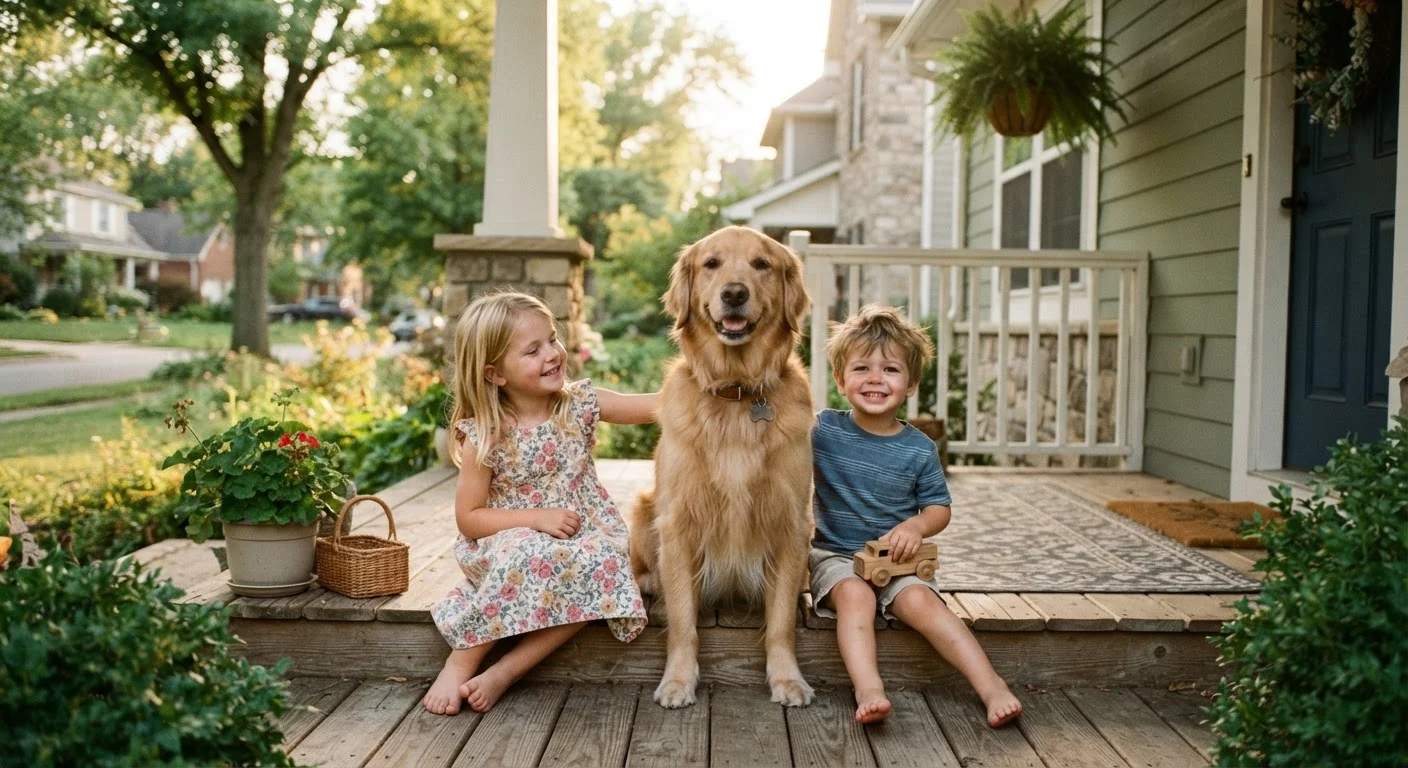
Large breed dogs can be deeply rewarding family companions, offering loyalty, gentle temperaments, and a reassuring presence. But they require a meaningful investment of time, money, and physical commitment that smaller pets simply don't demand. Families who go in with clear expectations tend to find the trade-offs very much worth it.
Best for active families with adequate living space, a realistic budget for ongoing care, and the commitment to provide daily structured exercise and early training.
What 'Large Breed' Really Means for Daily Life
Dogs weighing 50 pounds or more — a threshold many veterinarians use to define large breeds — include familiar family favorites like Labrador Retrievers, German Shepherds, Golden Retrievers, Boxers, and Great Danes. The physical scale of these animals shapes nearly every aspect of ownership, from how much counter space a wagging tail can clear to how much your annual vet bill might run.
If your family is weighing this decision, it helps to think less about the dog's size as a number and more about what that size means in practice: the food consumed, the exercise needed, the training required, and the health vulnerabilities that come with a larger frame. For a side-by-side perspective, our look at small pets and their trade-offs can help frame the comparison.
The Real Advantages of a Large Dog
There are genuinely compelling reasons families choose large breeds — and most of them go beyond how impressive the dog looks.
Strong loyalty and family bonding
Many large breeds form exceptionally close bonds with their human family. This attentiveness often translates to dogs that are in tune with the household's emotional rhythms and reliably affectionate.
Generally calmer indoors when well-exercised
Despite their size, breeds like Bernese Mountain Dogs and Greyhounds can be surprisingly relaxed indoors once their daily exercise needs are met. A tired large dog is often a remarkably calm housemate.
Well-suited to active, outdoor families
Large dogs are natural companions for hiking, running, or extended outdoor play. Families who spend time outdoors regularly often find a large dog fits their lifestyle more naturally than a smaller, lower-endurance breed.
Natural deterrent and presence in the home
The physical presence of a large dog can provide families with a sense of security. This is a benefit that requires no formal protection training — size alone changes how visitors and strangers interact with a household.
Resilient playmates for older children
Large breeds generally tolerate rough-and-tumble play better than small dogs, whose size can make them more vulnerable to accidental injury during enthusiastic child interactions.
Many large breeds were developed to work closely alongside humans, which often makes them attentive, trainable, and deeply bonded to their families. For households with children, a well-trained large dog can be a patient, gentle presence. See our guide on teaching a dog to stay calm around children for practical steps that apply especially well to large breeds.
The Challenges Families Often Underestimate
The challenges of large dog ownership are real and worth naming honestly — not to discourage families, but to help them prepare.
Significantly higher food and supply costs
A large dog may eat two to four times as much as a small breed, and costs for beds, crates, leashes, and medications are all scaled to body weight. These recurring expenses can add up to hundreds of dollars more per year than smaller dog ownership.
Greater veterinary and medication expenses
Drug dosages, anesthesia, surgical procedures, and many prescription treatments are calculated by weight. Routine care for a large dog often costs meaningfully more than the same care for a smaller animal.
Higher risk of serious breed-specific health conditions
Large and giant breeds are disproportionately affected by conditions including hip dysplasia, elbow dysplasia, bloat (GDV), and certain heart conditions. Many of these require costly intervention and ongoing management.
Shorter average lifespan than small breeds
Large breeds typically live 8–12 years on average, while giant breeds often have lifespans closer to 6–9 years. Families with children should be prepared for this reality and how to handle it thoughtfully.
Physical strength demands consistent training
An untrained large dog that pulls on leash, jumps, or becomes overstimulated poses genuine physical risks — particularly for elderly family members or young children. Early investment in professional or structured training is strongly advisable.
Space requirements can limit housing options
While many large dogs adapt well to apartment living given sufficient exercise, their size complicates travel, rental applications, and everyday logistics like car transport and hotel stays.
8–10 yrs
Typical lifespan of large to giant breeds
Veterinary data consistently shows an inverse relationship between body size and lifespan in dogs, with giant breeds aging fastest.
2–4×
More food consumed vs. small breeds
Large dogs may require significantly more food volume daily, directly multiplying one of the most consistent ownership costs over a dog's lifetime.
Health costs deserve special attention. Larger dogs are statistically more prone to orthopedic conditions like hip and elbow dysplasia, and giant breeds face a higher risk of gastric dilatation-volvulus (GDV), commonly called bloat — a life-threatening emergency. These aren't reasons to avoid large breeds, but they are reasons to budget for pet insurance and establish a relationship with a veterinarian before a crisis arises. Our overview of how dogs age across life stages explains how these health needs evolve as big dogs move into their senior years, which often arrive earlier than in small breeds.
Setting Your Family Up for Success
The families who thrive with large dogs share a few things in common: they start training early, they build consistent daily routines, and they go in with realistic expectations about cost and time.
Breed Energy Levels Vary Widely
Not all large dogs are high-energy. Breeds like Basset Hounds, Mastiffs, and Saint Bernards are notably lower-energy than Siberian Huskies or Vizslas of similar size. Before choosing a breed, research its typical exercise requirements carefully — matching your family's activity level to the dog's needs is one of the strongest predictors of a successful match. A low-energy family with a high-drive working breed is a recipe for a frustrated dog and an overwhelmed household.
Early socialization — exposing a large-breed puppy to a wide range of people, environments, and experiences before 16 weeks of age — has an outsized impact on temperament. A 70-pound dog that jumps on guests or pulls hard on a leash creates real safety problems that a 10-pound dog simply doesn't. Building a structured daily routine also makes a significant difference; large dogs tend to be calmer and better behaved when their days are predictable.
If this is your family's first dog, or your first large one, our comprehensive guide to bringing a dog home for the first time covers the practical groundwork — from supplies to safe introductions — that makes the first weeks go more smoothly.
This article is for general informational purposes only. Always consult a licensed veterinarian for guidance specific to your dog's health and care needs.
The content provided on our blog site traverses numerous categories, offering readers valuable and practical information. Readers can use the editorial team’s research and data to gain more insights into their topics of interest. However, they are requested not to treat the articles as conclusive. The website team cannot be held responsible for differences in data or inaccuracies found across other platforms. Please also note that the site might also miss out on various schemes and offers available that the readers may find more beneficial than the ones we cover.