

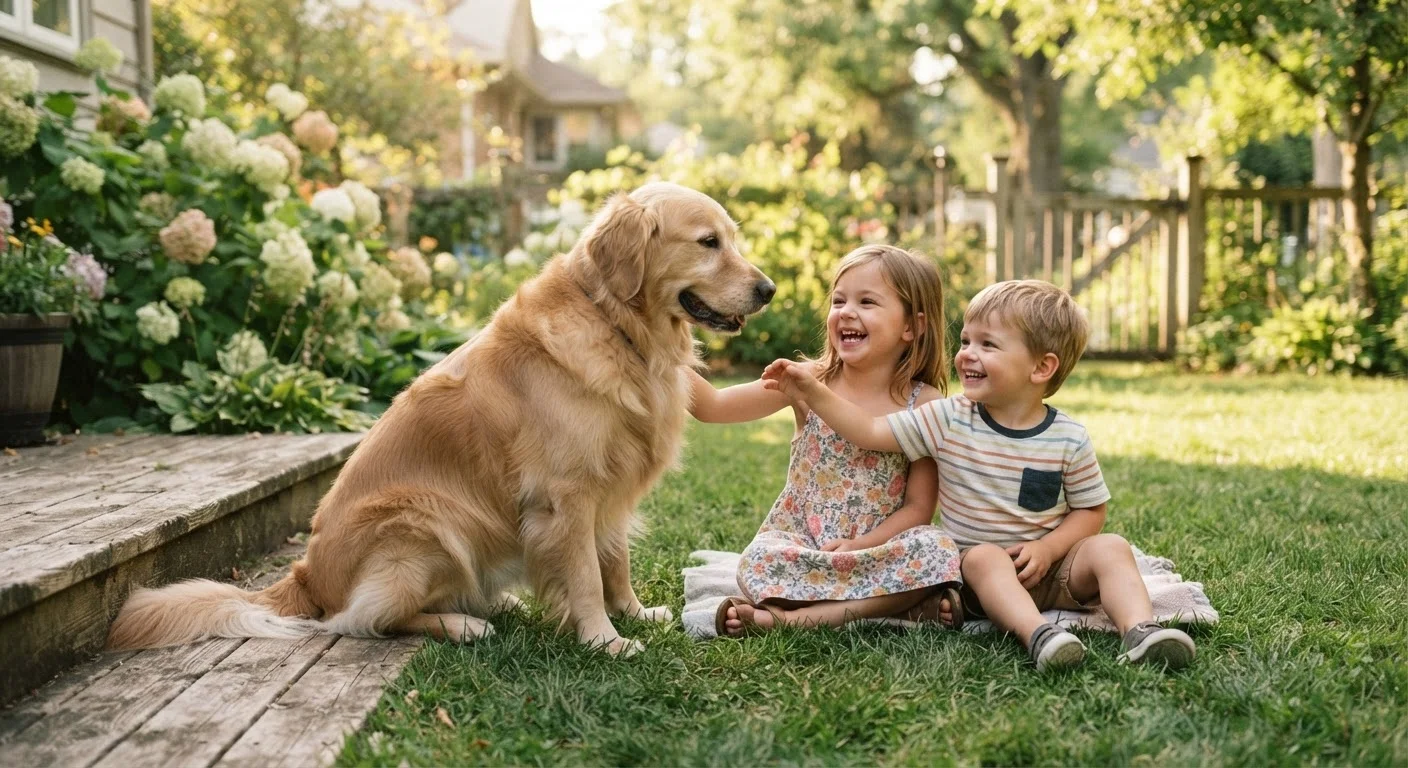
Why This Training Matters for the Whole Family
A dog that reliably stays calm around children isn't just easier to live with — it's a safer companion for everyone in the household. Excitement-driven behaviors like jumping, mouthing, or chasing can frighten small children or cause accidental injuries, even when the dog means no harm. At the same time, a dog that feels anxious or overwhelmed by child energy is under chronic stress, which affects both wellbeing and behavior over time.
The good news is that calm behavior is a learnable skill, not a fixed personality trait. Whether you have a puppy, an adolescent dog, or an adult rescue, structured positive training can meaningfully change how your dog responds to children. If you're still in the early stages of bringing a pet into your home, our guide to bringing a dog home for the first time covers foundational preparation that makes this training easier.
It also helps to understand that a dog struggling to respond to cues isn't being defiant. Common training gaps often explain ignored commands — and the same principles apply here. Families who approach this process with patience, structure, and realistic expectations tend to see the strongest results.
What you will need
What You'll Need Before You Begin
Gathering the right tools and setting clear expectations before you start makes each training session more productive and less stressful for everyone involved. The items below aren't expensive or complicated, but having them ready means you can respond quickly and consistently when your dog does something worth rewarding — or redirecting.
High-value training treats
Used to reward calm, gentle behavior around children during practice sessions.
Long-line leash or house leash
Gives you gentle physical control during early supervised introductions without startling the dog.
Dog crate or designated retreat space
Provides a safe, dog-only zone where your pet can decompress away from child activity.
Baby gate or exercise pen
Creates a physical boundary that separates children and the dog when direct supervision isn't possible.
Clicker
Marks the exact moment of correct calm behavior to speed up the dog's learning.
Beyond equipment, mental preparation matters too. Dogs that are adequately exercised and mentally engaged are significantly easier to train. If your household routine is hectic, explore enrichment strategies for busy families to help your dog arrive at training sessions in a calmer baseline state.
Step-by-Step: Training Your Dog to Stay Calm Around Children
Work through these steps in order, spending as many days as your dog needs at each stage before moving forward. Progress is individual — some dogs move through in a week, others need several weeks. Follow your dog's comfort level, not a calendar.
Build a calm baseline before introductions
Before your dog practices calm behavior with children, they need to have it without them. Spend several sessions working on a reliable "settle" or "place" cue — where your dog goes to a mat or bed and relaxes on cue. Practice this in low-distraction environments first, rewarding your dog the moment all four paws are on the mat and their body relaxes.
A dog that already knows how to self-settle has a real skill to draw on when the energy of children ramps up around them.
Introduce child-like sounds and movements gradually
Children move fast, squeal, laugh, and wave their arms — all of which can trigger a dog's arousal or prey drive. Help your dog associate these stimuli with calm outcomes before the real encounter. Play recordings of children playing at low volume while your dog eats or rests. Practice quick movements near your dog, pairing each with a treat if the dog remains relaxed.
Gradually increase the intensity over several days. The goal is for your dog to hear or see child-like behavior and look to you for a treat rather than react impulsively.
Set up the environment before any child interaction
Arrange the space so you control the encounter. Put your dog on a house leash (a short leash attached to their collar that drags loosely on the floor) so you can calmly redirect without grabbing. Make sure the dog's retreat space — crate, mat, or separate room — is accessible and that children know it is off-limits.
Remove toys or food items that might trigger guarding behavior. A calm environment sets your dog up to succeed from the first second.
Practice controlled, low-energy greetings
Ask the child to stand still, arms at their sides — no rushing toward the dog. Let the dog choose to approach. Reward the dog with a treat the moment they sniff calmly without jumping or mouthing. If your dog jumps, calmly turn away and withhold the reward; jumping earns no attention.
Keep first greetings short — 20 to 30 seconds is plenty. End on a positive note before any stress builds. Over multiple sessions, the dog learns that calm, gentle contact produces good things.
Teach children how to interact respectfully
Training the dog is only half the equation. Children need clear, age-appropriate rules: no hugging the dog around the neck, no approaching a dog that is eating or sleeping, no chasing, and no pulling ears or tails. Frame these as ways to be a good friend to the dog rather than as restrictions.
For younger children, demonstrate the correct way to pet — slow strokes along the dog's back, not patting the head. Consistency from adults reinforces these rules every time.
Recognize stress signals early and respond calmly
Dogs communicate discomfort before they escalate to growling or snapping. Watch for yawning, lip-licking, a tucked tail, turning the head away, or a stiff body posture. These are early stress signals, not stubbornness. When you see them, calmly redirect your dog to their settle spot and give children a brief break from the interaction.
Responding early prevents the dog from feeling that escalation is the only way to be heard — a critical step in building long-term trust and safety.
Build calm habits into your daily routine
Consistency is what transforms these skills from training exercises into reliable everyday behavior. Incorporate short settle practice into daily family life — before meals, after school arrivals, or during homework time. Predictable patterns help your dog understand when calm behavior is expected, and when it's their turn for active play.
A structured daily routine gives your dog the behavioral scaffolding they need to stay settled even when household energy is high.
Progress at Your Dog's Pace
There is no set timeline for this training. Pushing a dog through steps before they're ready often creates setbacks that take longer to undo than a slower, steadier approach. If your dog seems tense or distracted, shorten the session and end on something easy they can succeed at. Confidence builds cumulatively — small wins matter.
When to Seek Professional Help
Most dogs respond well to the approach above, but some situations call for professional support. If your dog has a history of fearfulness, resource guarding, or any prior bite incident, work with a qualified, certified dog behavior professional before attempting child introductions on your own. Look for trainers who use force-free, science-based methods.
Signs that professional help is warranted include: the dog lunging or snapping during early desensitization steps, an inability to disengage from children even with high-value rewards, or any escalation in tension despite consistent training. These aren't failures — they're signals that your dog needs a more individualized assessment.
Never Use Punishment to Suppress Fear
Scolding, leash corrections, or physical corrections used to stop a dog from reacting to children can suppress visible warning signals without reducing underlying anxiety. This makes the dog appear calmer while actually increasing risk. Positive reinforcement approaches address the emotional root of the behavior rather than just the outward expression of it.
For families raising large breeds, it's also worth reading about the specific trade-offs that come with large dogs, since size adds a layer of physical risk that affects how urgently early training should be prioritized.
This article is for general informational and educational purposes only. If your dog has displayed aggressive behavior, please consult a qualified veterinary behaviorist or certified professional dog trainer before proceeding with any training program.
The content provided on our blog site traverses numerous categories, offering readers valuable and practical information. Readers can use the editorial team’s research and data to gain more insights into their topics of interest. However, they are requested not to treat the articles as conclusive. The website team cannot be held responsible for differences in data or inaccuracies found across other platforms. Please also note that the site might also miss out on various schemes and offers available that the readers may find more beneficial than the ones we cover.