

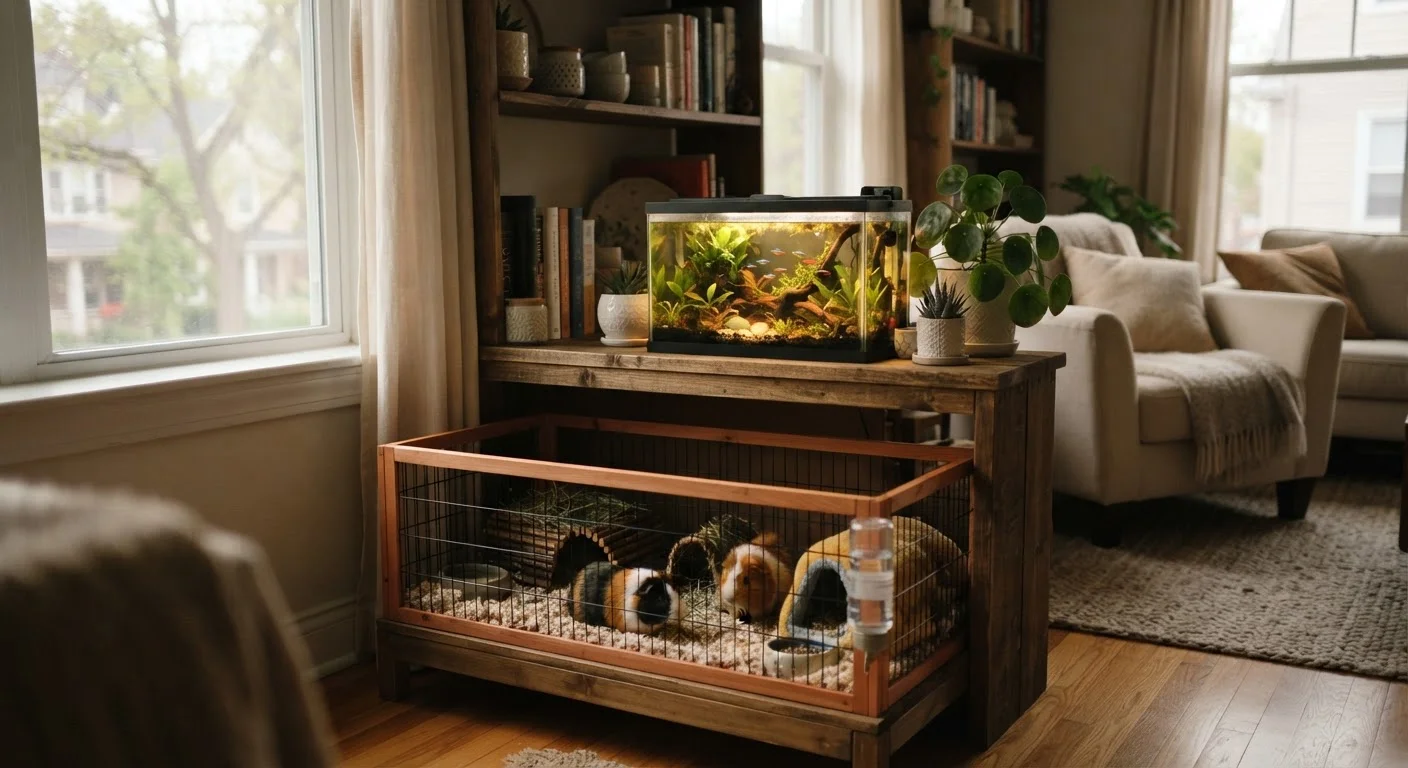
Why Apartment Size Doesn't Rule Out Pet Ownership
Many families living in apartments assume that a small home means no pet at all — or that they're limited to a goldfish on the counter. In reality, limited square footage closes far fewer doors than most people expect. What matters far more than total square footage is whether your household's schedule, tolerance for noise, and daily habits align with what a particular animal genuinely needs.
That said, apartment living does add real constraints: neighboring walls, lease restrictions, and the absence of a yard all shape which pets are realistic. Before committing to any animal, it's worth reviewing your lease closely — some buildings prohibit even small mammals or birds, regardless of size. If you're weighing whether a small pet is right for your family at all, our article on the real advantages and drawbacks of small pet ownership offers a grounded starting point.
The list below focuses on animals that tend to adapt well to apartment environments — and explains honestly what makes each one workable, and where challenges may arise.
Fish
Fish are among the most apartment-compatible pets available, and not just because they're quiet. A properly sized aquarium fits neatly on a shelf or countertop, produces no allergens, and creates almost no noise disruption for neighbors. Most leases that restrict pets make an exception for fish in reasonably sized tanks.
The workable part: fish require consistent water quality management — regular partial water changes, filter maintenance, and attention to temperature and pH levels. This isn't difficult to learn, but it does require routine. Beginners often do best starting with a single species suited to stable, straightforward tank conditions rather than diving into complex community setups immediately.
Fish require consistent water quality care, but they're quiet, allergen-free, and fit almost any living space.
Guinea Pigs
Guinea pigs are social, gentle, and generally well-suited to apartment living. They're diurnal — meaning they're active during the day — which makes them less likely to disturb nighttime sleep. Their vocalizations are soft and infrequent enough that neighboring units rarely notice.
What makes them workable is their need for companionship: guinea pigs are happiest kept in same-sex pairs or small groups, which means their habitat needs to be appropriately sized. A roomy enclosure with daily hay, fresh vegetables, and some time outside the cage each day keeps them content. They do produce a noticeable odor if their enclosure isn't cleaned regularly — two to three times per week is a realistic target. Our comparison of guinea pigs versus hamsters covers how their social and activity patterns differ in practical terms.
Guinea pigs thrive in pairs and are active during the day, making them a natural fit for family apartment life.
Hamsters
Hamsters are compact, self-contained, and relatively independent — appealing qualities in a smaller home. A single hamster occupies a modest footprint, and their care routine is straightforward enough for older children to participate in meaningfully.
The key apartment consideration is that hamsters are nocturnal. They're most active at night, which means wheel noise or burrowing sounds can be disruptive if the enclosure is in a bedroom. Placing the habitat in a common area away from sleeping spaces helps considerably. Hamsters are also solitary by nature and generally prefer to live alone, which simplifies feeding and habitat management. They're best suited to families looking for a low-interaction pet rather than one that enjoys being handled frequently.
Hamsters are solitary and low-maintenance, but their nocturnal schedule means cage placement matters in an apartment.
Budgies (Parakeets)
Budgerigars — commonly called parakeets — are small birds with large personalities and a manageable footprint. A pair of budgies can live comfortably in a mid-sized cage, and their chirping, while cheerful, is generally soft enough not to disturb neighbors through walls.
What makes budgies workable in an apartment is their adaptability and relatively modest daily care needs: fresh food and water, mental stimulation through foraging toys, and some time outside the cage each day. They do need social interaction — either with another bird or with their human family — and they can develop repetitive or anxious behaviors if left alone for long stretches. Families who are home regularly often find budgies rewarding companions. Check your lease carefully; some buildings restrict birds even at this small scale.
Budgies are social, cheerful, and compact — but they need daily interaction to stay mentally healthy.
Leopard Geckos
For families open to reptiles, leopard geckos offer a genuinely apartment-friendly option. They're quiet, hypoallergenic, odor-minimal when housed cleanly, and their enclosure — typically a 20-gallon tank for an adult — takes up minimal floor space.
The workable considerations here are environmental: leopard geckos need specific temperature gradients and a light cycle that mimics natural day-night patterns. This requires a reliable heat source and potentially a low-wattage light setup, both of which are easy to maintain once established. They're crepuscular (most active at dawn and dusk), handle gently, and can become quite calm with regular, gentle interaction. They're a particularly good fit for school-age children interested in learning responsible animal care with less daily time commitment than a mammal requires.
Leopard geckos are quiet, hypoallergenic, and space-efficient — a strong choice for reptile-curious apartment families.
Rabbits
Rabbits are more apartment-compatible than many families expect, but they also require more space and attention than their fluffy appearance suggests. A rabbit allowed to move freely in a bunny-proofed area — or given a large enough enclosure with regular supervised roaming time — can thrive in an apartment setting.
Rabbits are quiet, can be litter-trained, and form genuine bonds with their families. On the more demanding side, they need a diet primarily of fresh hay (supplemented with leafy greens), daily interaction, and mental stimulation. They're also chewers, which means electrical cords and baseboards need protection. Veterinary care for rabbits requires a vet experienced with exotic small animals — something worth confirming is available in your area before adopting. For a broader look at routine vet needs across small pets, see our piece on how often small pets need veterinary attention.
Rabbits can be litter-trained and genuinely affectionate, but their space, diet, and vet needs are more substantial than expected.
Finding the Right Match Before You Commit
No single animal is universally right for apartment life. A quiet household with older kids may do wonderfully with a pair of guinea pigs; a family with irregular schedules might find fish far more manageable. The goal isn't to choose the trendiest small pet — it's to choose one whose needs you can genuinely meet every day, not just on weekends.
Talk to Your Building Manager First
Even pets that seem obviously apartment-friendly — including fish tanks over a certain size, small birds, and pocket mammals — may be restricted by your specific lease or building policy. Before purchasing supplies or falling in love with an animal at a shelter, get clarity in writing from your landlord or property manager. This one step prevents a painful situation for both your family and the animal.
If you're still sorting out which animal fits your family's pace, our guide on matching a small pet to your family's lifestyle walks through how space, noise tolerance, and daily routines interact. And once you've made a choice, the family readiness checklist for bringing a small pet home can help ensure your space and supplies are ready before the animal arrives.
Apartment living with a pet is genuinely achievable — it just takes honest self-assessment and a willingness to meet your chosen animal on its own terms.
The content provided on our blog site traverses numerous categories, offering readers valuable and practical information. Readers can use the editorial team’s research and data to gain more insights into their topics of interest. However, they are requested not to treat the articles as conclusive. The website team cannot be held responsible for differences in data or inaccuracies found across other platforms. Please also note that the site might also miss out on various schemes and offers available that the readers may find more beneficial than the ones we cover.