

Our Verdict
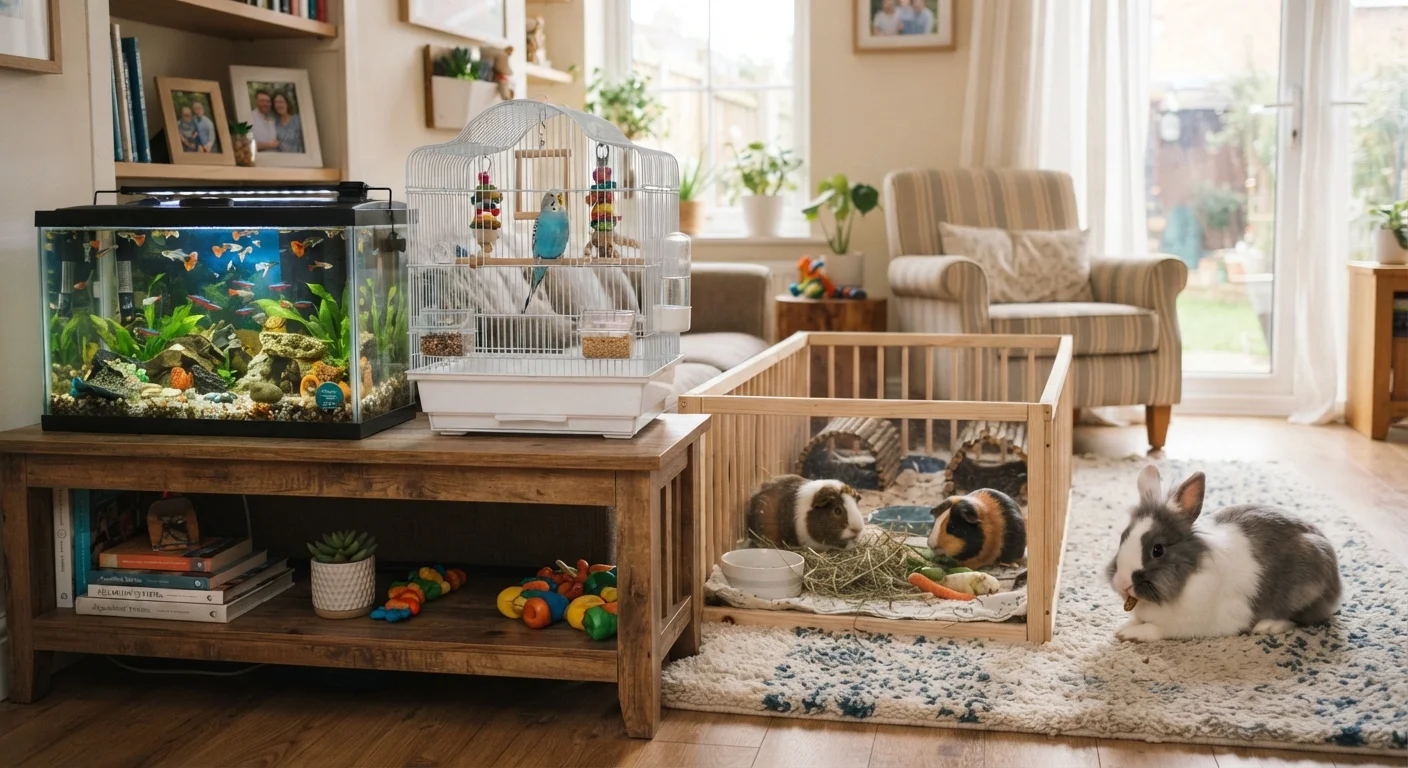
No single small pet suits every family, but each of these four options has a genuinely good match. Fish reward patient, routine-oriented households; birds bond deeply with families who can offer daily time and tolerate noise; rabbits suit older-child families with space to spare; and guinea pigs consistently stand out as approachable, gentle companions for a wide range of households including those with younger children.
| Best for | Recommended |
|---|---|
| Families wanting low-noise, low-allergen companionship | Fish |
| Families with older children who can commit to daily interaction | Birds |
| Families with older kids and ample indoor space | Rabbits |
| Families with young children seeking a first gentle mammal | Guinea Pigs |
Why Your Lifestyle Matters More Than the Pet's Cuteness
It's easy to fall in love with a fluffy rabbit at a shelter or a striking parrot at a pet store. But the most important question isn't which pet looks appealing — it's which pet will realistically fit into your family's daily rhythms, home layout, and tolerance for noise, mess, and time commitment.
Families who feel overwhelmed by the choice of cats and dogs sometimes assume small pets are automatically simpler. That's not always the case. A rabbit can demand as much hands-on attention as a cat. A parrot may outlive your youngest child's childhood. And a fish tank, while quiet and calming, requires consistent water chemistry monitoring that some families find unexpectedly technical.
Before any animal comes home, it's worth reviewing a family readiness checklist to make sure your space, supplies, and routines are genuinely prepared. This article helps you get to that point by comparing four of the most common small pet options across the factors families care about most.
Side-by-Side: How These Four Pets Compare
The table below captures the most practical differences across four dimensions families routinely cite as decisive: daily time investment, noise level, space needs, and suitability for children.
| Fish | Birds | Rabbits | Guinea Pigs | |
|---|---|---|---|---|
| Daily time commitment | Low–Moderate (tank maintenance) | High (social interaction required) | Moderate–High (exercise, handling) | Moderate (feeding, handling, enrichment) |
| Noise level | Silent | Moderate–High | Very quiet | Low (soft vocalizations) |
| Space required | Tank footprint only | Cage + out-of-cage flight space | Large enclosure + exercise area | Moderate enclosure, pairs recommended |
| Suitability for young children | Good (observation pet) | Moderate (supervision needed) | Low–Moderate (gentle handling crucial) | High (tolerant and gentle) |
| Typical lifespan | 2–15+ years (species dependent) | 5–20+ years (species dependent) | 8–12 years | 4–8 years |
| Allergen risk | Very low | Low–Moderate (feathers/dander) | Moderate (dander, hay) | Moderate (dander, hay) |
| Hands-on interaction | Minimal | High (thrives on bonding) | Moderate (on animal's terms) | High (enjoys gentle handling) |
Use this as a starting point rather than a definitive verdict. Individual animals vary, and your specific living situation — apartment vs. house, one child vs. four, work-from-home vs. long commutes — will shape which column speaks most clearly to you. If you're in a smaller space, our guide to small pets suited to apartment living explores this further.
Fish: Peaceful, but Not Effortless
Fish are often described as a low-maintenance starter pet, and in some ways that's fair — they don't bark, don't scratch furniture, and won't trigger most pet allergies. But responsible fish keeping requires regular water testing, tank cycling (the process of establishing beneficial bacteria in the filter), and consistent feeding schedules.
Tropical fish tanks involve maintaining specific temperature ranges; cold-water tanks like those housing goldfish still need space and filtration that many families underestimate. Goldfish in particular come with persistent myths — they don't thrive in tiny bowls and can live many years with proper care.
Fish are an excellent fit for households that value calm observation over hands-on interaction. They're also a thoughtful option for families where allergies rule out furry pets. The emotional connection is different from holding a guinea pig, but many families find a well-maintained aquarium genuinely soothing.
Start With a Smaller Tank Setup
If your family is new to fish keeping, consider starting with a well-filtered 10–20 gallon tank rather than a very large or very small setup. Nano tanks (under 5 gallons) are actually harder to maintain stable water chemistry in, while very large tanks can feel overwhelming for beginners. A moderately sized, properly cycled tank gives you room to learn without the extremes of either end.
Birds: Rewarding, but Demanding
Pet birds — from budgerigars (parakeets) to cockatiels and beyond — are social, intelligent animals that form real bonds with their caregivers. That bond comes with a meaningful time requirement. Most pet birds need daily out-of-cage time, social interaction, and mental stimulation to remain healthy and well-adjusted. A bird left alone for long stretches can develop stress-related behaviors.
Noise is a genuine consideration. Even smaller species like budgies chirp consistently throughout the day, and cockatiels can be surprisingly loud. Families in apartments or those with napping infants should research the specific species carefully. Our guide on keeping a pet bird when you have kids covers how to balance these realities safely.
Birds can also be long-lived — cockatiels commonly reach 15–20 years with good care, and larger parrots far longer. This is a commitment that extends well into your children's adult years. Families ready for that depth of relationship often find birds extraordinarily rewarding. For a comprehensive overview before deciding, see everything families should know before bringing home a pet bird.
Rabbits and Guinea Pigs: The Hands-On Mammal Options
Rabbits are gentle and can be genuinely affectionate, but they're often adopted based on an underestimation of their needs. They require spacious enclosures, daily exercise outside their habitat, a hay-heavy diet, and — importantly — they're prey animals that can be easily stressed by rough handling. Households with very young children who haven't yet developed gentle handling skills may find rabbits frustrating for both child and animal. Setting up a rabbit's living space correctly is a bigger undertaking than most families expect.
Guinea pigs, by contrast, are frequently described by animal welfare organizations as one of the more forgiving introductory mammals. They're active during the day (making them easier for children to interact with), they rarely bite when handled calmly, and their vocalizations — soft purrs and wheeks — are endearing rather than disruptive. They are social animals that generally do better in pairs, which is worth factoring into your planning. For a direct comparison of guinea pigs against another popular small mammal, see our article on guinea pigs vs. hamsters.
Whichever mammal you choose, confirm that a veterinarian in your area sees rabbits or guinea pigs as patients — not all general practice vets treat exotic or small mammals. Our overview of how often small pets need veterinary attention can help you understand what routine wellness care typically looks like.
Exotic Vet Access Isn't Universal
Not every veterinary clinic treats rabbits, guinea pigs, birds, or fish. Before committing to any of these animals, call local veterinary offices to confirm they see your chosen species and can provide routine wellness exams and emergency care. Discovering a lack of nearby exotic vet options after adoption can leave families in a difficult position if health concerns arise.
This article is for general informational purposes only and is not a substitute for professional veterinary advice. Always consult a qualified veterinarian regarding the health and care needs of any animal in your home.
The content provided on our blog site traverses numerous categories, offering readers valuable and practical information. Readers can use the editorial team’s research and data to gain more insights into their topics of interest. However, they are requested not to treat the articles as conclusive. The website team cannot be held responsible for differences in data or inaccuracies found across other platforms. Please also note that the site might also miss out on various schemes and offers available that the readers may find more beneficial than the ones we cover.