

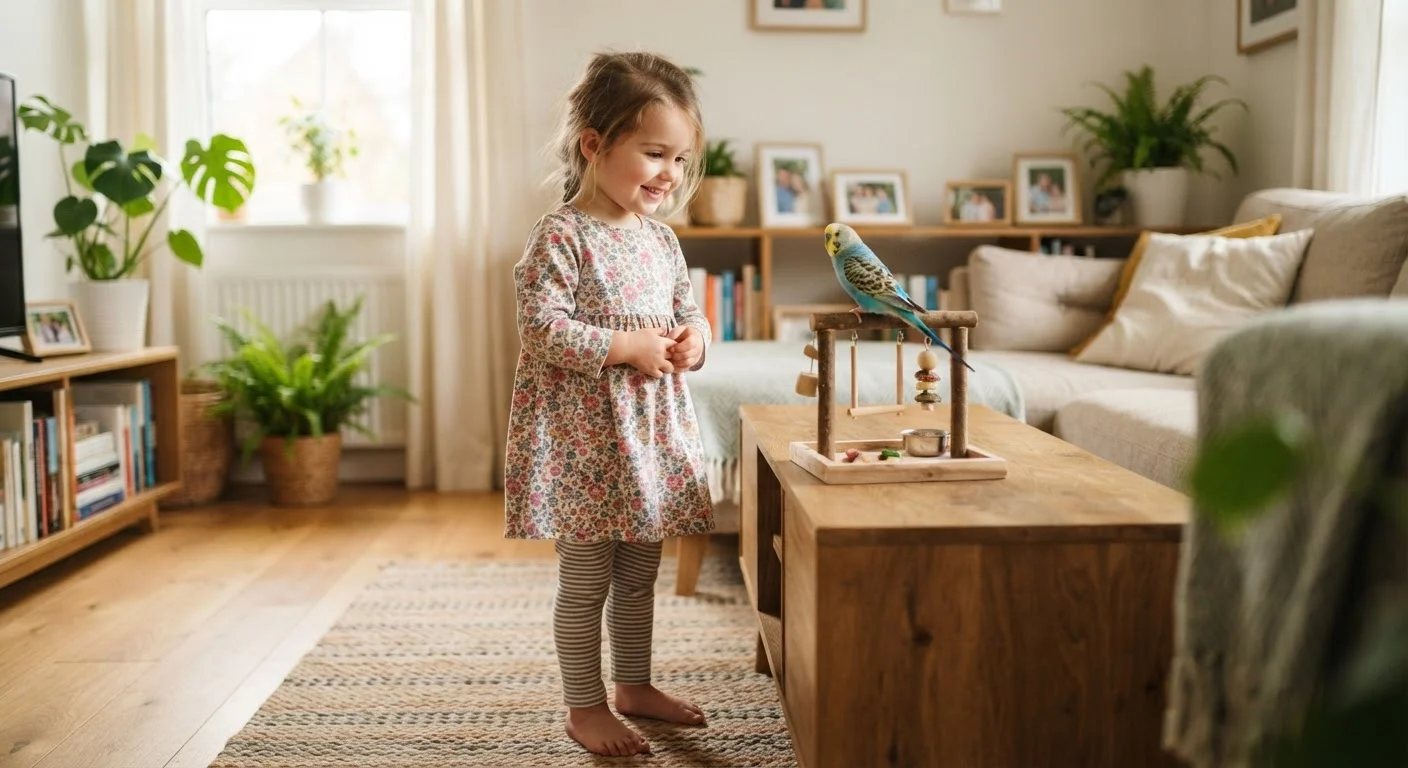
Is a Pet Bird the Right Fit for Your Family?
Birds occupy a unique middle ground in the pet world: they're interactive and engaging, yet more fragile and sensitive than most families expect. Before bringing one home, it's worth honestly assessing your household's noise level, daily rhythm, and how young your children are. If you're still weighing options, our guide to matching small pets to your lifestyle can help you compare birds against other family-friendly choices.
Species selection matters enormously with kids in the picture. Budgerigars (parakeets) and cockatiels are generally considered more tolerant of household activity and easier for children to interact with under supervision. Larger parrots — macaws, cockatoos, Amazon parrots — can be loud, strong-beaked, and emotionally complex. They're wonderful birds, but they demand more from caregivers and may not be the best starting point for families with children under eight.
Setting Up a Safe Environment
The cage should be positioned in a room where the family spends time, but away from drafts, cooking fumes, and direct sun. Birds have sensitive respiratory systems — non-stick cookware fumes, scented candles, and aerosol sprays can be genuinely dangerous to them. Establish a clear household rule: nothing sprayed or burned near the bird's space without checking safety first.
Cage placement also affects child safety. Mount or position the cage so younger children cannot reach inside unsupervised. A sturdy cage stand that doesn't wobble is essential — birds startle easily, and a tipping cage can injure both the bird and a child. Before your bird arrives, use the family readiness checklist to make sure your home setup is genuinely prepared.
Introducing Your Bird to Children: Step by Step
First impressions shape how a bird feels about people for a long time. Give your new bird two to three days to settle in before children approach closely — let it observe family activity from its cage without pressure. When introductions happen, keep voices low and movements slow. Children who run up excitedly or bang on the cage can create lasting wariness in the bird.
Teach kids to offer a flat hand rather than wiggling fingers, which birds may interpret as a threat. Short, positive sessions of five to ten minutes are far more productive than long, forced interactions. Reward children's calm behavior with praise, and frame patience as a skill they're building — not a restriction being placed on them.
Managing Noise and Household Routines
One reality families sometimes underestimate: birds vocalize most at dawn and dusk, and some species — even small cockatiels — can be surprisingly loud during those peaks. If bedrooms are close to the bird's space, this is worth planning around before purchase, not after. Consistent daily routines (consistent wake time, feeding schedule, and a covered cage at a regular evening hour) help birds feel secure and can reduce anxiety-driven screaming.
Children can be genuinely involved in this routine, which builds responsibility and deepens the bond. Assigning age-appropriate tasks — refilling the water dish, offering a piece of safe fruit, or gently talking to the bird each morning — gives kids ownership without putting them in situations that could be unsafe. For a broader perspective on what small pet ownership realistically involves, our balanced look at small pet ownership is worth reading together as a family.
Health and Wellbeing: What Every Family Should Know
Birds often hide signs of illness — a behavior rooted in survival instinct. By the time a bird looks visibly unwell, it may have been sick for some time. Establish care with an avian veterinarian before any health concerns arise, not after. Annual checkups are a reasonable baseline, though your vet can advise on what's appropriate for your species and bird's age.
Children should always wash hands after handling a bird or touching cage surfaces. While the risk of disease transmission from a well-cared-for pet bird is generally low, basic hygiene is a sensible, consistent habit to build. If anyone in your household has a compromised immune system or respiratory condition, consult a healthcare provider before bringing a bird home — not to alarm you, but because it's the responsible thing to do. The same thoughtful approach applies when introducing any new pet; our guide to introducing a new cat illustrates how careful first steps protect every member of a mixed household.
This article is for general informational purposes only and does not constitute veterinary or medical advice. Always consult a qualified avian veterinarian for guidance specific to your pet's health and care.
The content provided on our blog site traverses numerous categories, offering readers valuable and practical information. Readers can use the editorial team’s research and data to gain more insights into their topics of interest. However, they are requested not to treat the articles as conclusive. The website team cannot be held responsible for differences in data or inaccuracies found across other platforms. Please also note that the site might also miss out on various schemes and offers available that the readers may find more beneficial than the ones we cover.