

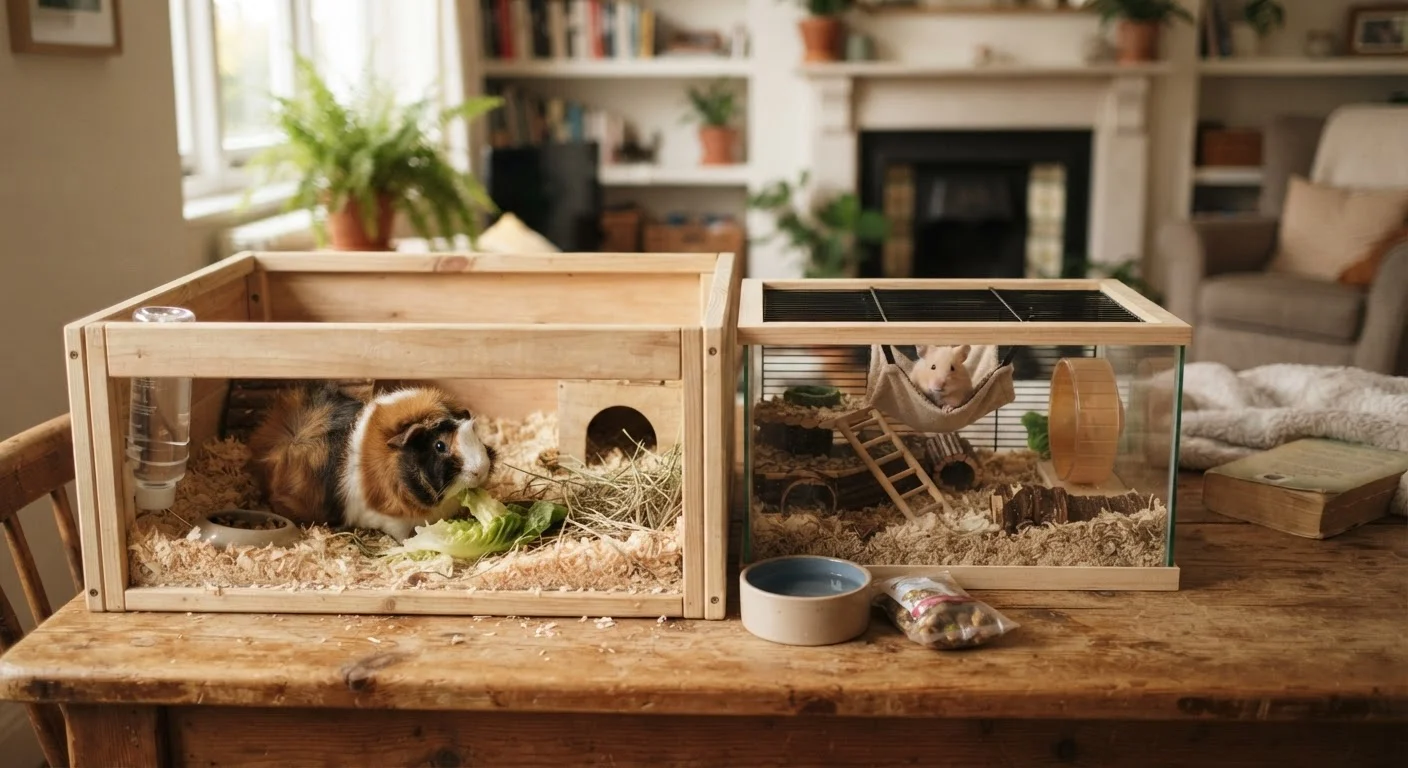
Option A
Guinea Pig
The social, daytime-active companion.
Best for: Families with children who want a gentle, interactive pet that thrives on daily human contact and a consistent routine.
Option B
Hamster
The independent, low-footprint option.
Best for: Households with older children or adults who prefer a quieter, more self-sufficient pet and can accommodate a nocturnal schedule.
The Core Difference: Social Lives and Sleep Schedules
Before picking between these two popular small mammals, it helps to understand one fundamental truth: guinea pigs and hamsters are built for very different lives. Guinea pigs are social, herd animals that are active during daylight hours. Hamsters are largely solitary and nocturnal — meaning they do most of their running, foraging, and exploring while your family sleeps.
This single distinction shapes nearly every other care consideration. A guinea pig left alone all day in a quiet house may become lonely and stressed. A hamster whose cage sits in a child's bedroom may be disrupted (and potentially grumpy) when woken for afternoon play. Neither outcome is good for the animal — or the child.
If your household wakes early, keeps a busy daytime schedule, and has kids who want to engage with a pet after school, a guinea pig's rhythms align naturally with family life. If your household is quieter, smaller, and more evening-oriented, a hamster's independence may be a better match. Our broader article on matching a small pet to your family's lifestyle explores how these lifestyle factors play out across several species.
| Criterion | Guinea Pig | Hamster |
|---|---|---|
| Activity pattern | Diurnal (active by day) | Nocturnal (active at night) |
| Social needs | Thrives in pairs or groups | Prefers living alone |
| Typical lifespan | 4–7 years | 2–3 years |
| Minimum enclosure size | 7–8 sq ft (for a pair) | 2–4 sq ft |
| Handling temperament | Generally gentle, tolerates handling | Can nip if startled or tired |
| Noise level | Vocal during daytime hours | Wheel noise possible at night |
| Diet complexity | Pellets, hay, fresh vegetables daily | Pellets, seeds, occasional fresh foods |
| Best age of child caretaker | 6 and older | 10 and older |
Space, Cost, and Daily Care Realities
Guinea pigs need significantly more room than most people expect. Veterinary and animal welfare guidelines typically recommend a minimum of 7–8 square feet of living space for a pair — and pairs are strongly recommended, since guinea pigs housed alone can experience chronic stress. Their enclosures also need daily spot-cleaning and a full bedding change weekly.
Hamsters require less square footage, but that doesn't mean minimal care. They still need enrichment — tunnels, wheels (a solid-surface wheel, not a wire one), and hiding spots are essential for their mental wellbeing. Without adequate stimulation, hamsters can develop repetitive stress behaviors.
4–7 years
Average guinea pig lifespan
Guinea pigs generally outlive hamsters by several years, a meaningful commitment for families with young children.
2–3 years
Average hamster lifespan
The shorter lifespan of hamsters means families may face the loss of a pet sooner, which can be an emotional consideration for younger children.
7–8 sq ft
Recommended minimum cage space for a guinea pig pair
Many animal welfare organizations suggest this as a baseline; more space is always encouraged for guinea pig wellbeing.
On the cost side, guinea pigs generally cost more to maintain: larger cages, more bedding, more food (including a consistent supply of fresh vegetables and hay), and the consideration that two animals may mean higher veterinary costs. Our article on real advantages and drawbacks of small pets walks through these financial realities honestly.
Both animals require veterinary attention, though the frequency varies. Guinea pigs benefit from annual wellness exams with an exotic-animal-knowledgeable veterinarian, and hamsters — despite their short lifespan — can develop health issues that warrant professional care. See our guide on how often small pets need vet attention for species-specific guidance.
A Note on Vitamin C for Guinea Pigs
Unlike most mammals, guinea pigs cannot produce their own Vitamin C and must get it through their diet daily. Fresh leafy greens like romaine lettuce and bell peppers are common sources. A deficiency can lead to serious health problems. This is one care requirement hamsters do not share, and it's worth factoring into your daily routine before choosing a guinea pig.
Which One Is Right Before You Bring Anyone Home?
The right choice comes down to honest self-assessment. Ask your family: Who will actually clean the cage on a Tuesday evening when everyone is exhausted? Both animals depend on consistent daily care regardless of your schedule.
Guinea pigs reward families who have time for gentle, regular interaction — they genuinely enjoy it, will vocalize (a sound called "wheeking") when they hear the fridge open, and can learn to recognize their people. Hamsters reward patient, respectful observation and are perfectly content with briefer, calmer handling sessions.
Before anyone comes home, use our family readiness checklist for small pets to confirm your supplies, space, and daily routines are genuinely in place. The checklist covers everything from enclosure setup to vet identification — the kind of preparation that makes the first weeks far less stressful for both the animal and your household.
Neither guinea pigs nor hamsters are low-effort pets. But both, when matched thoughtfully to the right family, can offer real joy, gentle responsibility lessons for children, and a surprisingly meaningful bond.
The content provided on our blog site traverses numerous categories, offering readers valuable and practical information. Readers can use the editorial team’s research and data to gain more insights into their topics of interest. However, they are requested not to treat the articles as conclusive. The website team cannot be held responsible for differences in data or inaccuracies found across other platforms. Please also note that the site might also miss out on various schemes and offers available that the readers may find more beneficial than the ones we cover.