

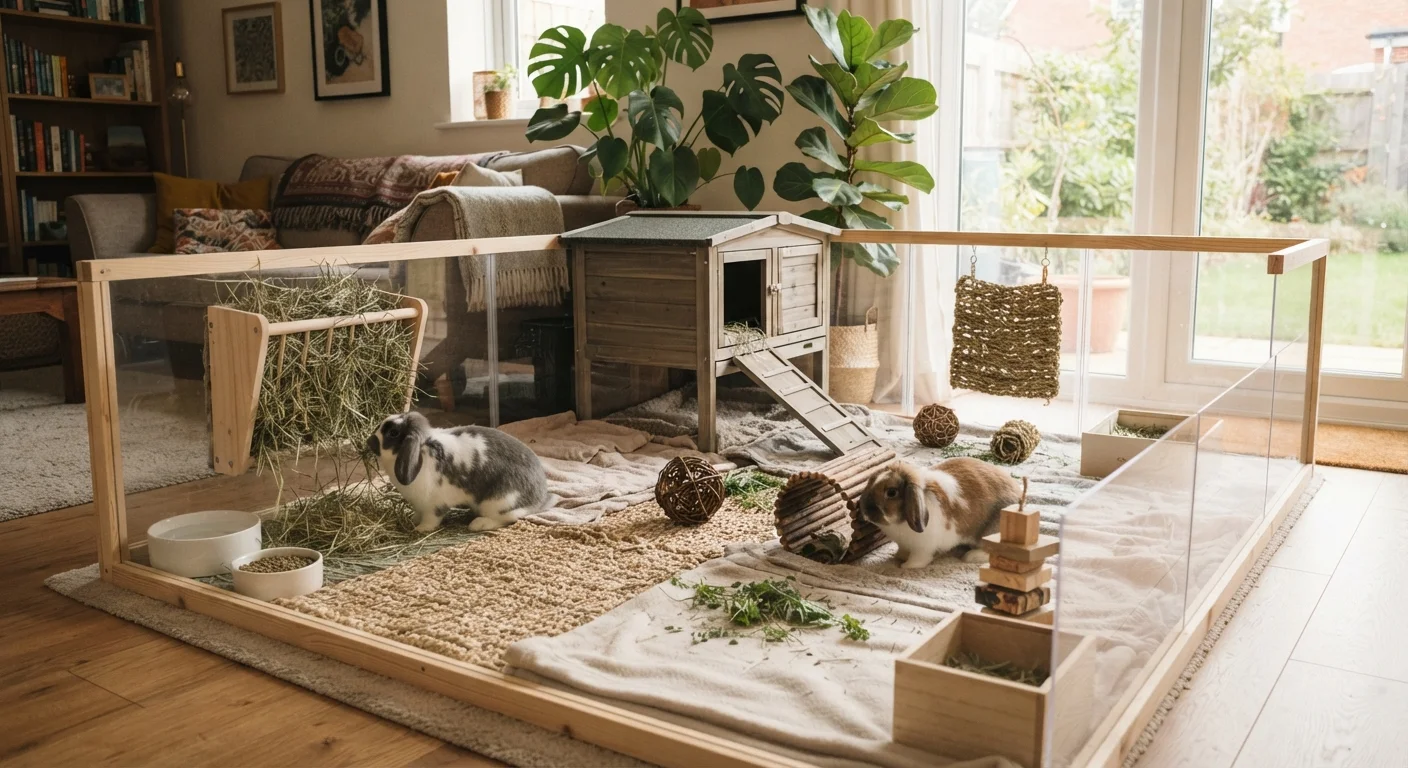
Why Rabbit Housing Requires More Planning Than You Might Expect
Rabbits are often marketed as easy, low-maintenance pets — but the truth is they have detailed housing needs that catch many families off guard. If you're still deciding whether a rabbit is right for your household, our guide on matching a small pet to your family's lifestyle is a helpful starting point.
For families who've already decided, understanding what a healthy enclosure actually requires — before the rabbit arrives — will set everyone up for success. The minimum space recommendations published by most animal welfare organizations are considerably larger than what many pet store hutches advertise. A rabbit that lacks adequate space, stimulation, or ventilation is a rabbit at risk for physical and behavioral problems.
What you will need
What You'll Need Before You Begin
Gather everything listed below before assembly. Having all materials on hand prevents the enclosure from sitting incomplete — a safety risk if your rabbit arrives before setup is finished. For a broader preparation checklist, see our family readiness checklist for bringing a small pet home.
Large Enclosure or X-Pen (exercise pen)
Provides the main living structure; an x-pen allows flexible sizing and easy reconfiguration as needs change.
Solid-Floor Flooring Mat or Tiles
Covers any wire surfaces to protect rabbit feet and provide grip.
Hay Rack or Hay Feeder
Keeps hay clean, dry, and continuously accessible — hay should make up about 80% of a rabbit's diet.
Heavy Ceramic or Weighted Water Bowl (or sipper bottle)
Delivers fresh water without tipping; bowls are often preferable as they allow more natural drinking posture.
Litter Box and Paper-Based Litter
Rabbits can be litter-trained; a corner box keeps the enclosure cleaner and simplifies daily maintenance.
Hideaway Box or Tunnel
Gives the rabbit a sense of security and a retreat space — essential for reducing stress.
Chew Toys and Foraging Enrichment
Keeps teeth worn naturally and provides mental stimulation to prevent boredom behaviors.
Thermometer
Monitors ambient temperature; rabbits are vulnerable to heat above 80°F (27°C) and cold drafts.
Setting Up the Enclosure Step by Step
Follow these steps in order. Each layer of the setup builds on the one before it, so skipping ahead can mean having to redo earlier work.
Choose and Position the Enclosure
Place the enclosure in a quiet, low-traffic area away from direct sunlight, drafts, and loud appliances. Avoid garages or outdoor sheds with extreme temperature swings. The area should allow good airflow without creating a draft directly on the rabbit's resting spot. Indoors is preferable for most family setups, as it allows the rabbit to remain part of household life while still feeling safe.
Lay the Flooring
If your enclosure has a wire bottom, cover it completely with solid mats — interlocking foam tiles, fleece blankets, or natural woven mats all work. Ensure the covering is secured and won't bunch up or slip. For enclosures with solid plastic bases, a layer of paper-based bedding (avoid cedar or pine shavings, which release fumes irritating to rabbits) adds comfort and helps with absorbency.
Install the Hay Rack and Food Station
Mount or place the hay rack at a height the rabbit can reach comfortably — roughly nose level when sitting. Fill it generously with fresh grass hay (timothy and orchard grass are common choices). Set the water bowl or bottle at a stable, accessible spot. Keep food and water away from the litter corner to maintain hygiene.
Set Up the Litter Box
Place the litter box in one corner of the enclosure — rabbits naturally tend to choose a corner for elimination, so observe where your rabbit gravitates and position the box there. Fill it with a thin layer of paper-based litter topped with a generous handful of hay. Having hay in or directly above the litter box encourages use and reinforces the litter training habit.
Add the Hideaway and Enrichment Items
Place a hideaway box — a simple wooden box, cardboard box, or purpose-built shelter — inside the enclosure so the rabbit can retreat at will. Add at least one tunnel and two or three chew items (untreated willow, apple wood sticks, or cardboard are safe options). Rotate enrichment items every week or two to sustain interest. Leave enough open floor space so the rabbit can stretch fully and perform a full binky (an exuberant jump-and-twist that signals happiness).
Verify Ventilation and Temperature
Check that air can circulate through the enclosure sides. Avoid placing the enclosure against a wall on more than two sides simultaneously. Use a thermometer to confirm ambient temperature stays within the comfortable range. In warmer months, a small fan directed to circulate room air — not pointed directly at the rabbit — can help. Never use heating pads inside the enclosure without veterinary guidance.
Plan and Rabbit-Proof the Free-Roam Area
The enclosure alone is not enough. Rabbits need at least two to four hours of supervised exercise outside the enclosure each day. Before allowing free roam, secure electrical cords out of reach (cord covers or tucking behind furniture works well), block access to toxic houseplants, and close off any spaces a rabbit could become trapped in. A rabbit-proofed playpen attached to the main enclosure is a practical solution for families with limited supervision time.
Start Simple, Then Expand
You don't need to have the perfect setup on day one. A clean, safe, correctly sized enclosure with hay, water, a hideaway, and a litter box covers the essentials. Add enrichment and complexity gradually as you learn your rabbit's preferences and personality. Rabbits often respond differently to toys and tunnels — observing what your individual rabbit enjoys is part of the relationship.
Common Mistakes to Avoid
Even well-intentioned setups can fall short in ways that affect your rabbit's health over time.
Avoid Hutches Marketed as 'Starter' Sizes
Many hutches sold as beginner-friendly are too small for a rabbit to stand fully upright, turn around comfortably, or perform natural behaviors like binkying. A hutch that restricts movement is not a suitable long-term home, even for smaller rabbit breeds. Use minimum space guidelines from reputable animal welfare organizations as your baseline — not the dimensions on product packaging.
One frequently overlooked issue is flooring. Wire-bottom hutches may seem practical for waste management, but they place constant pressure on a rabbit's hind feet and can lead to a painful condition called sore hocks (ulcerative pododermatitis). Always choose solid flooring or lay thick mats over any wire sections.
Another common gap is enrichment. Rabbits are intelligent animals that need mental stimulation. An empty enclosure — even a spacious one — leads to boredom, which can manifest as destructive chewing, aggression, or lethargy. For more on understanding your rabbit's emotional cues, see our article on reading your rabbit's body language.
Finally, if space in your home is limited, that doesn't have to be a dealbreaker — but it does require more creative planning. Our article on small pets suited to apartment living explores how to make tighter spaces work. Ongoing rabbit care extends beyond housing too — feeding, grooming, and vet visits are covered in our first rabbit care guide.
The content provided on our blog site traverses numerous categories, offering readers valuable and practical information. Readers can use the editorial team’s research and data to gain more insights into their topics of interest. However, they are requested not to treat the articles as conclusive. The website team cannot be held responsible for differences in data or inaccuracies found across other platforms. Please also note that the site might also miss out on various schemes and offers available that the readers may find more beneficial than the ones we cover.