

Start here
What Rabbits Actually Eat
Next
Grooming Your Rabbit at Home
Then
Handling and Building Trust
When you're ready
Veterinary Care From Day One
Important to know
Signs Your Rabbit May Need Help
What Rabbits Actually Eat
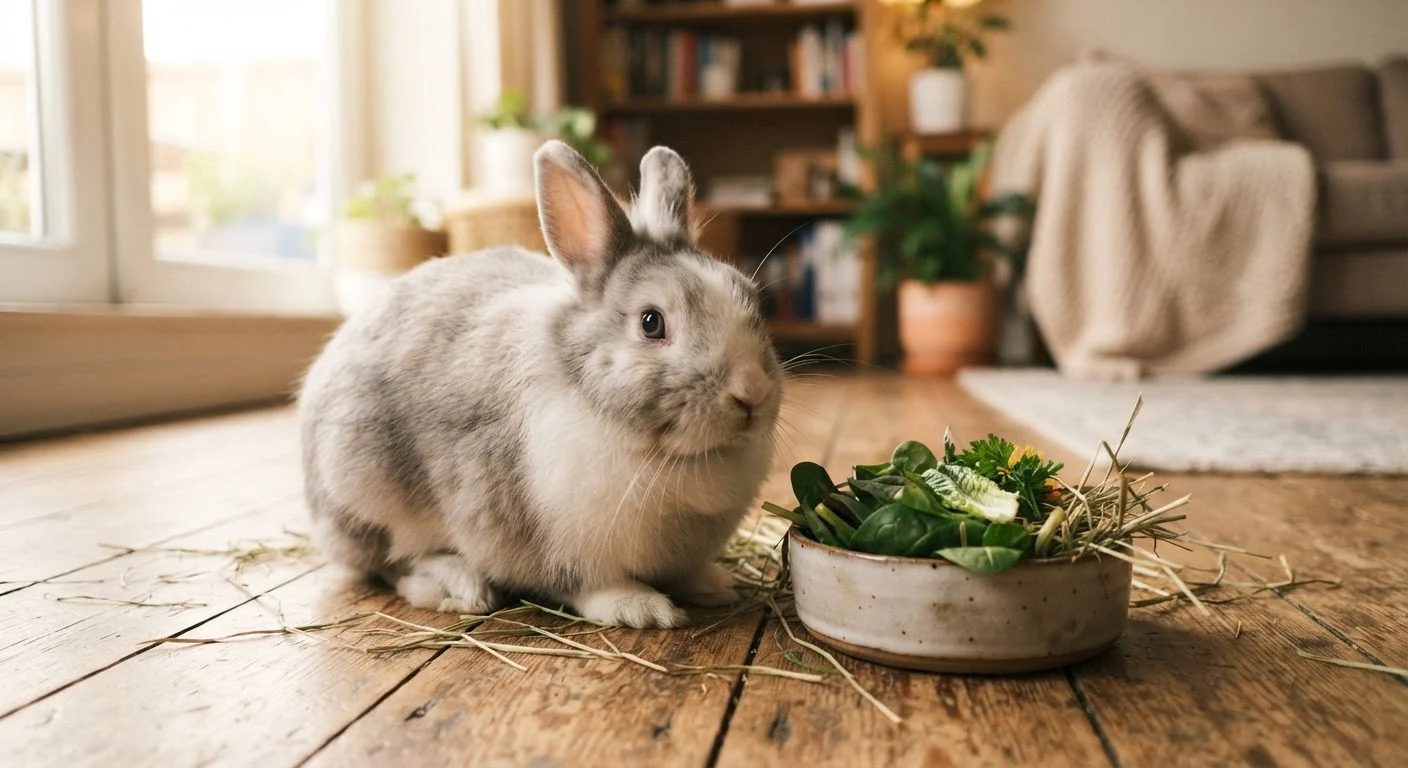
Rabbit nutrition is surprisingly misunderstood. Despite what cartoons suggest, a diet built around carrots is not appropriate. The true foundation is unlimited grass hay — timothy, orchard grass, or meadow hay — which should make up roughly 80% of what your rabbit consumes every day. Hay keeps the gut moving, prevents dangerous blockages, and naturally files down teeth that never stop growing.
Fresh leafy greens are the next layer. Aim for about one to two packed cups daily per five pounds of body weight. Safe choices include romaine lettuce, cilantro, parsley, and bok choy. Introduce new greens slowly to avoid digestive upset. Iceberg lettuce, on the other hand, has almost no nutritional value and can cause loose stools.
Pellets play a supporting — not starring — role. A small measured amount of plain timothy-based pellets is appropriate for adults; unlimited pellets often lead to obesity and reduced hay consumption. Treats like fruit should be offered sparingly: a thumb-sized piece of apple or berry is an occasional reward, not a daily staple.
Grass hay
Dried grasses such as timothy or orchard grass that form the nutritional and digestive backbone of a rabbit's diet. Different from legume hays like alfalfa, which are richer and generally only suited to young rabbits.
GI stasis
A potentially life-threatening condition where a rabbit's digestive system slows or stops moving. It requires prompt veterinary attention and can develop quickly.
Obligate herbivore
An animal whose body is designed exclusively to digest plant material. Rabbits fall into this category — no meat, dairy, or processed human foods belong in their diet.
The quick
The blood vessel that runs inside a rabbit's nail. Cutting into it during a nail trim causes pain and bleeding, so care is needed to clip only the clear tip of the nail.
Doe
The term for a female rabbit. An unspayed doe faces elevated health risks, particularly uterine cancer, as she ages.
Exotic vet
A veterinarian with specialized training in animals other than dogs and cats, including rabbits, birds, and reptiles. Not all general practice vets have deep experience with rabbits.
Fresh water must always be available. A heavy ceramic bowl is easier for most rabbits to drink from than a sipper bottle, and it's simpler to keep clean.
If you're still weighing whether a rabbit fits your family's lifestyle, the guide to matching a small pet to your family offers helpful context before you commit.
Grooming Your Rabbit at Home
Rabbits are fastidious self-groomers, much like cats. But they still need your help with a few key tasks — and neglecting them can lead to real health problems.
Brushing is the most frequent task. Short-haired breeds such as the Dutch or Mini Rex need brushing once or twice a week. Long-haired breeds, including Angoras and Lionheads, need daily attention to prevent painful, skin-pulling mats. During seasonal sheds — which can be surprisingly heavy — increase brushing frequency for any breed. This also reduces the risk of rabbits ingesting too much fur during self-grooming, which, unlike cats, they cannot vomit back up.
Nail trims should happen roughly every four to six weeks. Overgrown nails snag on bedding, alter posture, and can curl painfully into the paw. You can learn to trim nails at home using small animal clippers, but ask your vet to demonstrate the technique first, since cutting the quick (the blood vessel inside the nail) causes pain and bleeding.
Make Grooming a Positive Routine
Keep grooming sessions short and calm, especially at first. Offering a small piece of leafy green before or during brushing helps your rabbit associate the experience with something pleasant. Over time, many rabbits become relaxed during grooming — some even seem to enjoy the attention.
Ear checks should be part of your weekly routine. Gently look inside each ear for dark debris, which may signal ear mites, or redness that could indicate infection. Do not insert anything into the ear canal.
Bathing a rabbit is almost never necessary and can be genuinely dangerous. Wet rabbits become chilled quickly and can go into shock. Spot-clean soiled areas with a damp cloth if needed, and ensure the enclosure stays dry and clean — your rabbit will do the rest. For more on setting up a space that makes hygiene easier, see our article on rabbit enclosure requirements.
Handling and Building Trust
Rabbits are prey animals, which means their instincts tell them that being picked up signals danger. This is why so many rabbits seem skittish at first — it's not personality, it's biology. Patient, consistent handling is the key to building a bond.
Start by spending time at the rabbit's level on the floor. Let your rabbit approach you, sniff your hand, and eventually accept gentle strokes along the back and forehead. Avoid hovering over the rabbit or making sudden movements. Earning trust at ground level makes picking up much safer and less stressful for everyone.
When lifting is necessary, technique matters enormously. Slide one hand under the chest just behind the front legs, and place your other hand firmly under the hindquarters. Rabbits pushed into a kick-and-twist can fracture their own spine — a serious, sometimes fatal injury. Keep the rabbit close to your body to give it something to brace against.
Children in the family need clear guidance from adults on how to interact safely. Many rabbits actually prefer floor-level companionship to being held. Encouraging children to sit quietly and let the rabbit come to them builds a far stronger relationship than forcing contact.
To understand what your rabbit is communicating through its posture and movement, the guide to rabbit body language is an excellent companion resource.
Veterinary Care From Day One
Finding a rabbit-savvy veterinarian before you bring your pet home is one of the most important preparations you can make. Not all vets treat rabbits with equal experience — look specifically for a practice that lists exotic or small mammal care among its services.
Schedule a wellness exam within the first week of arrival, even if your rabbit appears perfectly healthy. This initial visit establishes a health baseline, checks for parasites, assesses teeth alignment, and gives you a trusted resource for questions going forward.
Don't Skip the Spay or Neuter Conversation
Uterine cancer is a serious and common concern in intact female rabbits, and the risk increases significantly with age. This is not a decision to postpone indefinitely. Discuss the appropriate timing and any associated risks with your veterinarian early in your rabbit's life — ideally at the first wellness visit.
Spaying and neutering deserve serious consideration. Unspayed female rabbits have a significantly elevated risk of uterine cancer as they age — some estimates in the veterinary literature place this risk quite high in intact does (female rabbits) over three years old. Neutering males reduces territorial marking and aggressive behaviors. Talk with your vet about timing, which is typically around four to six months of age, depending on the individual animal.
Annual wellness exams are generally recommended for rabbits under five years old. Older rabbits benefit from more frequent check-ins as age-related conditions like dental disease, kidney issues, and arthritis become more common.
Before your rabbit even arrives, reviewing a family readiness checklist for small pets can help ensure you haven't overlooked any essentials.
This article provides general information about rabbit care and is not a substitute for personalized advice from a qualified veterinarian. Always consult a vet for guidance specific to your rabbit's health and circumstances.
Signs Your Rabbit May Need Help
Rabbits are stoic animals that instinctively hide pain and illness — a survival trait from life as prey. By the time a rabbit looks obviously unwell, the problem is often already advanced. Knowing the early warning signs is part of responsible ownership.
Contact a vet promptly if you notice any of the following:
- Not eating or drinking for more than a few hours — rabbits have sensitive digestive systems that can shut down quickly
- No droppings, or droppings that are very small, misshapen, or strung together with fur
- Labored breathing or breathing through the mouth (rabbits are obligate nose breathers)
- Head tilting to one side, loss of balance, or rolling — these can indicate a neurological issue or ear infection
- Wet or matted fur around the chin, which may point to dental problems causing excessive drooling
- Lethargy or unusual stillness — a rabbit that is uninterested in its surroundings and not moving normally needs attention
GI stasis — a dangerous slowdown of the digestive system — is one of the most common rabbit emergencies. It can develop rapidly and worsen within hours. If your rabbit hasn't eaten and isn't producing droppings, treat it as urgent and seek veterinary attention the same day.
Keeping a simple log of your rabbit's daily eating, drinking, and litter habits makes it easier to spot changes early. The more familiar you are with your rabbit's normal, the faster you'll recognize when something is off.
Frequently Asked Questions
The foundation of a rabbit's diet is unlimited timothy or orchard grass hay, which supports healthy digestion and wears down their continuously growing teeth. Fresh leafy greens such as romaine lettuce, cilantro, and bok choy can be offered daily in modest amounts. Pellets should be given in limited quantities, and sugary treats — including most fruits — should be rare extras.
Short-haired rabbits benefit from brushing at least once a week, while long-haired breeds like Angoras may need daily combing to prevent painful mats. Nails typically need trimming every four to six weeks. Rabbits generally groom themselves, so bathing is rarely necessary and can actually be dangerous for them.
In the United States, there are currently no widely licensed rabbit vaccines approved for routine use, though this can vary and recommendations evolve. What matters most is a wellness exam with a rabbit-experienced vet, who can assess your rabbit's overall health and advise on parasite prevention and spay or neuter timing.
Always support a rabbit's hindquarters fully when lifting — a rabbit that kicks free can fracture its own spine. Approach calmly at the rabbit's level, scoop one hand under the chest and the other under the rump, and hold the rabbit gently against your body. Never lift a rabbit by the ears or scruff.
Schedule a wellness exam within the first week of bringing your rabbit home, even if the animal appears healthy. After that, annual exams are generally recommended for young adults, with more frequent visits as rabbits age past five or six years. Contact a vet promptly any time your rabbit stops eating, hasn't produced droppings, or seems lethargic.
Rabbits can be wonderful family pets, but they are generally better suited to families with children who are old enough to understand gentle, quiet handling — typically school age and above. Unlike dogs or cats, rabbits are prey animals that can become stressed by sudden movements or noise. Adult supervision during interaction is strongly recommended.
The content provided on our blog site traverses numerous categories, offering readers valuable and practical information. Readers can use the editorial team’s research and data to gain more insights into their topics of interest. However, they are requested not to treat the articles as conclusive. The website team cannot be held responsible for differences in data or inaccuracies found across other platforms. Please also note that the site might also miss out on various schemes and offers available that the readers may find more beneficial than the ones we cover.