

Why Rabbit Body Language Matters
Rabbits are quiet animals, but they are anything but silent. They communicate almost entirely through posture, movement, and subtle physical cues — and missing those signals can make it genuinely hard to build a trusting bond with your pet. Unlike dogs or cats, rabbits rarely vocalize distress; instead, they show it through their bodies. Learning to interpret those signals is one of the most valuable skills a rabbit owner can develop.
If your family is new to rabbit ownership, pairing this guide with a comprehensive first-rabbit care guide will give you a well-rounded foundation. And if you're curious how rabbit communication compares to feline cues, reading your cat's body language offers a useful contrast — rabbits tend to be far more subtle than cats, and their signals mean very different things.
| Primary communication method | Body posture and movement |
| Key happiness signal | Binkying (mid-air leap with twist) |
| Key stress signal | Thumping or full-body freeze |
| Sign of deep relaxation | Flopping on their side |
| Affection signal | Grooming (licking) your hand |
| Territory-marking behavior | Chinning objects with the scent gland |
Happiness and Comfort Signals
When a rabbit feels safe and content, it communicates that clearly — once you know what to look for. These positive signals are rewarding to recognize and a good sign that your rabbit's environment is working well. See our guide on setting up a proper rabbit living space to support these behaviors at home.
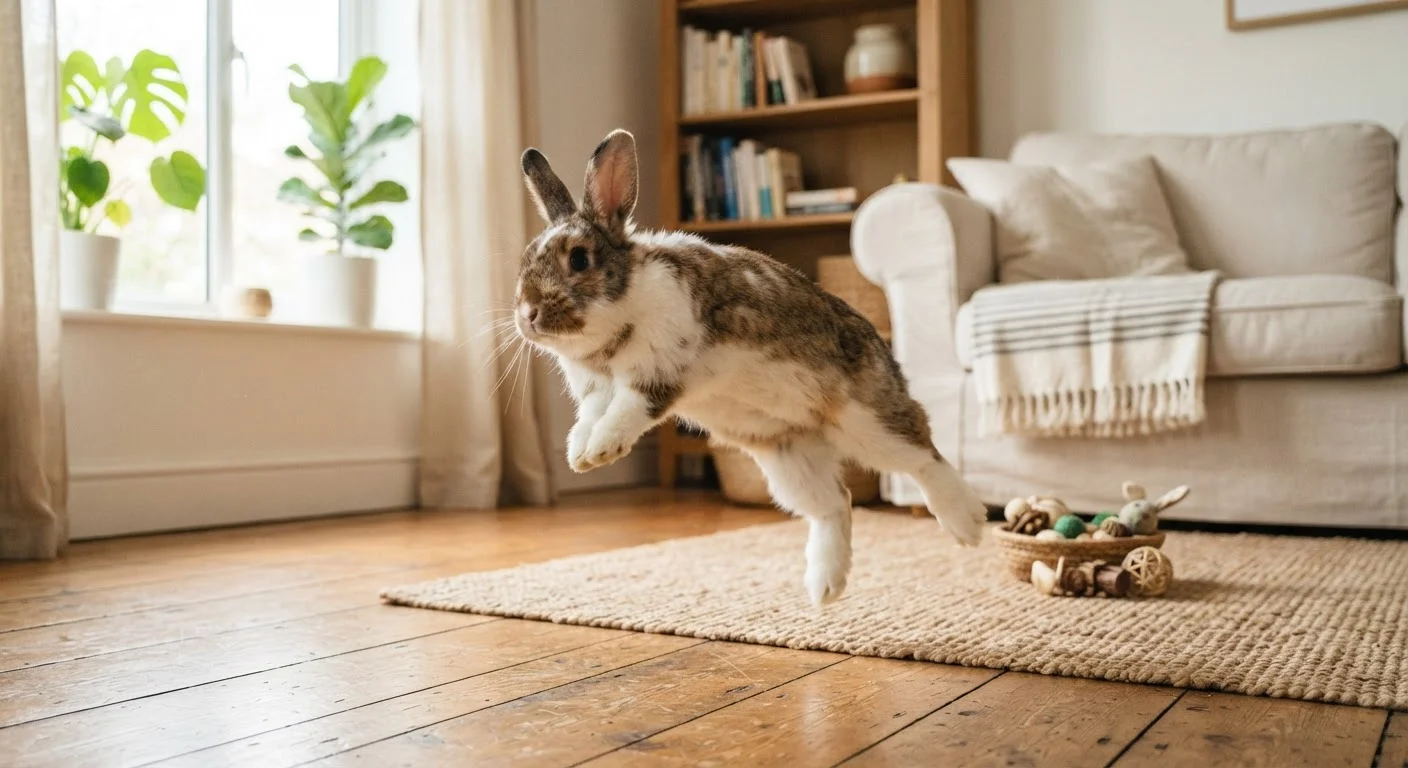
Binkying
A spontaneous leap into the air accompanied by a body twist or kick, seen in rabbits expressing joy or high energy. It is considered one of the clearest behavioral indicators that a rabbit feels safe and happy.
Flopping
When a rabbit suddenly rolls onto its side, often appearing lifeless. Despite looking alarming, flopping is a sign of complete relaxation and trust in the environment.
Thumping
A loud stomp made with one or both hind feet against the floor. Rabbits use thumping to signal perceived danger or to express frustration or displeasure.
Tooth purring
A soft, barely audible teeth grinding or chattering felt as a faint vibration when petting a rabbit. Unlike louder tooth grinding (which may indicate pain), tooth purring signals contentment.
Chinning
The act of rubbing the underside of the chin on objects or people. Rabbits have scent glands in this area and use chinning to mark their territory as a normal social behavior.
Prey animal instinct
The deeply ingrained behavioral patterns in animals — including rabbits — that evolved as defenses against predators. These instincts explain why rabbits hide pain, freeze when frightened, and are sensitive to sudden movements or sounds.
- Binkying: A sudden, joyful leap combined with a mid-air twist. This is widely recognized as one of the clearest signs of rabbit happiness.
- Flopping: Your rabbit dramatically throws itself onto its side, eyes partially closed. Though startling the first time you see it, flopping signals deep relaxation and contentment — not illness.
- Slow blinking or half-closed eyes: A calm, trusting rabbit at rest. Compare this to wide, fixed eyes, which signal alertness or fear.
- Tooth purring (soft grinding): A gentle teeth chattering felt more than heard when you pet your rabbit. It means your rabbit is enjoying the attention.
Stress, Fear, and Warning Signals
Rabbits are prey animals by nature, so stress responses are wired deeply into their behavior. Recognizing these early helps you adjust before a rabbit becomes truly frightened or injures itself trying to escape.
When Stress Signals Need Veterinary Attention
Persistent thumping, hiding, or refusal to move can occasionally indicate pain or illness rather than emotional stress. If your rabbit's fearful or withdrawn behavior is sudden, unexplained, or accompanied by changes in eating or bathroom habits, consult a veterinarian promptly. This article provides general behavioral education, not medical guidance.
- Thumping: A loud, deliberate rear-foot stomp against the floor. Rabbits thump to signal danger to other rabbits — or to express strong displeasure toward you.
- Freezing: A completely still, tensed body with wide eyes and upright ears. The rabbit is scanning for a threat. Avoid sudden movement or loud noise in this moment.
- Flattened ears and hunched posture: Combined with a tucked body, this indicates fear or submission. Give the rabbit space rather than reaching toward it.
- Growling or grunting: One of the few vocalizations rabbits use — a warning that the rabbit feels threatened and may scratch or bite if pushed further.
- Scratching or lunging: Active territorial defense. This is common in unspayed or unneutered rabbits and often improves after spay/neuter surgery, though a veterinarian should guide any health decisions.
Rabbits experiencing ongoing or unexplained behavioral changes — especially alongside physical symptoms — should be evaluated by a veterinarian. Body language shifts can sometimes reflect pain or illness, not just mood.
Curiosity, Affection, and Social Cues
Rabbits are social animals and actively engage with the people and environments they trust. These signals show a rabbit that is comfortable enough to explore and connect.
- Nose twitching rapidly: A rabbit actively gathering information about its surroundings. Faster twitching means higher interest or mild alertness.
- Circling your feet: Often a sign of excitement or, in unaltered rabbits, courtship behavior. In altered rabbits, it typically signals eagerness for attention or feeding time.
- Nudging with the nose: Your rabbit is requesting attention, moving you out of the way, or expressing mild bossiness — all normal social behaviors.
- Grooming you: Licking your hand or arm is a genuine sign of affection. Rabbits groom those they feel bonded to, so take it as a compliment.
- Chinning objects: Rubbing the underside of the chin on furniture, toys, or even you. Rabbits have scent glands there and are marking territory — a completely natural behavior.
Understanding these social signals helps families interact with their rabbit in ways that build trust over time, rather than accidentally signaling threat. For a broader comparison of how pets communicate differently, this guide to dog body language illustrates how much species vary in expressing the same emotions.
~65%
Of rabbit communication is postural
Animal behaviorists broadly agree that rabbits rely on body language and scent far more than vocalization to communicate their internal states.
10–12 years
Typical domestic rabbit lifespan
Understanding your rabbit's behavioral signals over a long life helps owners detect changes that may signal health concerns early.
The content provided on our blog site traverses numerous categories, offering readers valuable and practical information. Readers can use the editorial team’s research and data to gain more insights into their topics of interest. However, they are requested not to treat the articles as conclusive. The website team cannot be held responsible for differences in data or inaccuracies found across other platforms. Please also note that the site might also miss out on various schemes and offers available that the readers may find more beneficial than the ones we cover.