

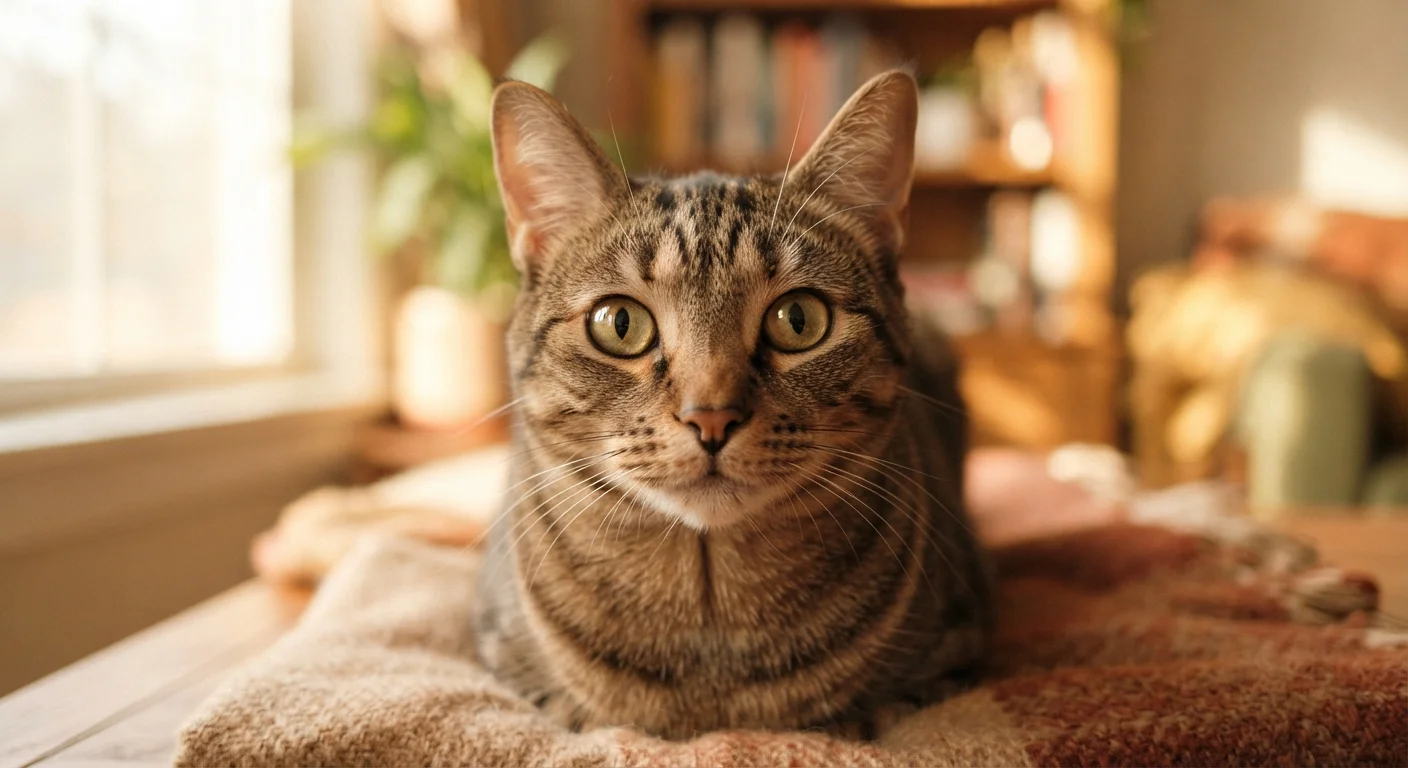
Why Reading Cat Body Language Matters
Cats are remarkably expressive — they just don't speak in ways humans naturally recognize. Unlike dogs, cats evolved as more solitary hunters, so their communication signals tend to be subtle, layered, and easy to misread. A flicking tail that looks playful to a child might actually be a warning. A slow blink that looks sleepy is often a gesture of deep trust.
Learning to interpret these signals helps your whole family interact with your cat more safely and more meaningfully. It can also help you spot early signs of stress or discomfort before they escalate. For a broader look at how your cat's instincts shape its behavior, see our guide on strange cat behaviors finally explained.
| Number of muscles controlling each ear | ~32 muscles per ear (Commonly cited in veterinary anatomy references) |
| Tail positions with distinct meanings | At least 7 recognized positions (Feline behavior research literature) |
| Primary communication mode | Body language and scent (not vocalization) (Animal behavior consensus) |
| Vocalization primarily directed toward | Humans, not other cats (Studies on domestic cat communication) |
Ears, Eyes, and Face: The Emotional Dashboard
Your cat's face is the fastest window into its emotional state. Here's what to look for:
- Ears forward and upright: Alert, curious, or engaged. Your cat is interested in something nearby.
- Ears rotated sideways ("airplane ears"): Anxious or uncertain. Give your cat some space.
- Ears flattened back: Fearful, defensive, or aggressive. This is a clear signal to back off and let the cat calm down.
- Slow blink: A cat holding eye contact and then slowly closing its eyes is expressing comfort and trust. You can mirror this gesture back — many cats respond positively.
- Dilated pupils: Can mean excitement, fear, or low light — context matters. Paired with a tense body, dilated pupils often signal stress.
- Constricted pupils in bright light: Often seen during focused arousal or mild aggression.
Slow blink
A deliberate, relaxed closing of the eyes that cats use to signal trust and contentment toward a person or another animal. Mirroring it back can help build your bond.
Airplane ears
A colloquial term for ears rotated sideways and flattened slightly, indicating anxiety or conflict in a cat. It sits between neutral alertness and full defensive flattening.
Bottlebrush tail
A tail where the fur stands fully erect, making it appear much thicker. Cats do this involuntarily when frightened or highly agitated as a way to look more imposing.
Overstimulation
A state where a cat becomes overwhelmed by petting or interaction and signals a desire to stop, often through tail lashing, skin twitching, or a sudden nip. Recognizing early warning signs prevents bites.
Whisker position also matters. Whiskers fanned forward indicate curiosity or hunting focus. Whiskers pinned back against the face signal fear or defensiveness.
Tail and Body: Reading the Whole Picture
A cat's tail is one of its most expressive tools, but it only tells part of the story. Always read it alongside overall posture.
- Tail held high, tip slightly curved: Confident, friendly greeting. This is the posture cats use when approaching someone they trust.
- Tail puffed up ("bottlebrush"): Fear or aggression — your cat is trying to appear larger. Avoid reaching toward a cat in this state.
- Tail low or tucked: Submission, fear, or illness. A persistently tucked tail is worth monitoring.
- Slow, wide tail swish: Focused concentration, often during hunting behavior.
- Rapid tail lashing: Irritation or overstimulation. If you're petting and the tail starts flicking fast, stop — a bite or scratch may follow.
Body posture rounds it all out. A cat with a loose, relaxed body — maybe rolled onto its side — is comfortable. A stiff, crouched cat with a tucked chin is either afraid or preparing to defend itself. If your cat frequently shows tense postures or hides more than usual, it may be experiencing stress or physical discomfort. Our article on signs your cat may be sick covers what changes are worth a vet visit.
Every Cat Has Its Own Baseline
Some cats naturally carry their tails lower or hold their ears in a slightly unusual resting position due to breed traits or individual personality. The key is learning what's normal for your specific cat, then noticing when something shifts. A change from your cat's personal baseline is often more meaningful than any single signal read in isolation.
Curious how cat signals compare to other pets? Our dog body language family guide and rabbit body language reference offer useful side-by-side perspective.
The content provided on our blog site traverses numerous categories, offering readers valuable and practical information. Readers can use the editorial team’s research and data to gain more insights into their topics of interest. However, they are requested not to treat the articles as conclusive. The website team cannot be held responsible for differences in data or inaccuracies found across other platforms. Please also note that the site might also miss out on various schemes and offers available that the readers may find more beneficial than the ones we cover.