

The Science Behind Seemingly Silly Cat Habits
If you've ever watched your cat chirp at a squirrel through the window, sprint wildly around the house at midnight, or fixate on an empty corner of the room, you're not alone in wondering what on earth is going on. The good news: most of these behaviors have clear explanations rooted in biology and instinct.
Domestic cats share roughly 95% of their DNA with tigers. While your house cat obviously isn't hunting wildebeest, the ancient drives that made their wild ancestors such effective predators are very much still present — they've just been redirected into living-room life. Understanding this helps put even the most puzzling behaviors in perspective.
For a broader look at what your cat communicates through posture and expression, our guide to reading your cat's body language covers ears, tails, and eye contact in depth.
~95%
DNA shared between domestic cats and tigers
Genome sequencing research published in peer-reviewed journals has found that domestic cats share approximately 95% of their DNA with tigers, helping explain many persistent wild instincts.
2–5x
More active at dawn and dusk than midday
Cats are crepuscular animals, with activity levels naturally peaking in low-light periods — which explains why nighttime zoomies are so common in indoor cats.
30–50%
Of a cat's day spent in light sleep
According to animal behavior researchers, domestic cats spend a significant portion of their day in light, restorative sleep — a pattern inherited from ancestors who needed to conserve energy between hunts.
Kneading, Chattering, and the Midnight Zoomies
Kneading — that rhythmic pushing motion cats make with their front paws — begins in kittenhood as a way to stimulate milk flow while nursing. Adult cats retain it as a deeply comforting self-soothing behavior. When your cat kneads your lap, a blanket, or a soft cushion, they're essentially telling you they feel completely safe.
Chattering or chirping at birds and squirrels is one of the most distinctive sounds cats make. Researchers believe this rapid jaw movement may be an involuntary predatory reflex — possibly mimicking the precise bite cats use to kill small prey. It's triggered by visual excitement at something they can see but can't reach. Think of it less as frustration and more as instinct firing on all cylinders.
The zoomies (technically called Frenetic Random Activity Periods, or FRAPs) are bursts of sudden, intense running — often at night. Cats are crepuscular, meaning their energy peaks naturally at dawn and dusk. Indoor cats with pent-up hunting energy often release it in these brief, chaotic sprints. Regular interactive play sessions earlier in the evening can help channel this energy more predictably.
Redirect the Zoomies With Timed Play
If your cat regularly tears through the house at 11 p.m., try scheduling a 10–15 minute interactive play session an hour or two before bedtime. Using a wand toy or feather teaser mimics a hunt and allows your cat to reach a satisfying "catch" — often followed by grooming and sleep. Consistent timing helps reset your cat's energy cycle to better match your household's schedule.
Knocking Things Over and Other Attention Strategies
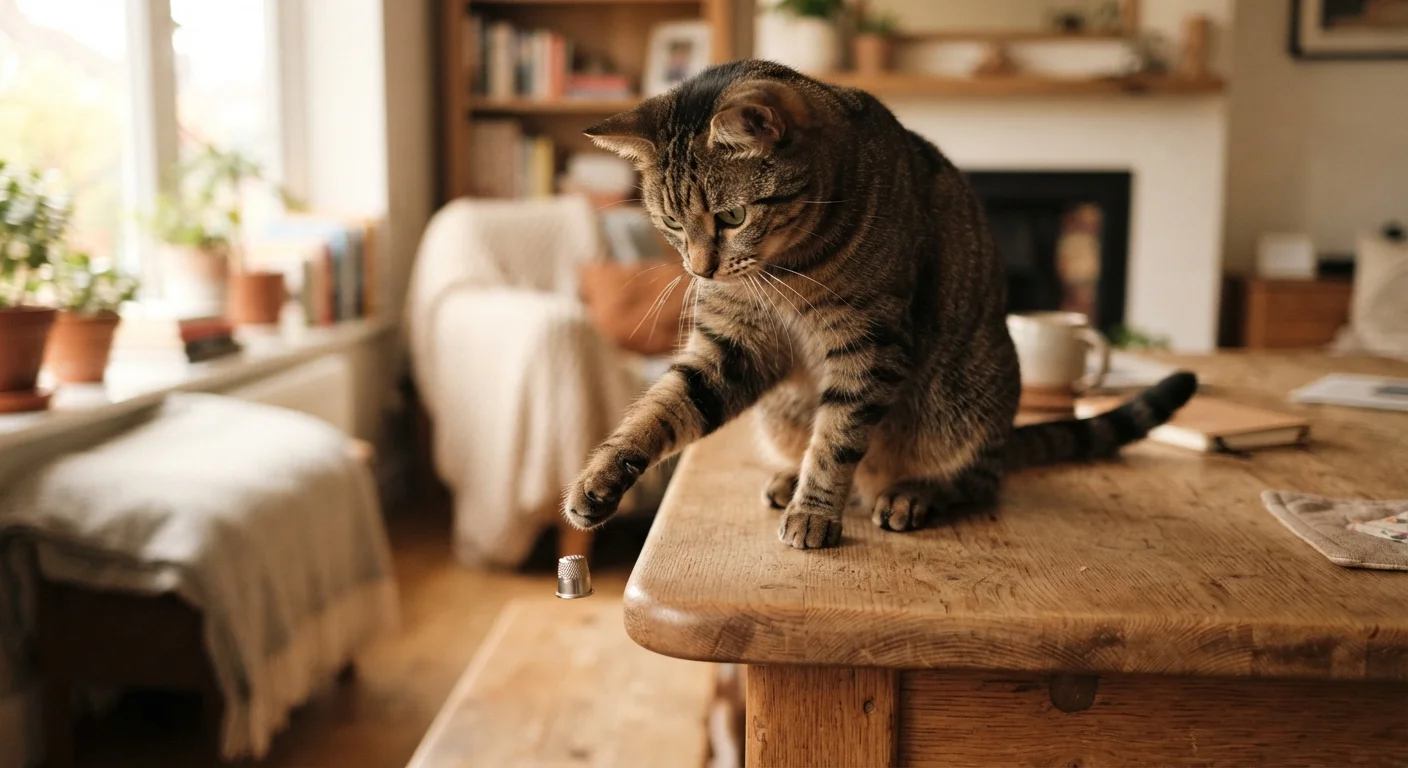
Cats are natural experimenters. Batting at an object tests whether it moves, squeaks, or runs — all useful data for a hunter. But domestic cats also learn very quickly that knocking your coffee mug to the edge of the counter produces an immediate, dramatic human response. Once that connection is made, the behavior tends to repeat.
Rather than scolding (which cats generally interpret as attention, reinforcing the act), try preemptive interactive play and puzzle feeders that give your cat a sanctioned outlet for this investigative energy.
Cats that bring home prey — or toy prey — are exhibiting a gift-giving behavior likely directed at their social group. In the wild, experienced hunters sometimes bring food to younger or weaker group members. You've been nominated. It's worth noting that keeping cats indoors protects both local wildlife and your cat from outdoor hazards.
When Strange Becomes Concerning
Most quirky cat behaviors are entirely normal expressions of instinct. But a sudden shift in behavior — new aggression, prolonged hiding, changes in appetite, or altered litter box habits — can sometimes be an early signal of pain, illness, or significant stress. Cats are famously good at masking discomfort, so behavioral changes are often one of the first visible signs something is off.
If your cat's habits change noticeably and without an obvious trigger (like a move or a new pet), it's worth bringing up with your veterinarian. Early attention to behavioral changes can make a real difference in outcomes.
Curious about other common pet behavior puzzles? Our article on why dogs do strange things explores similar instinct-driven habits in canine companions.
This article is for general informational purposes only and is not a substitute for professional veterinary advice. If you have concerns about your cat's health or behavior, please consult a licensed veterinarian.
Frequently Asked Questions
Kneading is a behavior kittens use while nursing to stimulate milk flow. Adult cats carry this motion forward as a self-soothing habit linked to feelings of safety and contentment. When your cat kneads you, it generally means they feel deeply comfortable and bonded with you.
Cats are wired to bat at objects to test whether they're alive — a carry-over from hunting behavior. They also quickly learn that knocking something over gets your immediate attention, which can reinforce the habit. Providing interactive toys gives them an appropriate outlet for this impulse.
That rapid jaw-clicking sound — sometimes called chattering — is thought to be an involuntary predatory reflex triggered by the sight of prey the cat cannot reach. Some researchers believe it may also mimic the killing bite cats use on small animals. It's completely normal behavior.
Cats are instinctive hunters, and some bring prey home as a form of gift-giving — possibly sharing a successful hunt with their social group, which now includes you. Spaying or neutering and keeping cats indoors can reduce this behavior while also protecting local wildlife.
Sudden or dramatic changes in behavior — increased hiding, aggression, changes in eating or litter box habits — can sometimes signal pain, illness, or stress. It's always worth a conversation with your veterinarian if something feels noticeably different from your cat's normal patterns.
A slow, soft blink from a cat is actually a sign of trust and relaxed affection. A hard, unblinking stare can be a sign of heightened attention or mild tension. You can try returning a slow blink to communicate calm — many cats respond in kind. See our guide on <a href="/pets-animals/cat-care/reading-your-cats-body-language-from-ears-to-tail">reading cat body language</a> for more.
The content provided on our blog site traverses numerous categories, offering readers valuable and practical information. Readers can use the editorial team’s research and data to gain more insights into their topics of interest. However, they are requested not to treat the articles as conclusive. The website team cannot be held responsible for differences in data or inaccuracies found across other platforms. Please also note that the site might also miss out on various schemes and offers available that the readers may find more beneficial than the ones we cover.