

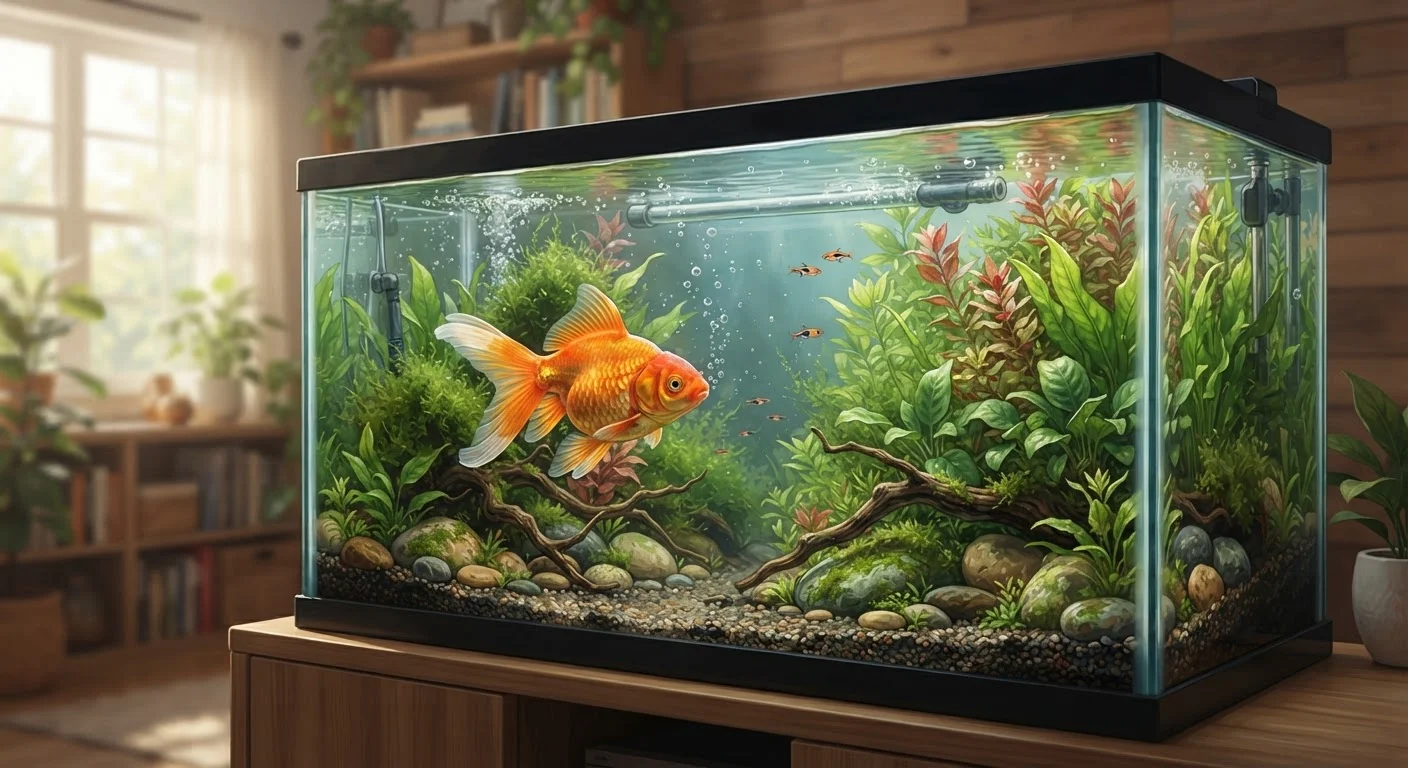
Why Goldfish Myths Matter More Than You'd Think
Goldfish are often the first pet a family considers beyond a cat or dog — and for good reason. They're beautiful, relatively quiet, and seem low-maintenance. But a cloud of persistent myths has shaped how millions of families care for them, and those misconceptions have real consequences for the fish.
Understanding what goldfish actually need isn't just good for them — it also means fewer heartbreaking losses and less money spent replacing fish that shouldn't have died so young. If you're exploring whether a fish might be the right fit for your household, our guide on matching a small pet to your family's lifestyle is a great place to start.
Below, we tackle the most widely believed goldfish myths head-on — and replace them with the facts.
Myth
Goldfish only live for a few years at most, so there's no point investing heavily in their care.
Fact
Goldfish commonly live 10–15 years, and some have been documented living beyond 20 years with proper husbandry.
The widespread belief that goldfish are short-lived comes almost entirely from the conditions they're typically kept in — not their biology. When housed in adequately sized, filtered tanks with appropriate feeding and water quality, goldfish are genuinely long-lived animals. The common goldfish and its relatives are hardy fish by nature; it's neglect and misinformation, not fragility, that shortens their lives so dramatically in many homes.
Myth
Goldfish have a three-second memory, so they don't experience boredom or distress.
Fact
Research has demonstrated that goldfish can retain memories for months, not seconds.
The three-second memory claim is one of the most enduring animal myths in circulation, but it has no scientific basis. Studies have shown goldfish can be trained to perform tasks and remember the training days or months later. They can also recognize feeding times and respond to their environment in ways that clearly indicate learned behavior. This matters practically: a goldfish in a barren, cramped environment does experience a diminished quality of life, even if it can't communicate it the way a dog or cat might.
Myth
A small bowl or vase is a perfectly fine home for a goldfish.
Fact
Goldfish bowls are inadequate — they lack filtration, limit oxygen exchange, and are far too small for a fish that can grow to 12 inches.
The image of a goldfish in a small round bowl is iconic, but it represents one of the most harmful norms in pet keeping. Goldfish are heavy waste producers, and without a filter, ammonia from their waste builds to toxic levels rapidly. Bowls also have a small surface area relative to their volume, which restricts the oxygen exchange that fish depend on. Common goldfish varieties can reach 10–12 inches in length; even fancy, shorter-bodied breeds regularly reach 6–8 inches. A bowl simply cannot support that animal throughout its life.
Myth
Goldfish will only grow to the size of their tank, so a small tank keeps them manageable.
Fact
Stunted growth in goldfish is a sign of stress and organ damage, not healthy adaptation.
The idea that goldfish self-regulate their growth to fit their environment is partially misunderstood. While growth can slow in cramped conditions, it does so because the fish is under chronic stress and accumulating waste products that suppress healthy development. Internal organs, particularly the kidneys and liver, may continue growing even as external size is limited — leading to painful internal crowding. A small tank doesn't produce a small, healthy goldfish; it produces a suffering one that may appear smaller than it should be.
Myth
You should feed goldfish as much as they'll eat, since they're always hungry.
Fact
Goldfish lack a stomach and will eat continuously if given the chance — overfeeding is a leading cause of illness and poor water quality.
Goldfish have a continuous digestive tract rather than a true stomach, which means they are essentially always in a state of passing food through. This makes them appear perpetually hungry and willing to eat regardless of need. Overfeeding results in excess waste, which spikes ammonia levels in the tank and can cause serious illness. Most fish care guidelines recommend feeding small amounts once or twice daily — only what the fish can consume in about two minutes — and removing any uneaten food promptly.
Myth
Tap water is fine for goldfish straight from the faucet.
Fact
Tap water contains chlorine and chloramines that are toxic to fish and must be neutralized before use.
Municipal tap water is treated to be safe for human consumption, but those same disinfectants — chlorine and chloramines — damage the delicate gill tissue of fish and can disrupt the beneficial bacteria colonies that keep a tank biologically stable. A water conditioner (dechlorinator) should always be used when adding tap water to a tank, whether during initial setup or partial water changes. This is a simple, inexpensive step, but skipping it is one of the most common reasons newly set-up tanks fail quickly.
Setting Up for Success: What the Facts Mean in Practice
Correcting these myths isn't about making goldfish ownership intimidating — it's about giving families a realistic, honest picture so they can succeed. A properly sized, filtered tank is genuinely manageable once it's established. The upfront investment in the right setup pays off in a fish that's visibly healthy, active, and long-lived.
15+ years
Typical goldfish lifespan with proper care
Aquatic care resources and fish veterinarians widely cite 10–15 years as a realistic lifespan for well-kept goldfish, with some individuals living considerably longer.
20 gallons
Minimum recommended tank size for one goldfish
Most aquarium care guidelines recommend at least 20 gallons for a single fancy goldfish, with additional gallons per additional fish.
2–3 minutes
Max feeding window per meal
Fish care educators commonly advise offering only as much food as a goldfish can consume in two to three minutes to prevent overfeeding and water quality issues.
One of the most overlooked pieces of the setup puzzle is the nitrogen cycle — the biological process that converts toxic fish waste into less harmful compounds. Without it, even a large, well-intentioned tank can become dangerous quickly. Our article on what a healthy aquarium actually looks like walks through exactly why this process matters and how to complete it before adding any fish.
If you've already experienced unexplained fish loss, you're not alone — and it's rarely bad luck. Common setup mistakes like uncycled tanks, overcrowding, and tap water chemistry are behind most early deaths. The good news is that all of them are preventable.
New Tank? Don't Add Fish Yet
One of the most consequential mistakes new fish owners make is adding goldfish to an uncycled tank. Before your aquarium can safely support fish, it needs to establish colonies of beneficial bacteria that process waste — a process called the nitrogen cycle that typically takes several weeks. Adding fish too early exposes them to toxic ammonia spikes that are often fatal. Plan your setup timeline carefully, and consider reading up on the nitrogen cycle before your first fish comes home.
This article is for general informational purposes only. For specific veterinary concerns about your fish's health, consult an aquatic veterinarian.
The content provided on our blog site traverses numerous categories, offering readers valuable and practical information. Readers can use the editorial team’s research and data to gain more insights into their topics of interest. However, they are requested not to treat the articles as conclusive. The website team cannot be held responsible for differences in data or inaccuracies found across other platforms. Please also note that the site might also miss out on various schemes and offers available that the readers may find more beneficial than the ones we cover.