

Why the Nitrogen Cycle Is the Foundation of Fish Health
When families first set up an aquarium, the impulse is to fill it with water, add some decorations, and introduce fish the same day. It looks ready — but appearances can be dangerously misleading. A brand-new tank has no beneficial bacteria, which means fish waste rapidly builds up as toxic ammonia with nothing to neutralize it.
The nitrogen cycle is the invisible biological system that changes all of this. Over several weeks, colonies of bacteria naturally establish themselves — primarily in your filter media — and begin converting harmful ammonia into nitrite, then into the relatively harmless nitrate. Only when both ammonia and nitrite consistently read zero is a tank considered cycled and genuinely safe for fish.
If you've ever wondered why new fish keep dying, an uncycled tank is usually the first place to look. The good news is that the cycle is straightforward to understand and, with a little patience, easy to manage.
3–6 weeks
Typical time to fully cycle a new tank
Fishkeeping resources and aquarium hobbyist organizations consistently cite this range for a fishless nitrogen cycle at standard tropical temperatures.
0 ppm
Safe ammonia and nitrite in a cycled tank
Even low concentrations of ammonia — as little as 0.25 ppm — can stress fish and damage their gills over time, according to general aquatic husbandry guidance.
< 20 ppm
Ideal nitrate level for most freshwater fish
Many aquarists and fishkeeping resources recommend keeping nitrate under 20 ppm for sensitive species, achievable through routine partial water changes.
How to Cycle a Tank Before Adding Fish
The most fish-friendly method is a fishless cycle. You run the filter, add a small amount of pure ammonia (unscented household ammonia works, or you can use fish food as it decomposes), and wait for bacteria to colonize naturally. Test ammonia, nitrite, and nitrate every few days. You'll typically see ammonia spike, then nitrite spike as bacteria begin converting it, and finally nitrate appear as the second group of bacteria catches up.
The tank is cycled when ammonia and nitrite both read zero and nitrate is detectable. At that point, do a partial water change to bring nitrate down, then add your fish gradually — not all at once.
Never Clean Your Entire Filter at Once
Beneficial bacteria live primarily in your filter media — the sponges, ceramic rings, or bio-balls inside your filter. Rinsing all of this with tap water at once kills those colonies and can essentially 'crash' a cycled tank. Instead, rinse filter media gently in a bucket of old tank water removed during a water change, and replace components gradually over several weeks rather than all at once.
You can speed things up modestly by seeding your tank — adding a small amount of gravel or a piece of filter media from an already-established, healthy aquarium. This introduces existing bacterial colonies to your new tank. Some pet stores will provide a pinch of established gravel if you ask.
What a Healthy, Cycled Tank Actually Looks Like
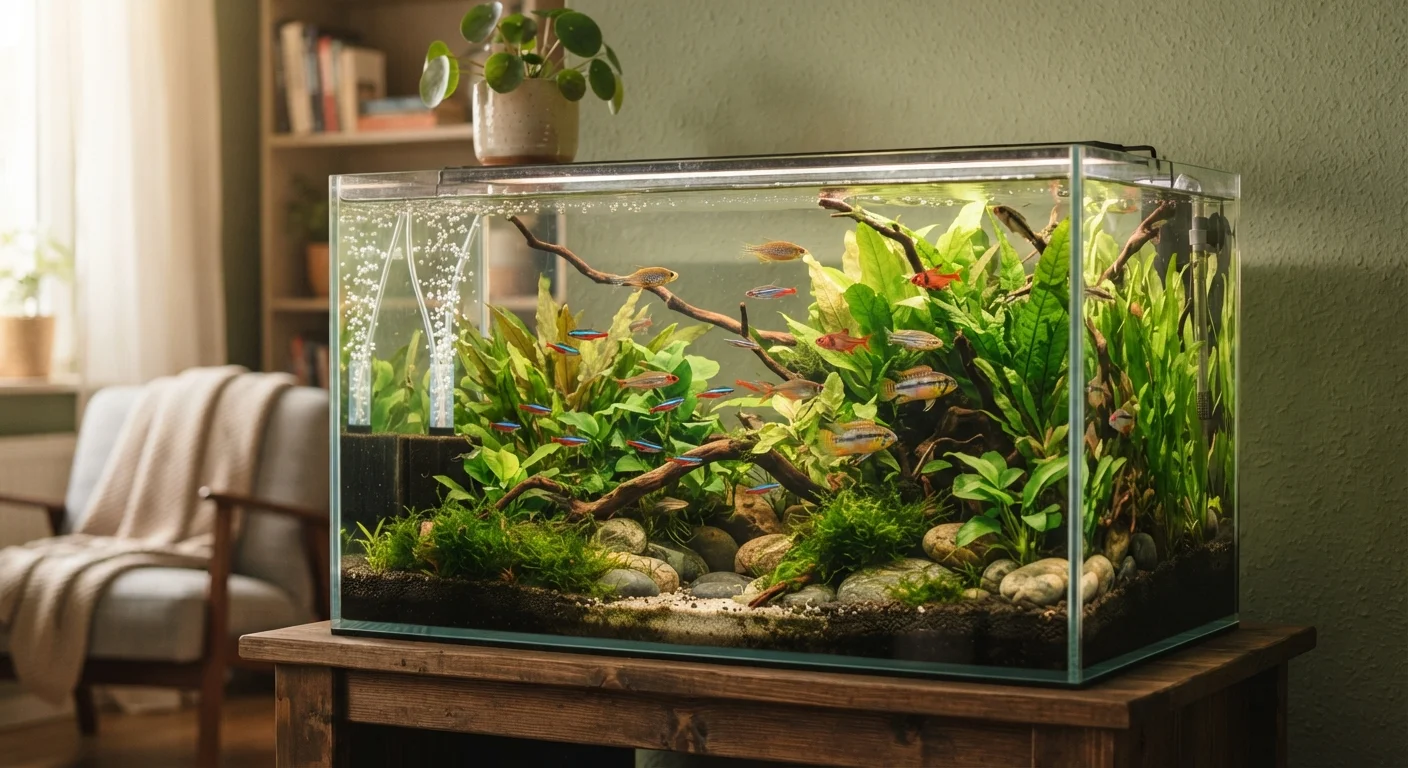
Once your cycle is complete, a healthy aquarium has a few reliable signs. Water is clear, not milky or yellow-tinged. Fish swim actively, hold their fins open, and behave normally for their species. There's no film floating on the surface and no persistent foul odor near the tank.
Some light algae growth on glass is completely normal and even a sign of a functioning ecosystem. What you want to avoid is a sudden green or brown bloom covering everything, which often signals excess nutrients from overfeeding or missed water changes.
Milky Water During Cycling Is Normal
Many new aquarium owners panic when their water turns cloudy white a few days after setup. This is usually a bacterial bloom — a temporary explosion of free-floating bacteria as the tank ecosystem begins to establish itself. It typically clears on its own within a week or two as the nitrogen cycle progresses. Avoid the temptation to do large water changes, which can disrupt the process.
A weekly routine matters more than any single intervention. Test your water, perform a 20–30% partial water change, check that your filter is flowing well, and observe your fish's behavior for a few minutes. These small habits prevent the large crises that send families rushing to the pet store in a panic.
If you're deciding between a freshwater setup and a saltwater tank, the nitrogen cycle applies to both — but the complexity of managing it differs significantly. Our guide on freshwater vs. saltwater aquariums breaks down what each type genuinely demands so families can choose with realistic expectations.
Frequently Asked Questions
A fishless cycle typically takes three to six weeks. The timeline depends on water temperature, the source of ammonia used, and whether you added a bacterial starter. Warmer water (around 78–82°F) tends to speed up bacterial growth.
It's strongly discouraged. Adding fish to an uncycled tank exposes them to toxic ammonia and nitrite spikes that can cause rapid illness or death. If you must add fish early, choose very hardy species and perform frequent partial water changes while monitoring levels closely.
Clear water (not cloudy or yellow-tinted), fish that are active and swimming upright, no unusual film on the surface, and algae limited to small amounts on glass. Milky cloudiness during cycling is normal but should clear once bacteria establish.
Test weekly during the cycling phase and at least every one to two weeks in an established tank. After a major change — adding fish, treating illness, or doing a deep clean — test more frequently until levels stabilize.
Yes. Visual inspection alone cannot detect ammonia or nitrite. Liquid reagent test kits are generally more accurate than test strips and are widely available at pet stores. They're an essential tool for any aquarium owner.
Most freshwater fish tolerate nitrate below 40 ppm (parts per million), though many thrive best under 20 ppm. Regular partial water changes — typically 20–30% of tank volume weekly — are the most reliable way to keep nitrate in check.
The content provided on our blog site traverses numerous categories, offering readers valuable and practical information. Readers can use the editorial team’s research and data to gain more insights into their topics of interest. However, they are requested not to treat the articles as conclusive. The website team cannot be held responsible for differences in data or inaccuracies found across other platforms. Please also note that the site might also miss out on various schemes and offers available that the readers may find more beneficial than the ones we cover.